



Markets
September 14, 2026
Fed, ECB and BOJ May Hike Together as $2.35T Carry Trade Faces Test
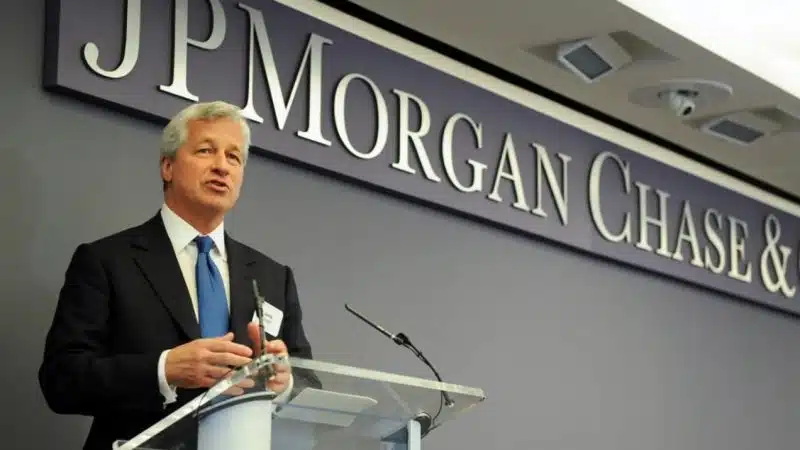
JP Morgan and the Iran war now sit at the center of a widening inflation debate in the U.S. JP Morgan Chase CEO Jamie Dimon just warned that the conflict could reignite inflation and push the Federal Reserve toward keeping rates higher for longer, or even hiking them outright.
Even with President Donald Trump agreeing to suspend attacks on Iran for two weeks, top Fed officials openly discuss the same oil price surge and inflation possibility right now, a sharp shift from just a few months ago.
Patrick De Haan, head of petroleum analysis at GasBuddy, wrote on X:
“[The ceasefire] hasn’t really clarified anything when it comes to the Strait.”

In his annual shareholder letter, Dimon called inflation the potential “skunk at the party” this year. The JP Morgan chief warned that oil and commodity market disruptions, driven by the Iran war, could push up gasoline prices, manufacturing costs, and broader consumer prices. Gas already hit $4.12 a gallon on April 6, per AAA, up 80 cents from a month earlier. Prices may not fall quickly even after the ceasefire, as the EIA warned full restoration of oil flows through the Strait of Hormuz could take months.

Jamie Dimon, JP Morgan Chase CEO, wrote:
“Now, because of the war in Iran, we additionally face the potential for significant ongoing oil and commodity price shocks, along with the reshaping of global supply chains, which may lead to stickier inflation and ultimately higher interest rates than markets currently expect.”
He added:
“Given our complex global supply chains, countries are experiencing disruptions in shipbuilding, food and farming, among others. The outcome of current geopolitical events may very well be the defining factor in how the future global economic order unfolds, then again, it may not.”
Also Read: Gold Prices Dip as Trading Volume Overtakes Major Assets
As PBS News reported, Cleveland Fed President Beth Hammack said Monday that a Fed interest rate hike could be appropriate if inflation stays above the central bank’s 2% target. Cleveland’s own projections put inflation at 3.5% in April, the highest since 2024.
FactSet forecasts also show annual inflation jumping to 3.1% in March from 2.4% in February, a direct result of the Iran war-driven oil price surge hitting U.S. households hard. Western states, including California, and parts of the East Coast saw gas prices above $4.20 per gallon, while much of the South and Midwest stayed somewhat below the national average.

Beth Hammack said:
“I can foresee scenarios where we would need to reduce rates … if the labor market deteriorates significantly. Or I could see where we might need to raise rates if inflation stays persistently above our target.”
Hammack also mentioned:
“Inflation has been running above our target for more than five years now, and a further increase would mean it is moving in the wrong direction, away from our 2% objective.”
Chicago Fed President Austan Goolsbee, asked to rate the inflation outlook on a color scale, had this to say:
“At least orange. Orange with a chance of meatballs; it hasn’t been great.”
A Fed interest rate hike would mark a sharp U-turn from late 2025, when the central bank cut rates three times. It would also put the Fed directly at odds with President Donald Trump, who wants rates cut to 1%, well below the current 3.6%. As Financial Review noted, a growing number of economists expect at least two more rate increases this year, warning that the Iran war keeps pushing inflation higher even as economic growth softens.
JP Morgan’s Iran war inflation concern, and the Fed’s shifting rate signals, show the economic fallout from the conflict is still very much unfolding. Even so, news of the temporary US-Iran ceasefire sent oil prices tumbling below $100 a barrel within minutes of Trump’s announcement. The March Consumer Price Index report due Friday will deliver the first concrete read on how far the oil price surge already hit U.S. households, and whether inflation risks across the country keep climbing.
Also Read: Robinhood & BNY Mellon Power Trump Accounts as JPMorgan Eyes $13T Tokenized Assets Shift

Written by Vladimir Popescu
Vladimir Popescu leads editorial coverage at BlockNow, with over 8 years in financial and tech journalism. He previously held editorial leadership roles at Watcher Guru and Windows Report, and has been cited by Forbes for his crypto market coverage.