





Bitcoin
April 9, 2026
New Report Ties Bitcoin Creator Identity to Blockstream CEO Adam Back
The US is moving closer to a defined framework for crypto regulation, with new stablecoin rules. On April 7, the Federal Deposit Insurance Corporation (FDIC) released a 191-page proposal to implement parts of the GENIUS Act stablecoin framework. A day later, Treasury Secretary Scott Bessent backed faster progress in a Wall Street Journal op-ed. This is adding pressure on lawmakers to act while there is still time this year.
Also Read: New Report Ties Bitcoin Creator Identity to Blockstream CEO Adam Back

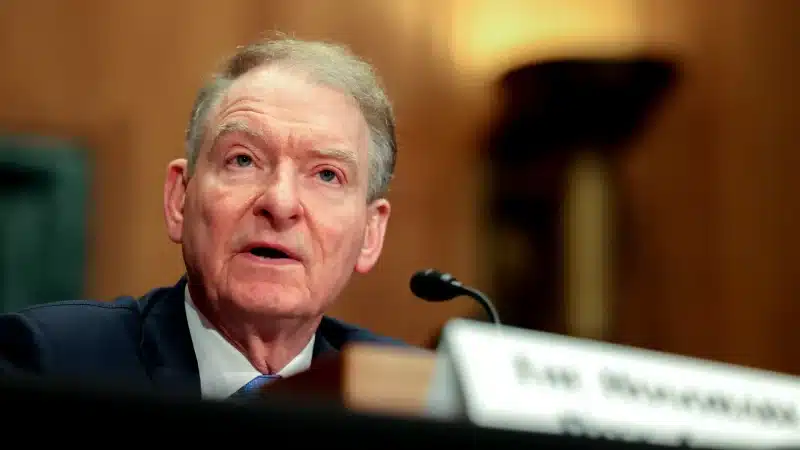
The FDIC’s proposal outlines how regulated stablecoin issuers would operate under federal oversight. It requires 1:1 reserves backing tokens, allows users to redeem within two business days, and does not allow issuers to offer yield. It also says stablecoin reserves will not get deposit insurance, while tokenized deposits that meet the rules will be treated like regular bank deposits.
This is the second GENIUS Act rulemaking from the FDIC. It follows an earlier proposal in December 2025. The approach is broadly aligned with a similar proposal from the Office of the Comptroller of the Currency (OCC) released in February. This suggests regulators are coordinating on stablecoin standards.
The focus is now turning to the CLARITY Act, which aims to set clear rules for digital assets in the US. This includes giving the CFTC oversight of the most spot markets. Progress had been stuck for months over stablecoin yield, but lawmakers now seem to have found a way forward. Senators Thom Tillis and Angela Alsobrooks said they have reached an agreement in principle. This draws a line between interest-like payments and rewards tied to activity.
Also Read: Shiba Inu & XRP Land on Rakuten Wallet as SHIB Pockets 4% Gains
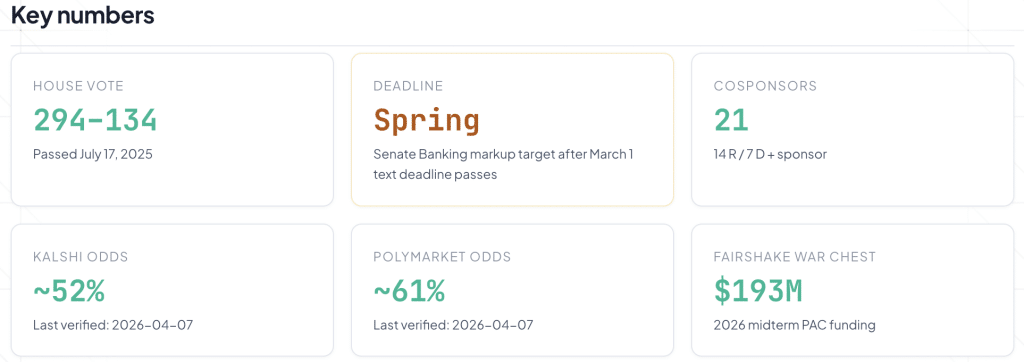
This clears the way for a Senate Banking Committee markup. This is currently targeted for April 13. Prediction markets suggest growing confidence, with Polymarket placing the odds of passage in 2026 at around 61%.
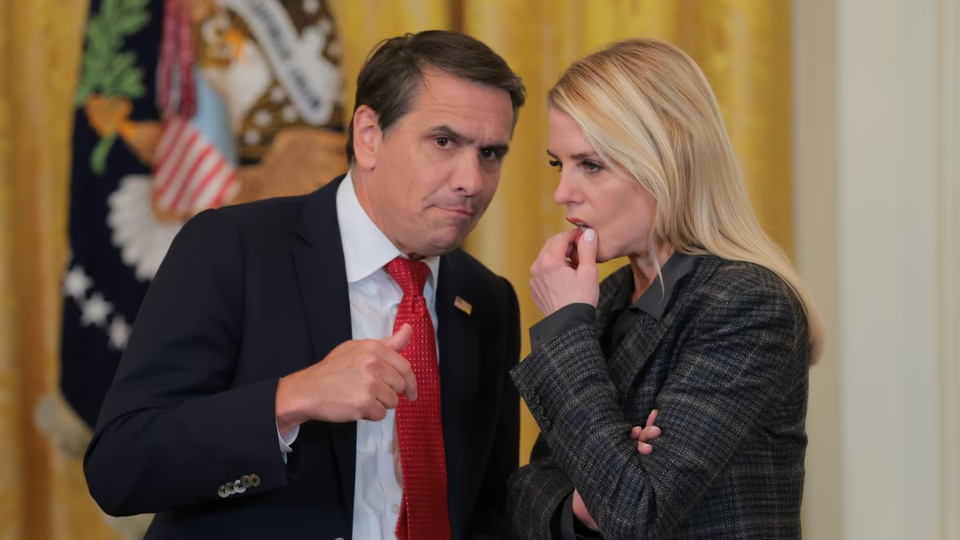
Bessent has called crypto regulation a matter of national economic security and urged Congress to move quickly. He has also warned that the legislative window could close after the November elections if political control shifts.
Along with this, the SEC’s crypto safe harbor proposal is under review at the White House’s Office of Information and Regulatory Affairs. The framework would allow crypto projects to launch with temporary exemptions while meeting disclosure requirements.

Taken together, multiple pieces of the US crypto regulation framework are progressing at the same time. The outcome remains uncertain, but there seems to be direction.
Also Read: Atkins Confirms Crypto Regulation Safe Harbor Is One Step From Going Live