





General Crypto
March 25, 2026
Invesco Takes Over $967M Tokenized Treasury Fund as Market Hits $12B
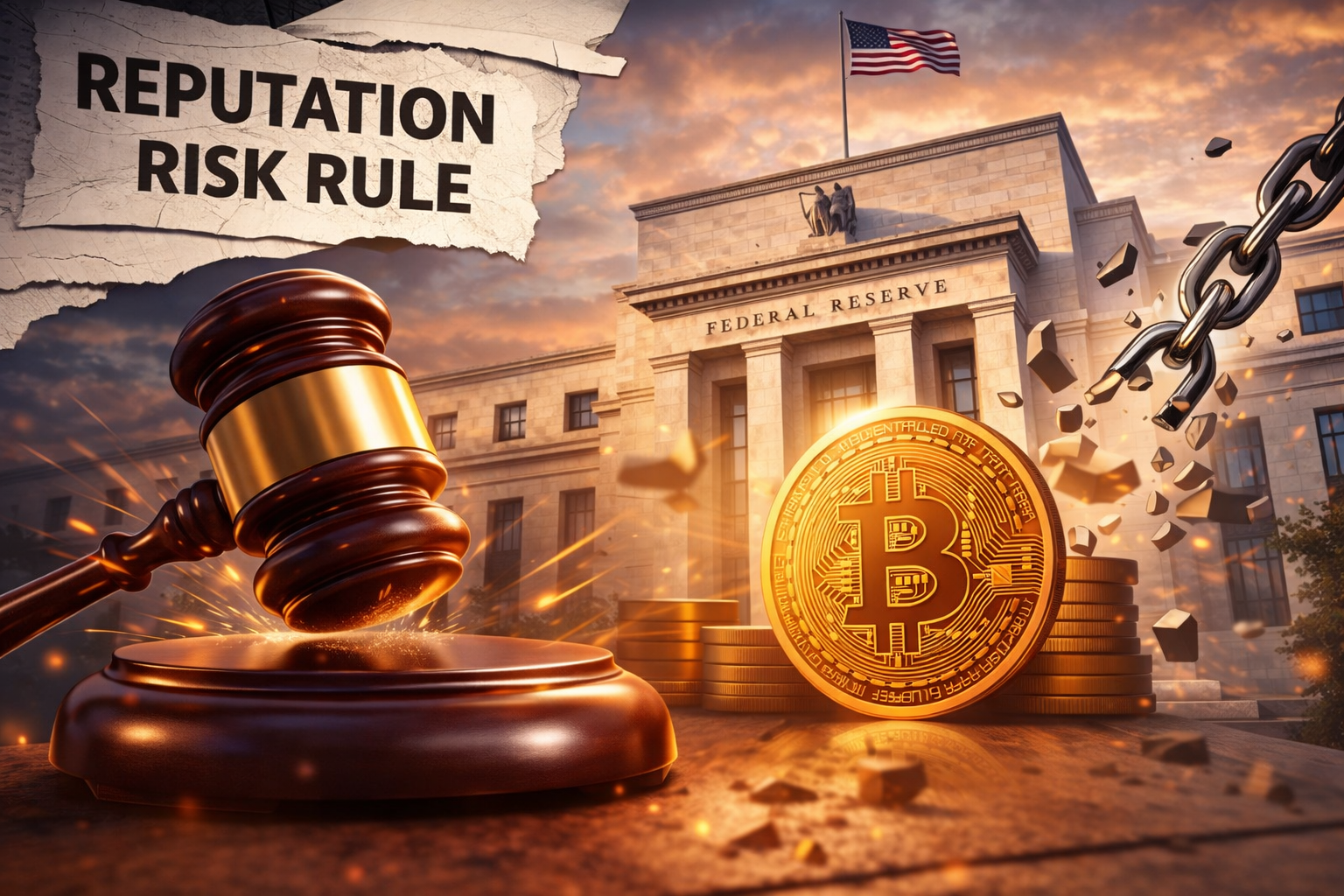
The Federal Reserve is moving to formally eliminate one of the most controversial supervisory tools in modern banking. This shift could even reopen the door for crypto firms that have been locked out of traditional finance. On February 23, the central bank proposed codifying its earlier decision to remove “reputation risk” from its bank examination framework.
The Fed’s reputation risk rule had previously allowed regulators to take into account public perception and even political sensitivities. This was when they were assessing whether banks should serve certain customers. Due to this, several cryptocurrency firms often found themselves on the wrong side of the judgment.
Vice Chair for Supervision Michelle Bowman acknowledged these concerns directly. She said,
“We have heard troubling cases of debanking—where supervisors use concerns about reputation risk to pressure financial institutions to debank customers because of their political views, religious beliefs, or involvement in disfavored but lawful businesses. Discrimination by financial institutions on these bases is unlawful and does not have a role in the Federal Reserve’s supervisory framework.”
The Federal Reserve’s proposal makes clear that supervisors should focus on measurable financial risks. Since 2022, a multitude of firms lost banking relationships after the downfall of Silvergate Bank and Signature Bank. Both had played a major role in providing crypto banking services. In addition, a 2024 report from venture firm Castle Island Ventures showed that crypto debanking increased during that period.
Also Read: Coinbase Stablecoin Revenue Could Surge 7x Under GENIUS Act, Bloomberg Reports

The removal of the Fed’s reputation risk rule could make it easier for crypto firms to regain stable banking access. Banks now have clearer cover to work with digital asset firms without worrying about regulatory backlash. This doesn’t mean crypto companies get a free pass.
Also Read: ING Report: Dollar Safe Haven Weakens as Trump Tariffs Hit Global Trade
The Fed emphasized that safety, soundness, and compliance expectations remain unchanged. In addition, banks are still expected to follow anti-money laundering rules and maintain strong compliance programs.
The cryptocurrency community has been arguing that this rule previously allowed regulators to discourage crypto activity without issuing formal banks. These concerns were even tied to Operation Chokepoint 2.0. This is a phrase used by the market to describe what they saw as coordinated pressure on banks to distance themselves from the industry.
Also Read: China Not Dumping US Treasuries: $170B Buying Spree Defies BRICS
For cryptocurrency firms, the latest change won’t fix everything at once. But it removes one of the barriers that made banking relationships difficult.