






Markets
April 6, 2026
Oil Hits $115, Kills the Gold Price & the Fed Cannot Help
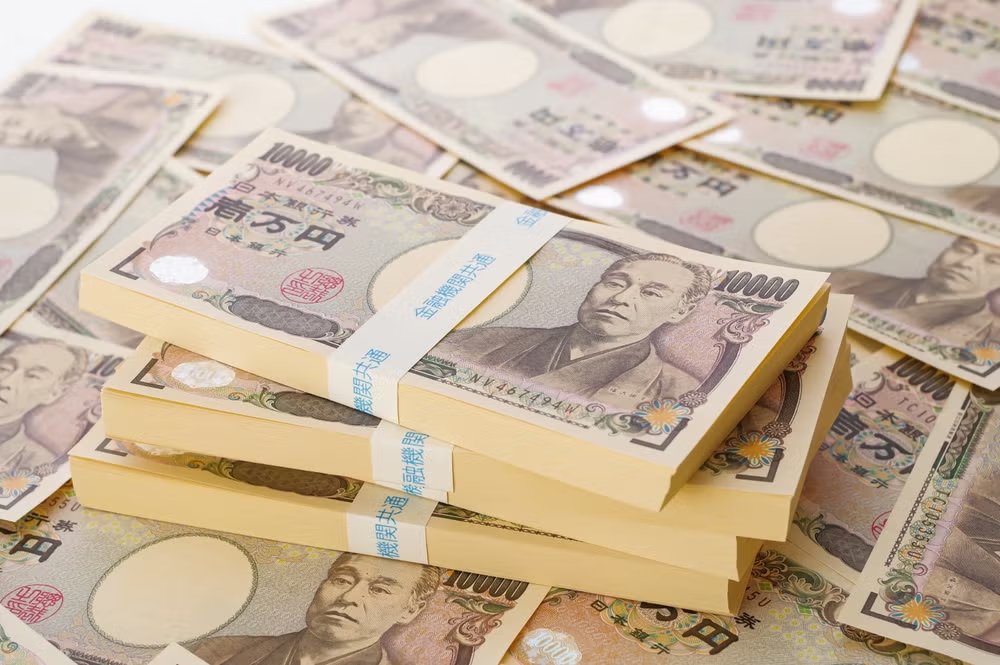
The Japanese yen is getting close to a level where Japan has stepped in before. At the same time, Japanese bond yields are at their highest in decades. The yen-dollar rate is now near 160. This is a level that both traders and policymakers are watching closely. Inflation is rising, and global conditions are shifting. This has prompted officials to warn markets as pressure builds on the currency.
Also Read: Oil at $115, a Tuesday Deadline and a Ceasefire That Almost Nobody Believes In
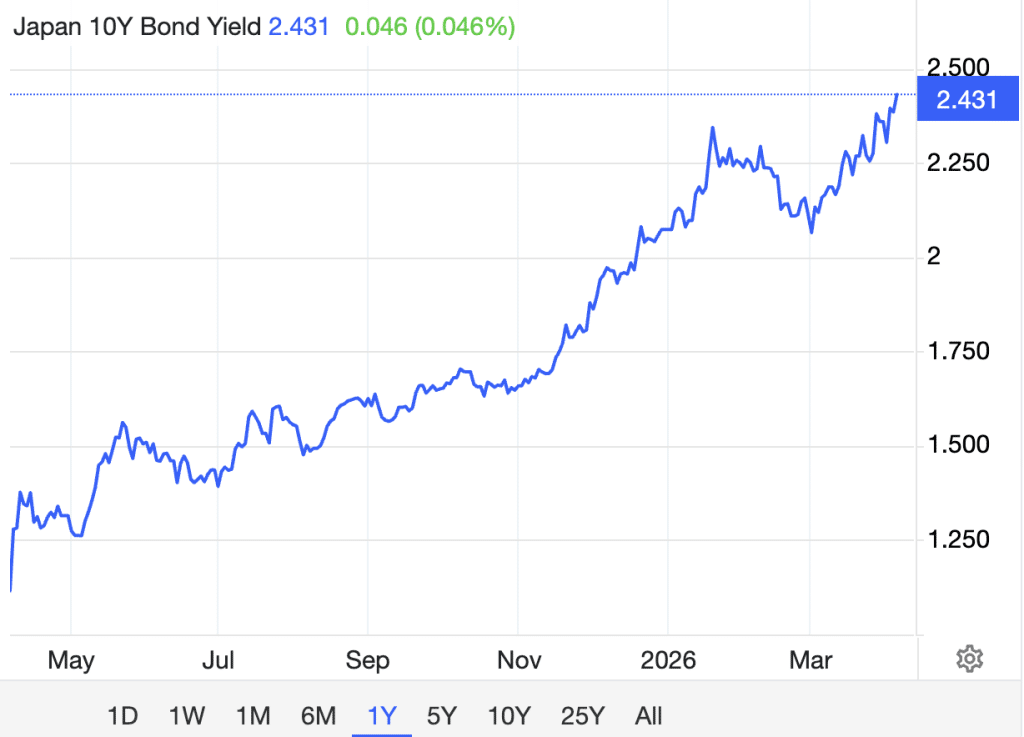
Japan’s 10-year government bond yield rose to around 2.4% on April 6. This is its highest level since February 1999. The latest move shows growing expectations that the Bank of Japan may need to continue tightening policy as inflation remains above its 2% target for over three years.
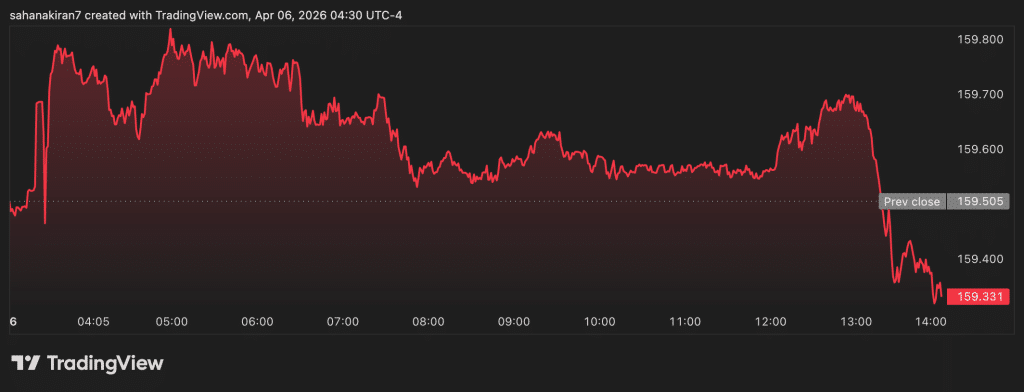
At the same time, the Japanese yen weakened to 159.33 per dollar. It is staying close to a 21-month low. According to reports, the currency has been under pressure as investors favor the dollar amid rising geopolitical risks and higher US yields.
Short bets against the yen are building up. They have now reached about $5.7 billion, the highest since July 2024. This was the last time that Japan stepped into the foreign exchange market. It spent a staggering $100 billion to hold the currency near the 160 level.
Finance Minister Satsuki Katayama recently said that the government is prepared to respond to excessive volatility and speculative moves. He seems to be trying to keep the option of yen intervention on the table.
Also Read: IMF & World Bank Spring Meetings to Tackle Global Debt and Growth
External factors are also adding to this. Oil prices have climbed above $110 per barrel amid tensions in the Middle East. This has, in turn, increased import costs for Japan. Reports noted that markets are viewing this situation through an inflation and interest rate lens, which is keeping the dollar strong. Charu Chanana, chief investment strategist at Saxo in Singapore, said,
“Investors are treating this as an oil-to-inflation-to-rates problem, which is why the dollar remains the cleanest haven for now, while gold, bonds, and yen have all looked far less reliable than in a normal geopolitical scare.”
Timing is becoming a key issue here. The next Bank of Japan meeting on April 27-28 could change expectations again. Acting too soon risks disrupting global carry trades. But waiting could see the yen dollar pair move past 160 with stronger momentum.
Markets have seen this before. In August 2024, a policy shift triggered a sharp sell-off in Japanese equities. This prompted Nikkei to fall in 12% in a single day.
For now, the yen remains under pressure. It is clearly caught up between rising Japanese bond yields and steady demand for the dollar. This has left policymakers with limited room to respond.
Also Read: Jet Fuel Restrictions Hit Bologna, Linate and Venice Airports