




Markets
March 27, 2026
Tesla stock is getting hit from multiple angles this week. HSBC cut its 12-month price target on TSLA to $119, keeping a Sell rating, which implies a 70% drop from the current price of $381. At the same time, Microsoft stock has fallen 33% from its October 2025 all-time high, now trading below its 200-day moving average by the widest margin since 2008. Two of the most widely held stocks in America are getting crushed simultaneously, and Wall Street’s advice on each could not be more different.
Also Read: Goldman Says Bitcoin Bottom Is In as Pension Funds Pour $13.8B Into Stocks
HSBC has been bearish on Tesla stock for over a year, pointing to brand damage in Europe and lost market share to Chinese rivals like BYD. Its latest note drops the HSBC Tesla price target from $133 to $119, with the Sell rating firmly in place.
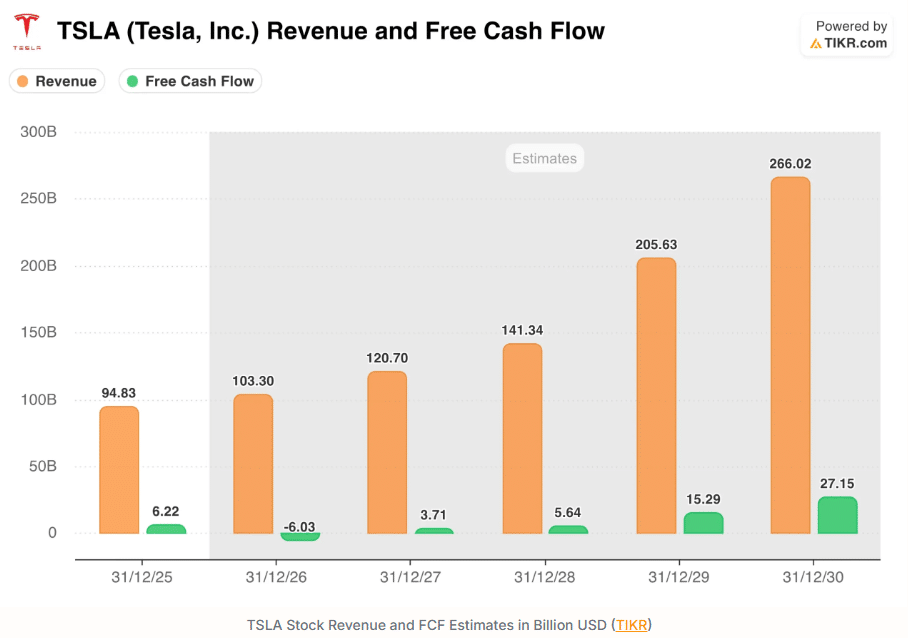
The timing landed one day after the NHTSA escalated its FSD investigation, covering 3.2 million vehicles across the Model S, X, 3, Y, and Cybertruck. The probe examines whether FSD can safely handle low-visibility conditions like fog and sun glare. In crashes reviewed by the agency, the system reportedly failed to detect deteriorating camera visibility before impact, with one incident involving a pedestrian fatality. Elon Musk has staked Tesla’s long-term valuation on FSD and robotaxis, making the NHTSA probe a direct hit on that thesis. Wall Street’s consensus on Tesla stock sits at Hold, with an average 12-month target of $422, while the HSBC Tesla price target of $119 sits at the far end of the range.
Also Read: Fannie Mae Opens Door to Bitcoin-Backed Mortgages Amid US Housing Crisis
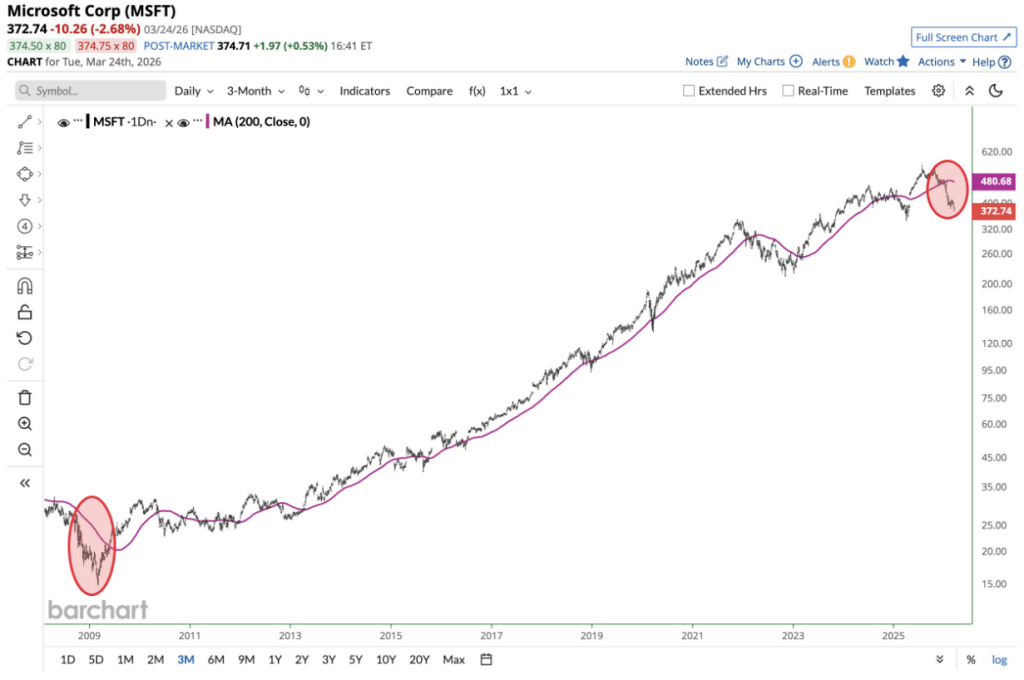
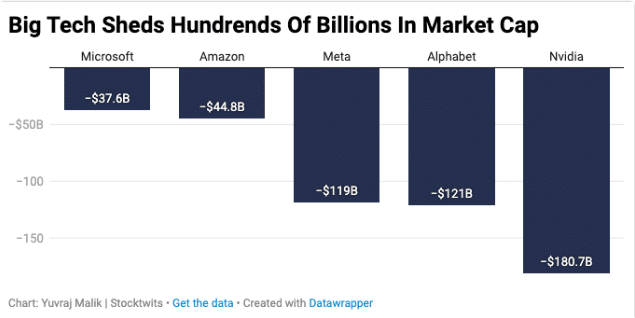
Microsoft stock in 2026 is now down 33% from its October record, the steepest drop among the Magnificent Seven. The gap between the current price and its 200-day moving average is the widest since the 2008 financial crisis, per Barchart. The Iran war, a frozen Fed, and a fraying OpenAI relationship have all hit MSFT at once.
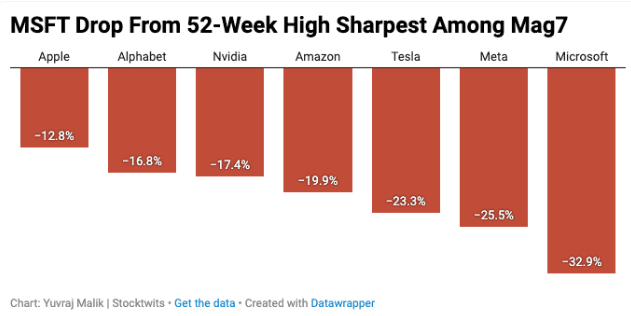
Among the Mag7, Microsoft stock has taken the hardest hit from its 52-week high, down 32.9%.
That divergence from the 200-day MA, now sitting at roughly 28%, has not been seen since the financial crisis peaked at around 51% in 2008.
Jurrien Timmer, Director of Global Macro at Fidelity Investments, had this to say:
“The Mag 7 notwithstanding, the AI playbook has not been materially impacted by the stress in the broader market. To me, this strongly suggests that the AI boom continues to be a boom.”
UBS cut its Microsoft price target to $510 from $600, keeping a Buy rating. Analyst Karl Kierstead stated:
“The narrative around M365 and Copilot needs to improve for the stock to re-rate higher.”
Bank of America resumed coverage with a Buy and $500 target, citing “durable multi-year growth” across cloud and AI. Currently, 54 out of 57 analysts covering Microsoft stock rate it a Buy, with an average target of $591.60, implying nearly 60% upside from current levels. For anyone tracking Big Tech losses this week, the TSLA stock forecast alongside MSFT contrast is about as stark as it gets.
Also Read: Swiss Banking Dynasty Splits as Son Builds Europe’s Best Bitcoin Treasury