





Markets
March 30, 2026
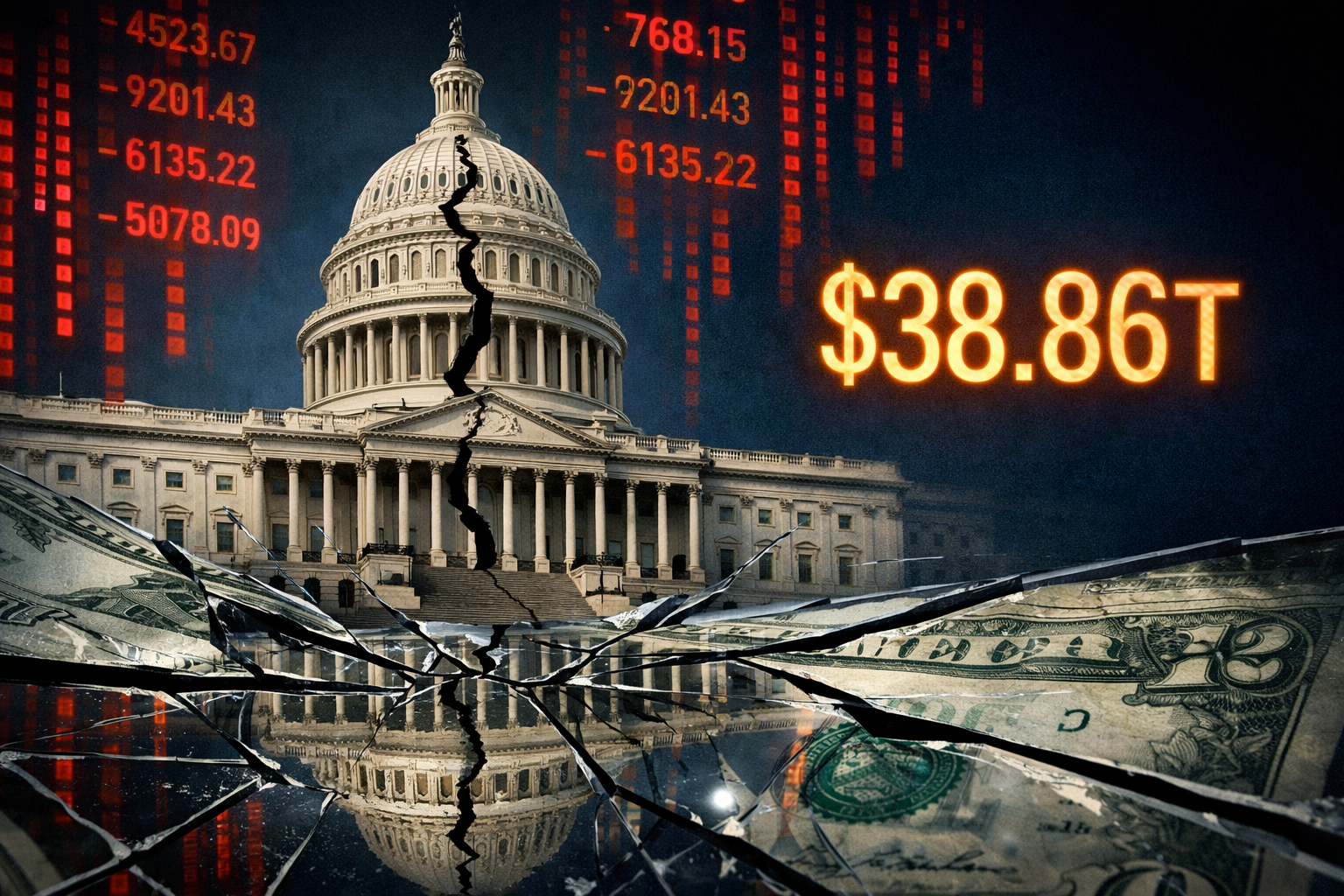
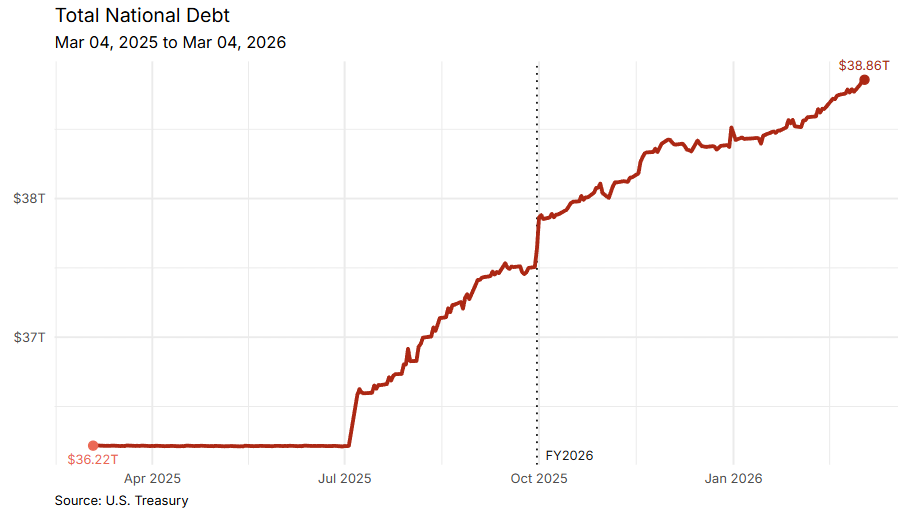
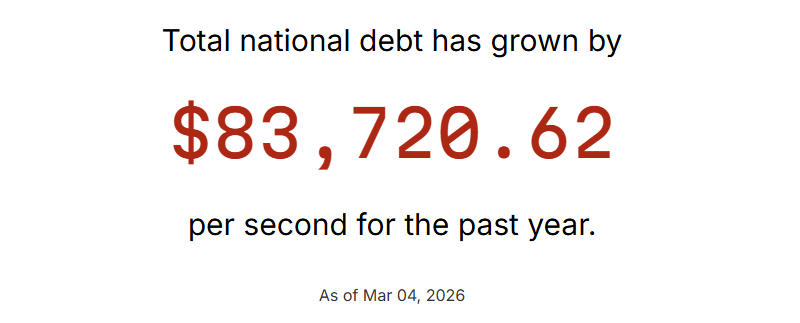
The US national debt has crossed 100% of GDP, and the pace of accumulation is unlike anything seen before. As of March 4, 2026, total gross national debt sits at $38.86 trillion, up $2.64 trillion year over year and $10.86 trillion higher than five years ago. That works out to $7.23 billion per day, $301.39 million per hour, and $83,720.62 per second.
The US debt to GDP ratio hitting this level matters because it is the threshold where crisis response capacity historically starts to shrink. With the federal deficit 2026 showing no signs of slowing, and US debt interest payments consuming a growing share of the budget, the inflation outlook US economists are tracking points toward sustained fiscal pressure.
Also Read: BRICS: India Says It Never Needed US ‘Permission’ to Buy Russian Oil
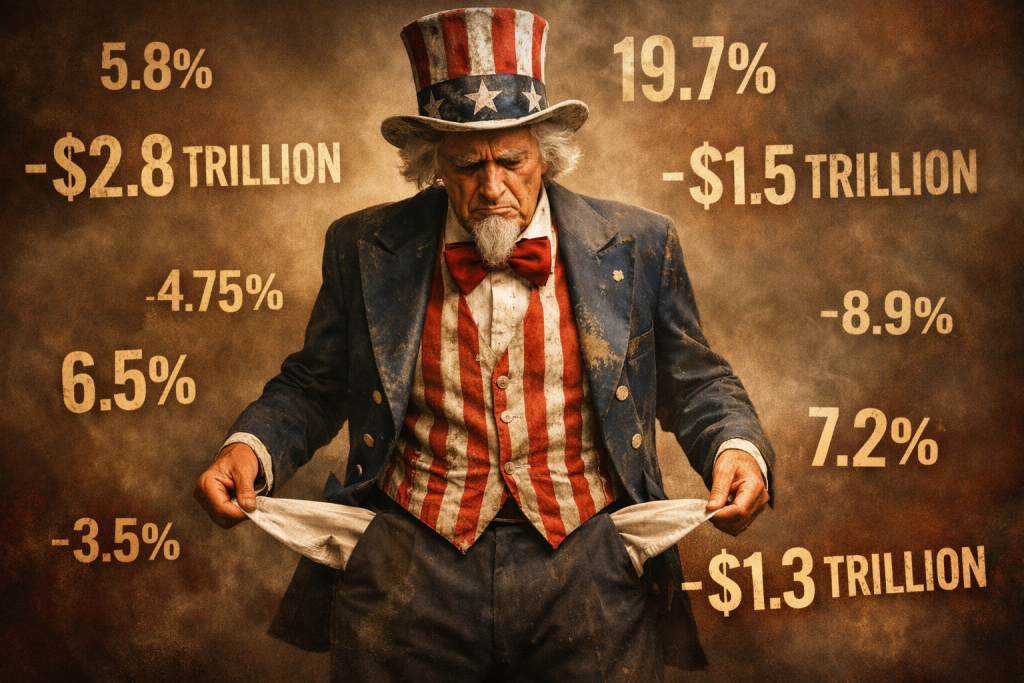
The Joint Economic Committee released its Monthly Debt Update on March 9, 2026, confirming that the US national debt reached $38.86 trillion as of March 4. The rate of increase averaged $7.23 billion per day over the past year, with the five-year increase now at $10.86 trillion.
The Committee for a Responsible Federal Budget has flagged the US debt to GDP ratio crossing 100% as a point where a “break glass” fiscal plan needs serious consideration, according to Fortune.
Also Read: Iran War Turbocharges De-Dollarization: America Pays $1 Billion a Day
US debt interest payments are now competing directly with discretionary spending, and that structural pressure forces the government to borrow more just to service existing obligations. The federal deficit 2026 trajectory, combined with elevated rates, is what makes the inflation outlook US analysts are watching so concerning. When debt rolls over at current rates and deficits keep widening, bringing inflation down sustainably becomes harder.
The US debt to GDP ratio sitting above 100% and the federal deficit 2026 still expanding means the fiscal buffer that once existed for economic shocks is essentially gone.
Also Read: Oil Swings $38 on Trump’s Iran War Signal as US Limits Russia Sanctions Relief