






Markets
April 3, 2026
Oil Just Hit $141 and the UN Lost Its Only Legal Path to Reopen Hormuz
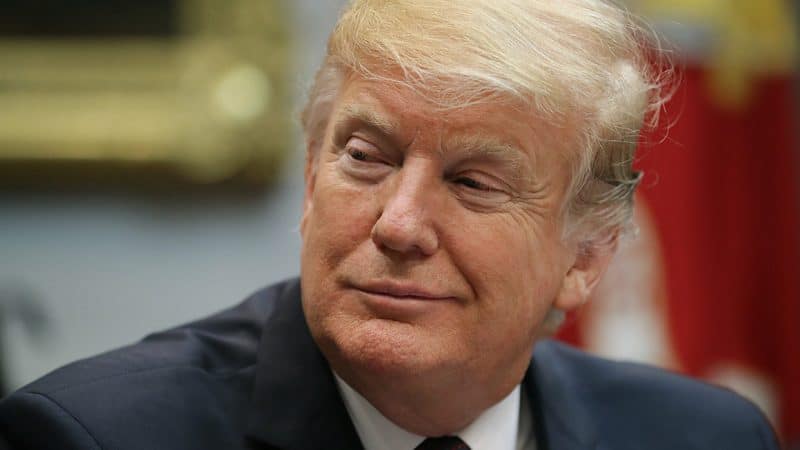
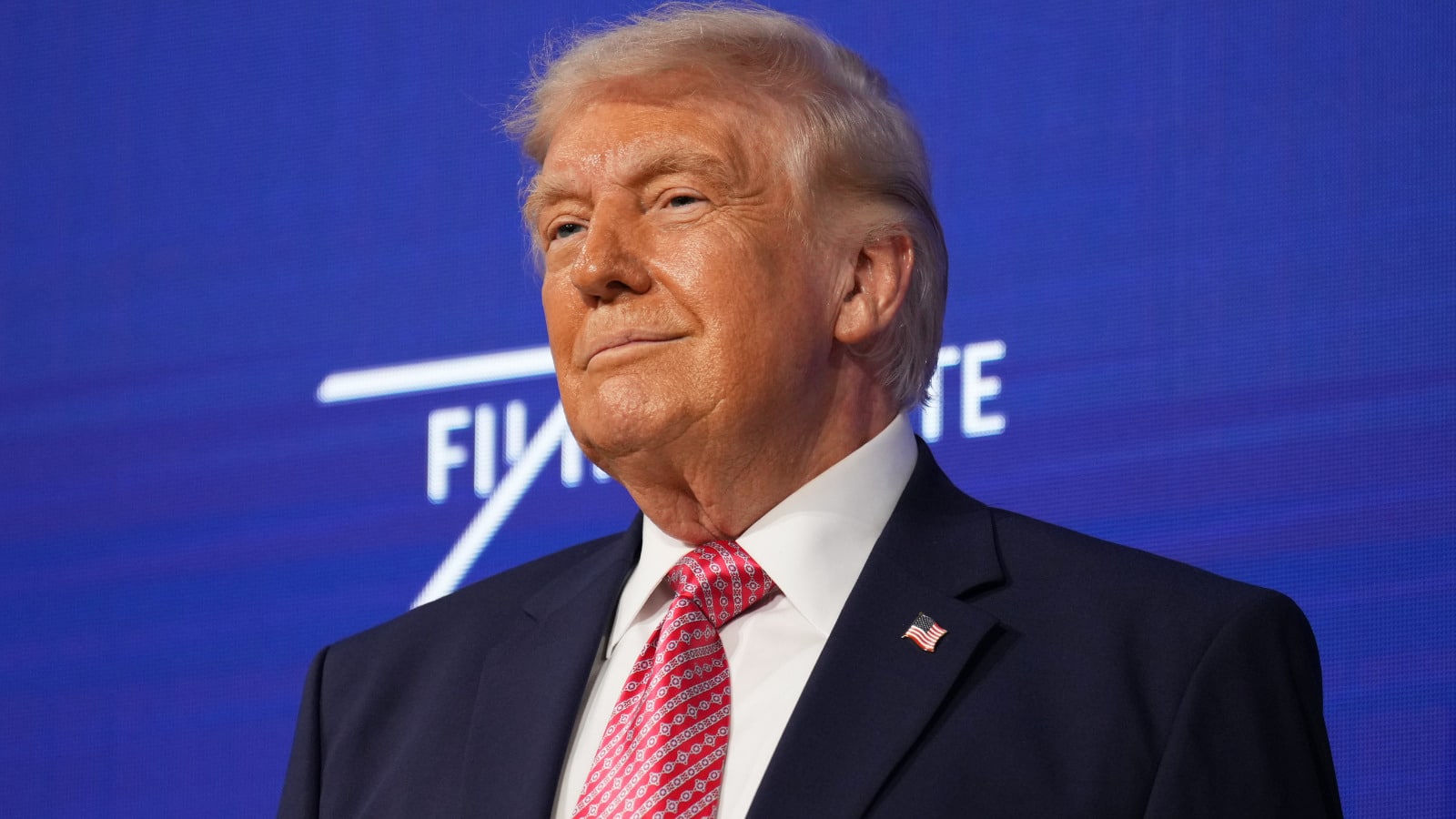
The US defense budget is set for a historic jump. President Donald Trump has proposed $1.5 trillion for fiscal 2027. The figure marks the largest year-over-year increase in military spending since World War II, according to the Committee for a Responsible Federal Budget (CRFB). The plan lands at a time when concerns around the federal deficit and long-term fiscal stability are no longer confined to economists. This week, those concerns were voiced directly by the Federal Reserve.
Also Read: SpaceX IPO Targets $2T While Anthropic Drops $400M on Biotech the Same Day
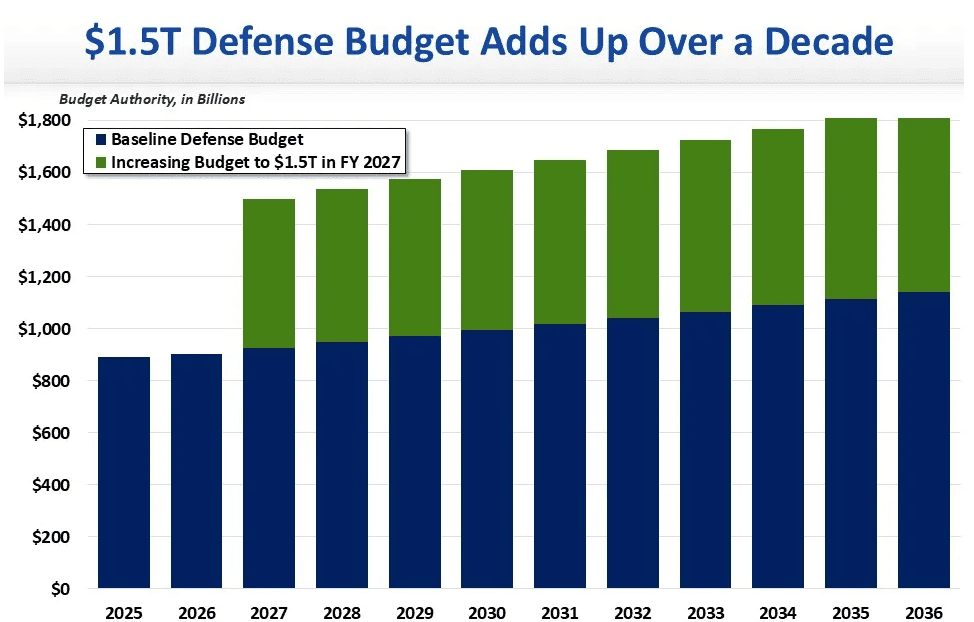
The proposal is structured as $1.15 trillion in base spending and an additional $350 billion through a reconciliation bill. The increase could push base defense spending past the $1 trillion mark for the first time. Funding is directed toward large-scale programs, including the Golden Dome missile defense system, F-35 fighter jets, and Virginia-class submarines.
CRFB estimates that increasing defense spending to this level would add about $5.8 trillion in total over the next 10 years. Once interest costs are included, that pushed the increase in the national debt to about $6.9 trillion. This comes at a time when the US national debt has already crossed $39 trillion.
Also Read: Oil Just Hit $141 and the UN Lost Its Only Legal Path to Reopen Hormuz
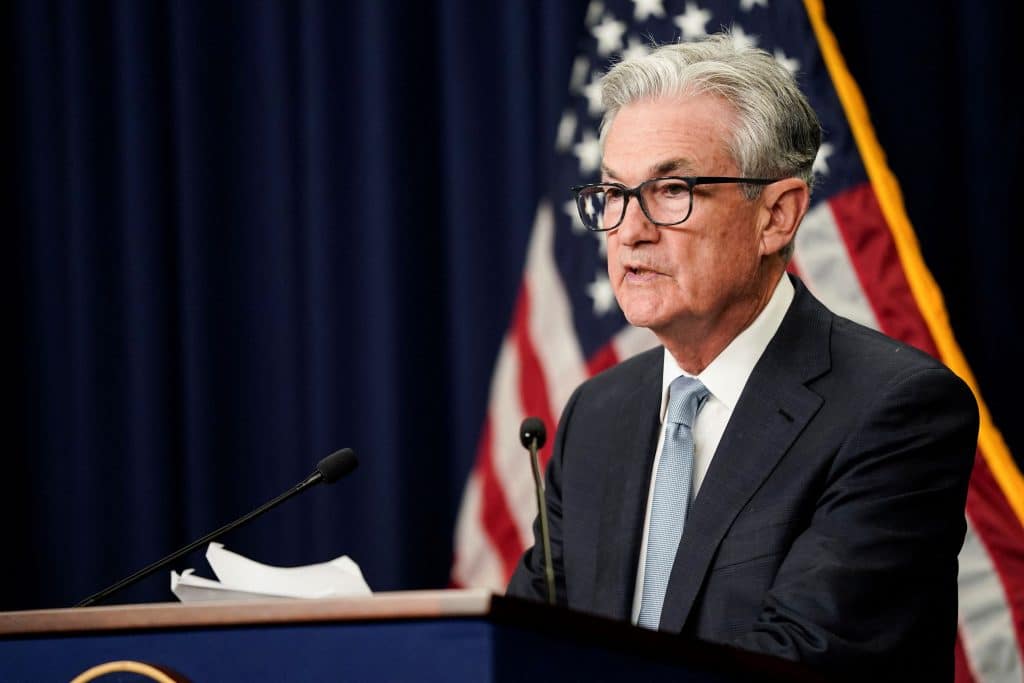
Federal Reserve Chairman Jerome Powell issued a debt warning this week. It was focused on how fast the debt is growing and not just how large it is. Speaking at Harvard, Powell said the current plan is “not sustainable.” He even added that “it will not end well if we don’t do something fairly soon.” Powell pointed out that federal debt is increasing faster than the economy, which is pushing long-term debt levels higher. He added,
“What’s clear is that our debt is growing much faster; the federal government debt is growing substantially faster than our economy. And that ratio is going up. And in the long run, that’s kind of the definition of unsustainable.”
Interest costs are a key pressure point. Net interest payments are projected to exceed $1 trillion in fiscal year 2026, up from $345 billion in 2020. In the first quarter of the current fiscal year alone, the US has already spent $270 billion on interest. This surpasses defense spending over the same period.
The Congressional Budget Office expects debt held by the public to rise from 101% of GDP to 120% by 2036 if current trends hold. This trajectory is further adding to growing concerns around the broader national debt crisis in the US government.
Amidst this, markets are starting to reflect some of that uncertainty. Bank of America’s Bull & Bear indicator fell from 8.4 to 7.4, moving out of “Extreme Bull” territory for the first time since February.
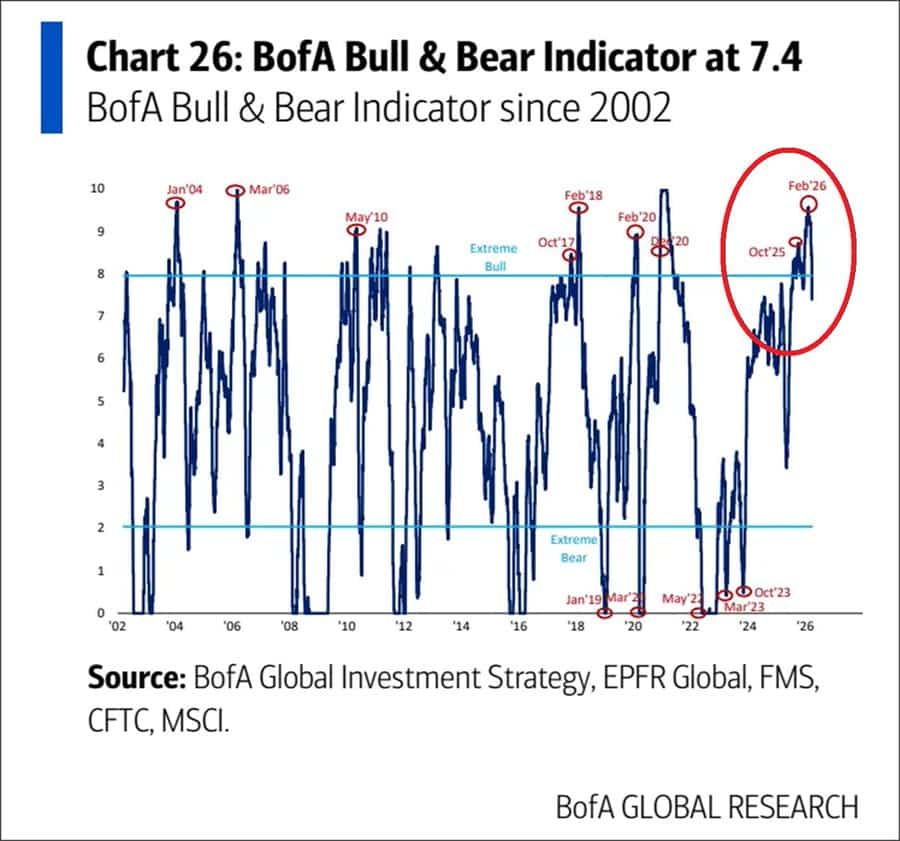
The timing here stands out. Trump’s higher military spending is moving forward even as policymakers issue more direct warnings about the fiscal path. For now, both are moving in opposite directions.
Also Read: Oil Surges and Gold Crashes as Trump Vows to Send Iran into the Stone Age