






Business
March 28, 2026
As the ripple effects of newly tightened US trade policies vibrate across international borders, a leading Bank of America analyst is convinced they’re reshaping the global economic landscape. The analyst, Michael Hartnett, stresses their increasingly central role in shaping market dynamics, alliances and long-term economic strategies.
Also Read: Coinbase Q4 Earnings Miss Sparks COIN Stock Sell-Off
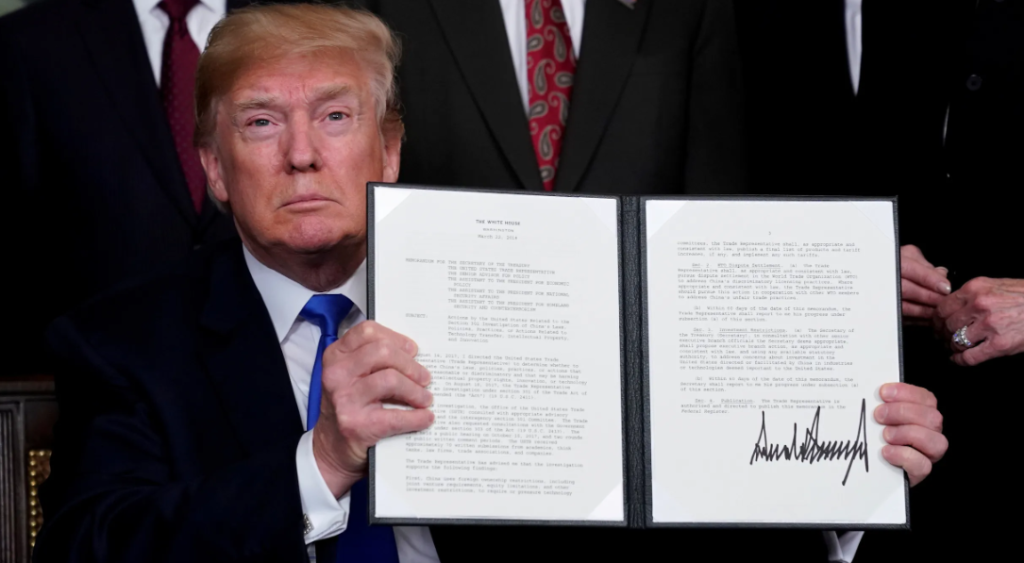
Since President Trump came into power, he has redefined the current era of trade. His tenure is marked by the largest US tax increase as a percent of GDP since 1993. These policy shifts have contributed to renewed trade frameworks and the readjustment of supply chains. Now, it is more than just tariffs; it is defined by the weaponization of economic ties.
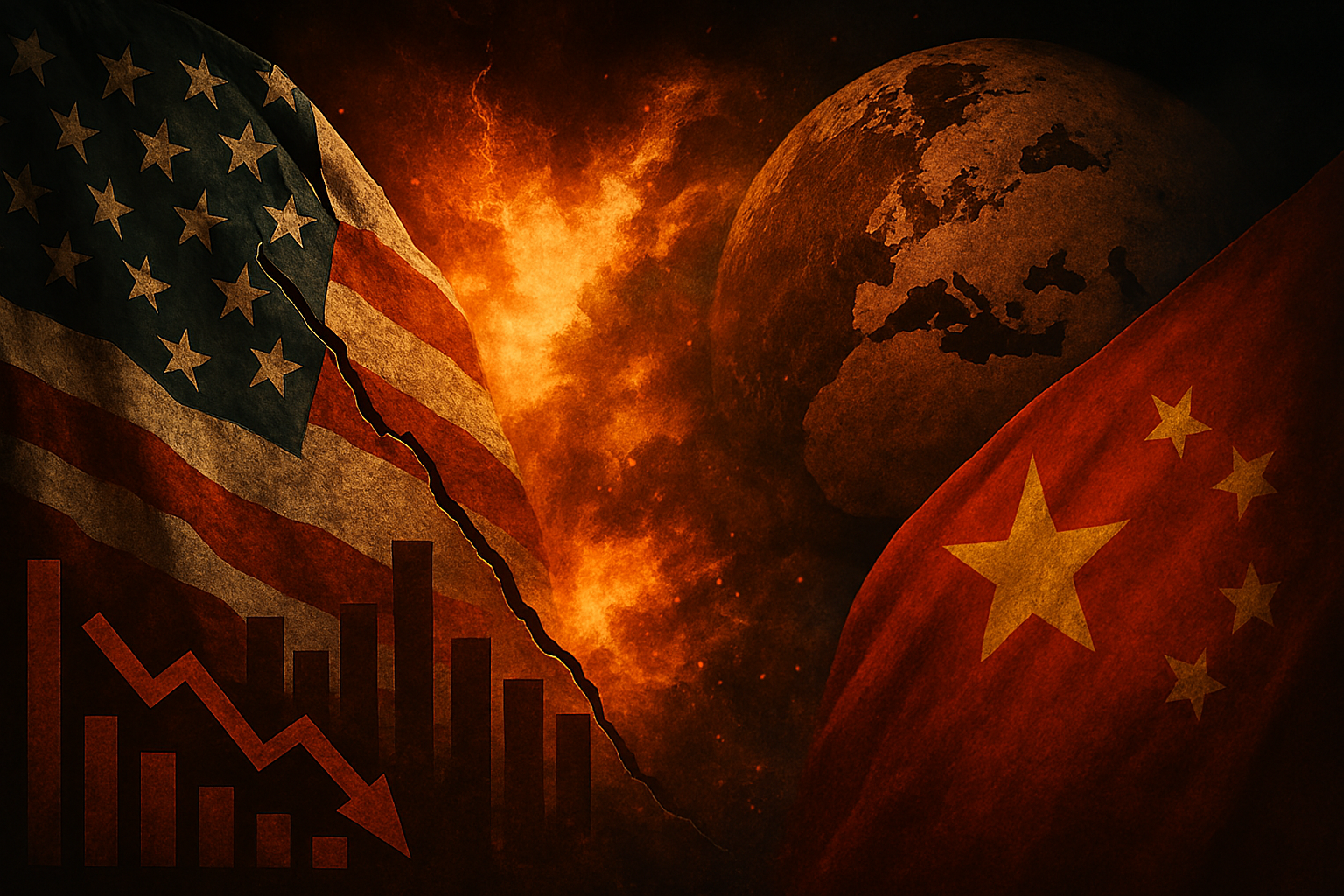
The Bank of America analyst notes that the latest US trade policies are increasingly focused on de-risking from rival economies, a move that is creating profound geopolitical shifts. And while some forecasts point to continued global expansion, trade-related uncertainties remain a headwind for growth projections outside the US, particularly in export-dependent economies.
Also Read: Cathie Wood Says U.S. Inflation at 0.8% Could Turn Negative
In the chart below, Chia’s export dependency on the US has significantly declined. In the same breath, China has also increased its exports to Asia.
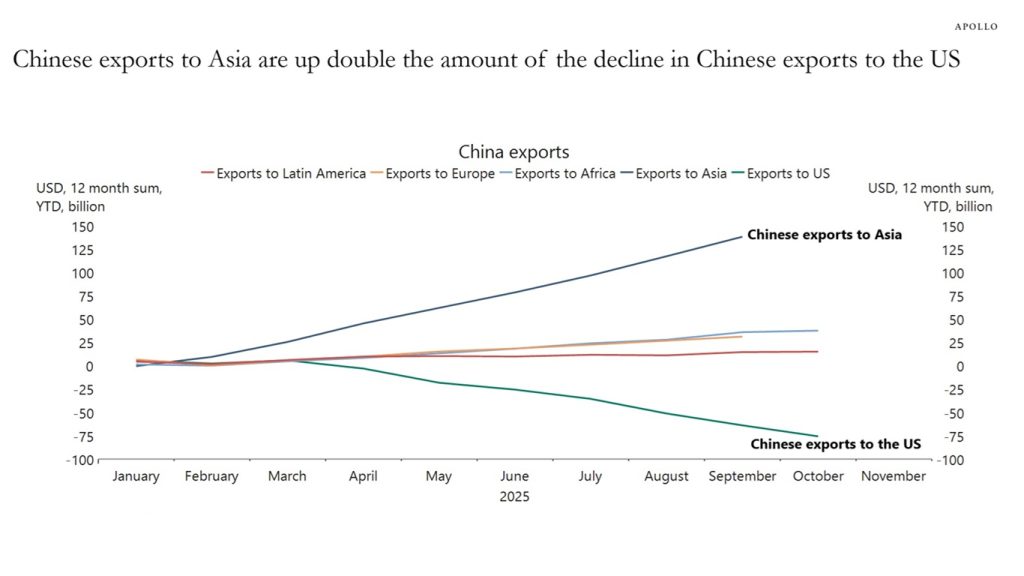
The global economic impact is two large economies becoming less vulnerable to each other, but still driving up global prices.
Others, on the other hand, feel that other economies have weathered the storm. Greg Fuzesi, chief euro area economist at J.P. Morgan, stated that:
“Western Europe has weathered the trade war surprisingly well over the past year and therefore it could be argued that the latest threats may also only have a relatively modest impact.“
As geopolitical shifts continue to accelerate, the divide between Western-aligned trade blocs and the rest of the world is widening. Analysts emphasize that the global economic impact of US trade policies extends beyond immediate tariff lines. Secondary markets in Southeast Asia and Latin America are stepping in to fill the vacuum.
Also Read: Bhutan Sells Another $6.7M in Bitcoin as Mining Plans Stall
Despite these protectionist maneuvers, the global economy remains surprisingly resilient. Experts project that total world trade in goods will keep its growth momentum.