







Business
March 31, 2026
SpaceX IPO Could Shut Out Robinhood as Morgan Stanley’s E*Trade Takes Control

The US Treasury is currently under the spotlight as it has completed a $14.7 billion debt repurchase. This is part of a broader US Treasury buyback operation that helps to manage outstanding government debt while supporting trading conditions in the market. According to the US Treasury Bureau of the Fiscal Service, the operation accepted $14.697 billion in Treasury securities out of the $40.9 billion offered. Along with this, maturities were seen ranging between April 2026 and February 2028. The buyback settled earlier today had a maximum purchase limit of $15 billion.
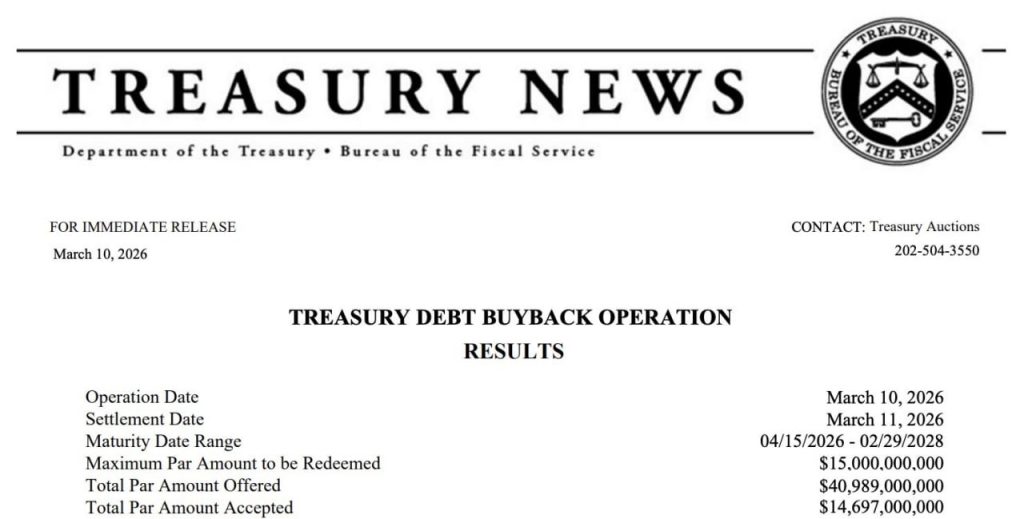
Treasury buybacks are used mostly to improve Treasury market liquidity. This allows the government to repurchase older bonds while issuing new ones through regular auctions. The strategy helps smooth trading conditions and maintain stability in the $25 trillion US government bond market. This is part of the Treasury’s debt management strategy.
Also Read: Oracle Stock Soars 10% on Its Strongest Q3 in Years After 84% Cloud Surge

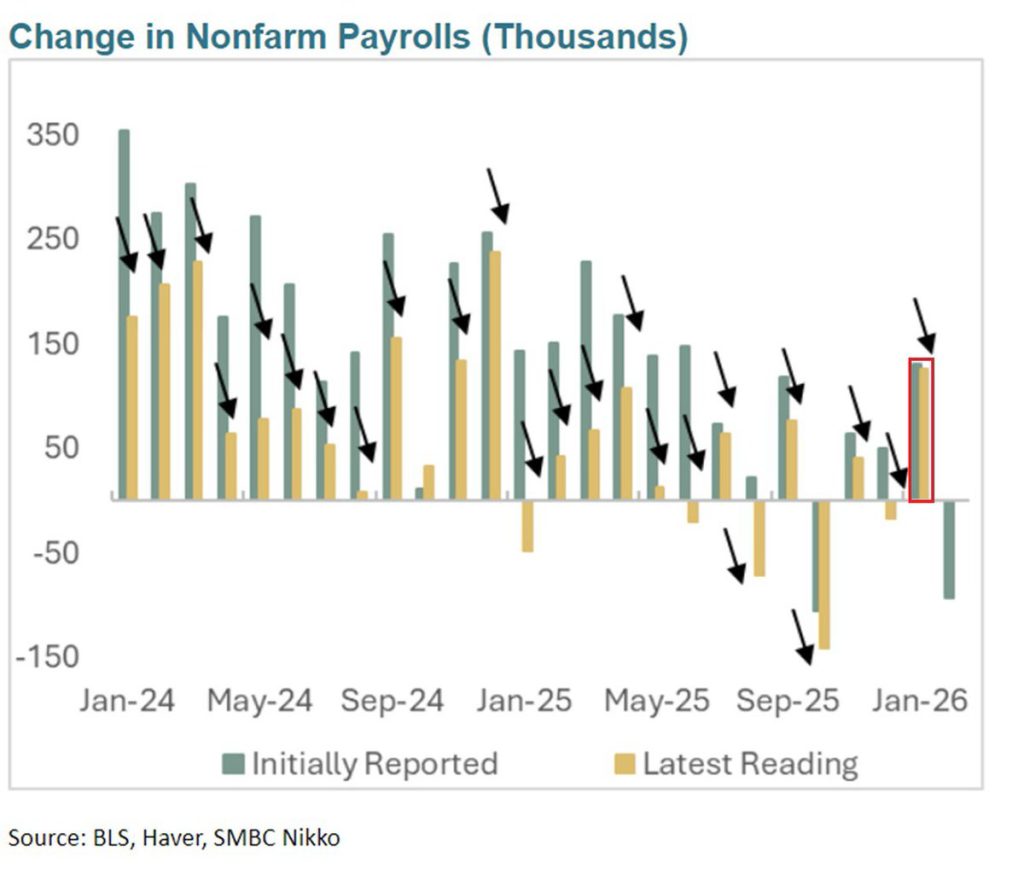
The buyback comes amidst the spotlight on US jobs revisions. Data from the Bureau of Labor Statistics shows employment estimates have been repeatedly adjusted downward over the past year. This is because complete payroll records are becoming available. In the latest revision, the agency reported that employment growth for the year through March was overstated by about 862,000 jobs in earlier estimates.
In addition, monthly updates also shifted the labor picture. December payrolls were initially reported as a gain of 48,000 jobs. But this was later revised to show a 17,000 decline. These adjustments are part of the government’s effort to improve labor market data accuracy as more employer reports are incorporated into the dataset. Repeated downward revisions are being viewed by some economists as potential economic slowdown signals.
Also Read: China Thrives as Energy Chaos Accelerates a Global De‑Dollarization Shift
It should be noted that investors now have their eyes on the market. When the government repurchases its own debt, cash flows back into the financial system. This can support Treasury market liquidity and overall financial conditions. Periods of stronger liquidity have time and again coincided with increased demand for risk assets such as equities and cryptocurrencies.
For that reason, some market participants see large buyback operations as a potential risk-on signal. This is particularly true in cryptocurrency markets that often respond to shifts in global liquidity.
Also Read: Trump Unveils $300B Texas Refinery by India’s Reliance, First US Plant in 50 Years