









Business
March 25, 2026
Chainlink’s cross-border settlement reached a major milestone under Hong Kong’s e-HKD pilot. Visa, ANZ, ChinaAMC, and Fidelity International completed a regulated solution that moves tokenized assets across chains with automated compliance and atomic settlement, all within the HKMA’s regulatory framework. It is the first time institutional blockchain infrastructure of this kind has been demonstrated at this scale, with real institutions and real regulatory backing.
Also Read: Morgan Stanley Cuts 2,500 Jobs in a Signal Investors Shouldn’t Ignore
The architecture connects ANZ’s private DASChain to the public Ethereum Sepolia network. Chainlink CCIP handles secure messaging and value transfer of e-HKD across both environments, enabling Payment vs. Payment and Delivery vs. Payment transactions. Settlement is atomic, so neither leg completes without the other.
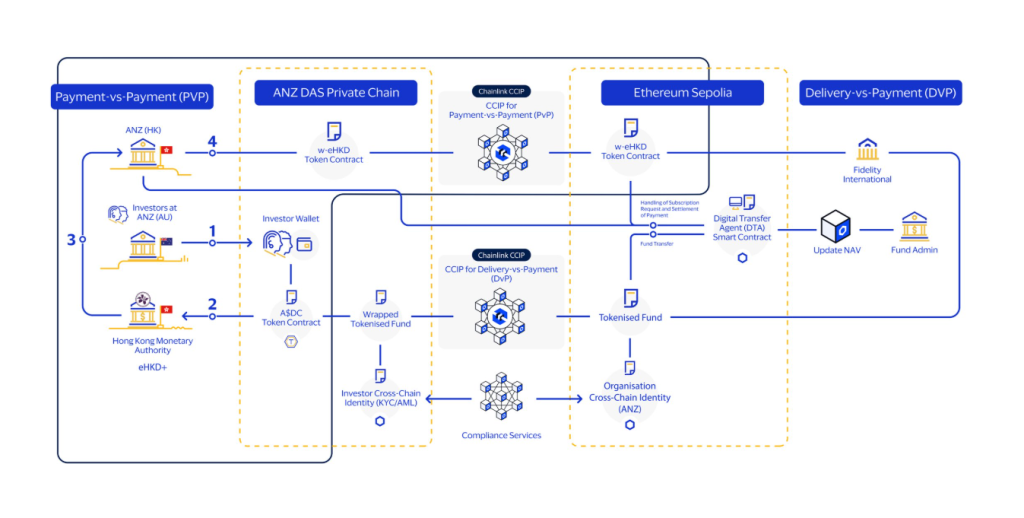
Three components power the Chainlink cross-border settlement stack. The Digital Transfer Agent automates tokenized fund unit issuance and fetches onchain NAV data for near-real-time settlement. Chainlink CCIP moves e-HKD securely across chains and jurisdictions. The Automated Compliance Engine verifies KYC and AML credentials in real time, keeping personal data offchain while embedding compliance directly into each transfer.
Cross-border settlement has historically been slow, expensive, and fragmented. Correspondent banking also adds settlement risk and cost, and no single platform had combined data, interoperability, and compliance in one place for institutional blockchain use. Chainlink solves all of that within a single infrastructure, and the e-HKD pilot proves it works inside an actual regulatory perimeter.
Also Read: IRS Refund Delays 2026: Why Refunds Are Late and “Where’s My Refund” Isn’t Updating