







Markets
April 11, 2026
VIX Drops to Pre-War Levels Following Iran Ceasefire
Wall Street anticipates the Goldman Sachs Q1 Earnings release on Monday morning as a major financial catalyst. The firm expects to benefit from a robust investment banking recovery and heightened trading volatility. With revenue estimates hitting $17 billion, the bank aims to prove its “back to basics” strategy works. This performance update provides essential data on how high interest rates and geopolitical tensions are currently shaping the global banking landscape.
Also Read: VIX Drops to Pre-War Levels Following Iran Ceasefire
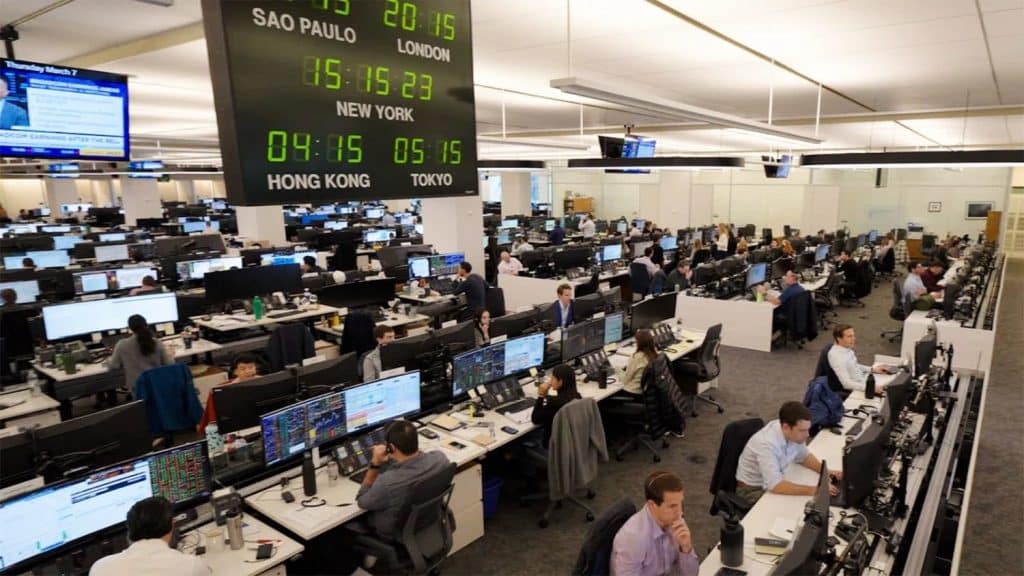
Analysts anticipate that the Goldman Sachs Q1 Earnings will demonstrate significant resilience in a shifting economic landscape. The bank targets a consensus EPS of $16.48, signalling a potential double-digit profit surge. Market participants are closely watching for a robust investment banking recovery to drive these results forward. Stronger merger advisory fees and debt underwriting activity likely bolstered the firm’s bottom line this quarter.
This report serves as a definitive Wall Street forecast for the health of institutional finance. Investors want to see if high-interest rates continue to support net interest income margins effectively. Furthermore, current financial sector trends suggest that trading desks benefited from recent global market volatility. Such performance would validate the strategic shift toward core wealth and asset management operations.
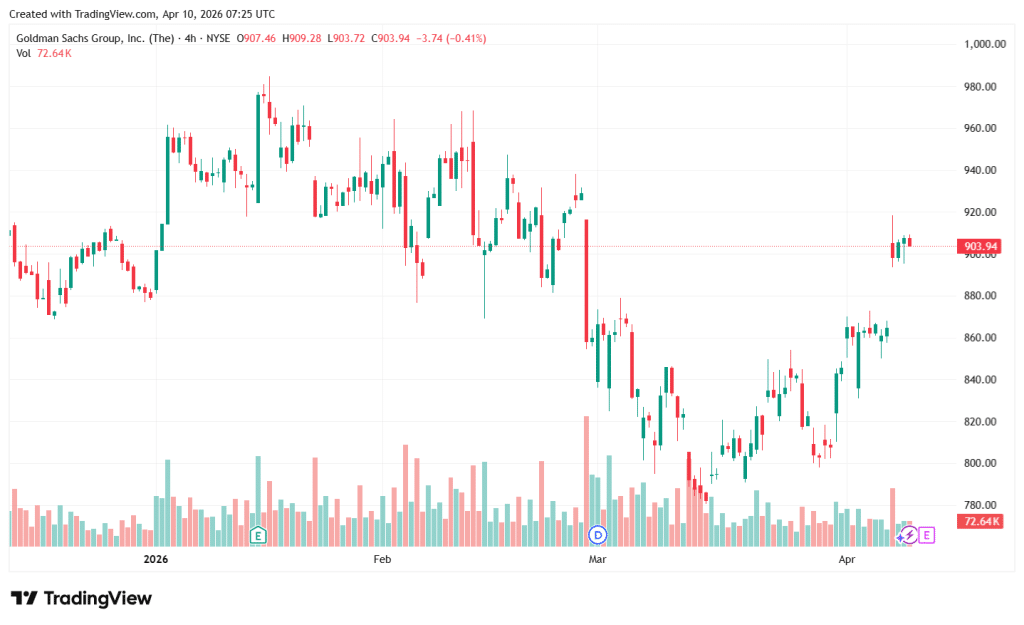
A positive bank stock analysis depends on whether the firm meets these elevated revenue expectations. Consequently, the Monday morning release will set the tone for the entire banking industry’s performance. Shareholders remain focused on the firm’s ability to maintain high returns on equity despite geopolitical risks.
Also Read: Morgan Stanley Bitcoin ETF Launch Pushes BTC Price Above $73,000
Global deal-making has finally accelerated after a prolonged period of stagnation. This investment banking recovery is evident as major players like JPMorgan Chase and Morgan Stanley report fuller pipelines. Higher equity valuations have encouraged CEOs to resume large-scale mergers and acquisitions. Consequently, this shift provides a more optimistic Wall Street forecast for the upcoming fiscal year.
Other institutions are also benefiting from financial sector trends favoring debt issuance and public offerings. These competitors see a resurgence in IPO activity, which directly supports higher advisory fee income. Such broad industry growth makes a bullish bank stock analysis more common among institutional investors.
Furthermore, the strength of the Goldman Sachs Q1 Earnings will likely confirm if this rebound is sustainable. Global markets now look toward these top-tier firms to lead the way in cross-border transactions. This collective momentum suggests that the capital markets slowdown is officially ending.
Also Read: China and Japan Inflation Pick Up as Iran War Drives Energy Costs Higher