







Markets
July 12, 2026
US Inflation Data Expected at 4.2% YoY as CPI Hits Tuesday
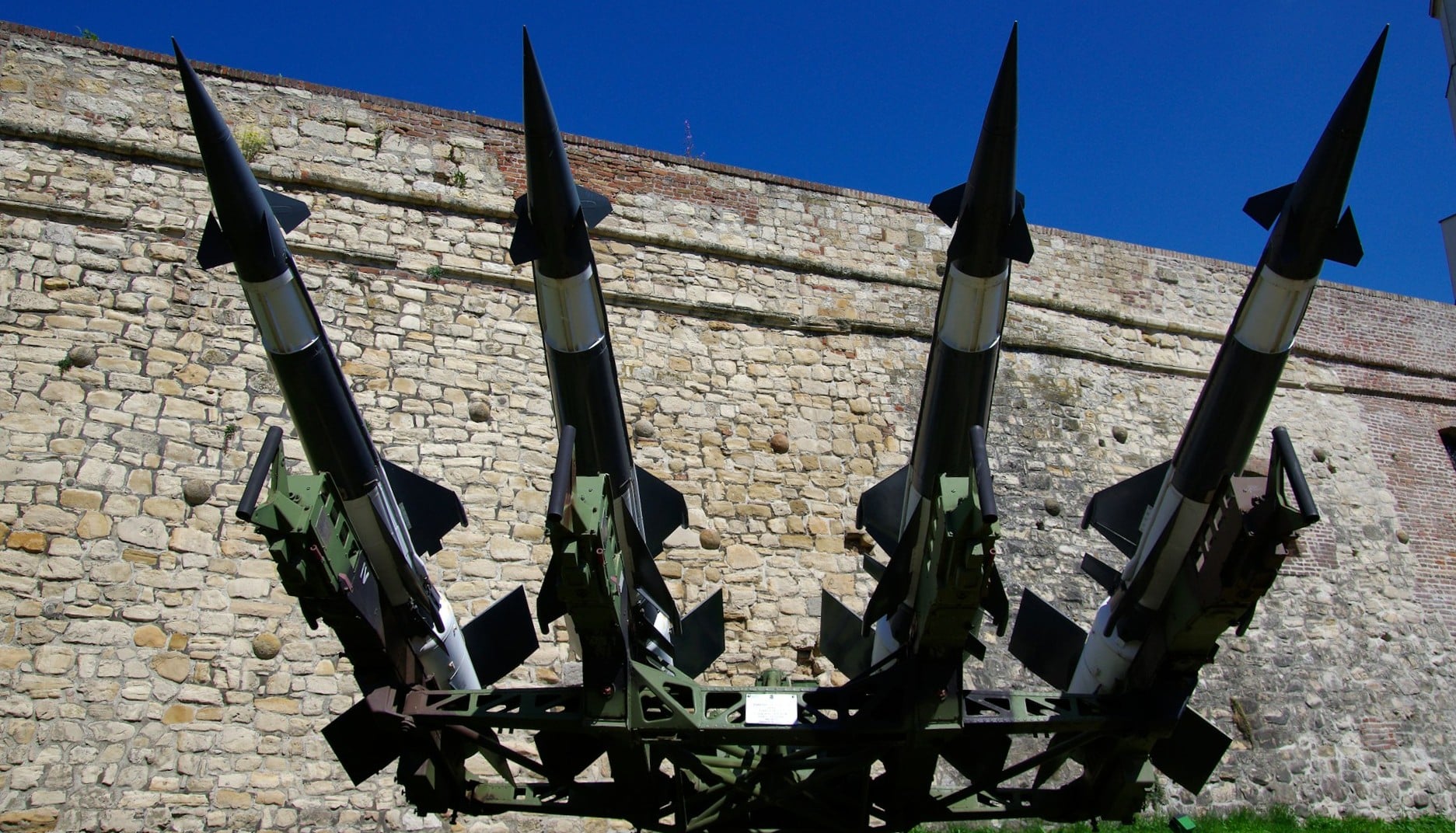
In a significant shift in the global defense landscape, Europe has emerged as the world’s largest arms importer. According to a SIPRI 2026 report on global arms flow, arms imports in Europe have increased by 210% between 2016-20 and 2021-25. Europe is now responsible for 33% of the global arms imports.
The surge in Europe arms imports 2026 reflects a European rearmament sentiment, amid fears of the Russia-Ukraine war and other global conflicts. The global arms imports rose by almost 9.2% between 2016-20 and 2021-25.
Apart from the European region, countries across the globe increased their arms imports. China didn’t make it into the top 10 arms importers for the first time since 1991-95, as the country now focuses on domestic arms production.
Also Read: Oracle Stock Soars 10% on Its Strongest Q3 in Years After 84% Cloud Surge
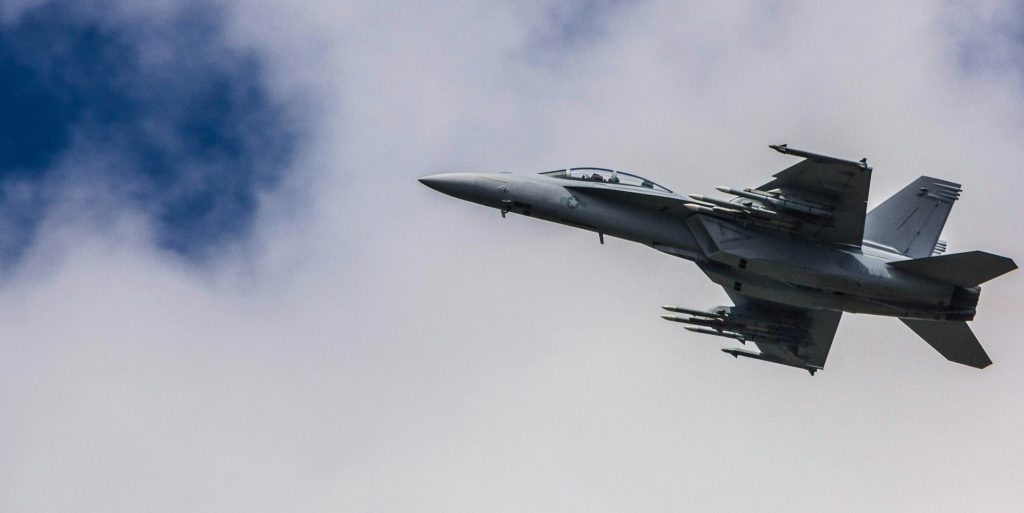
The US remains the largest supplier, forming 48% of the arms imports to Europe, while countries like France and Germany also play key roles.
Talking about European arms imports in 2026, Mathew George, Director of the SIPRI Arms Transfers Programme, said,
“While tensions and conflicts in Asia and Oceania and the Middle East continue to drive large-scale arms imports, the sharp increase in arms flows to European states pushed global arms transfers up almost 10 per cent.”
George then highlighted the factors behind the surge. He added,
“Deliveries to Ukraine since 2022 are the most obvious factor, but most other European states have also started importing significantly more arms to shore up their military capabilities against a perceived growing threat from Russia.”
The surge in arms imports and exports has reached the Cold War-era military spending levels, after falling significantly in the past few decades.
Additionally, the import surge is also influencing European defense stocks. With France and Germany emerging as key exporters in the regions, investors are now looking at defense stocks with a more positive outlook, expecting better returns in the long term.
If the trade keeps up, European defense stock prices may rise. Defense stocks currently in the news are:
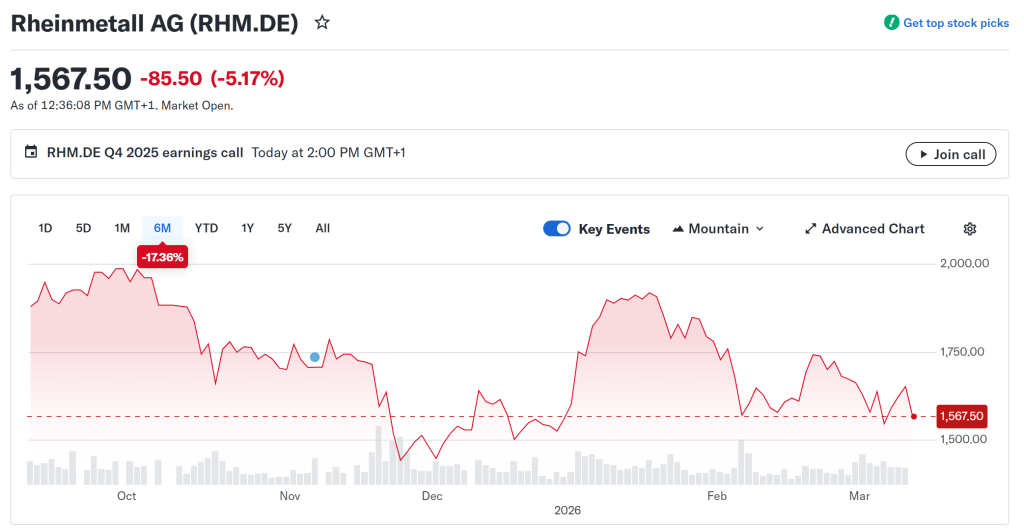
Rheinmetall AG (RHM.DE), a German arms manufacturer, currently trades at 1,565.00 EUR. The stock has fallen by 17.36% in the past six months, but over the past year, the stock price has increased by 34.66%. According to a report in WSJ, Rheinmetall expects sales to increase by 45% this year, reaching 14.5 billion EUR.
The company’s anti-missile and drone systems have been deployed in the US-Israel-Iran war, with it receiving orders for more. The 1-year Target Est for Rheinmetall AG is 2,127.25 EUR
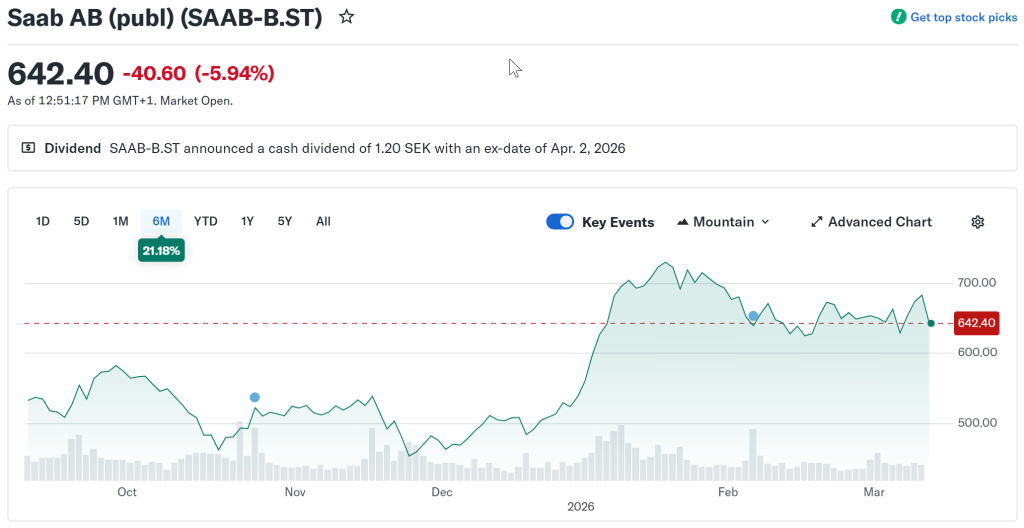
Saab AB (SAAB-B.ST), a Swedish aerospace and defence company, currently trades at 641.70 SEK, up 21.18% in the past six months and 68.34% in the past year. With a total intraday market cap of 348.101B SEK, the defence manufacturer’s 1-year Target Est sits at 604.45 SEK.
In Q4 FY25, Saab AB reported revenue of 27.7 billion, while its earnings stood at 2.56 billion. The company, with a 9.8% profit margin, also recently announced a cash dividend of 1.20 SEK.
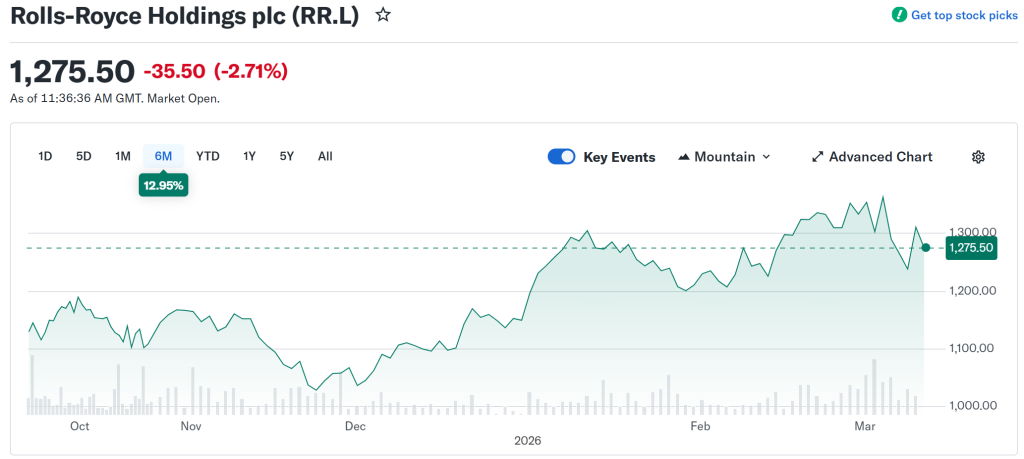
Rolls-Royce Holdings PLC (RR.L), a British-based aerospace and defence company, was incorporated in 2011 and has Rolls-Royce Power Systems as one of its subsidiaries. The stock is currently trading at 1,269.94 GBp, 12.95% over the past six months and 69.79% over the past year.
In 2025, Rolls-Royce Holdings PLC’s revenue stood at 20.06 billion, while earnings were reported to be 2.76 billion. Although RR.L has witnessed volatility in the past few months, the 1-year Target Est of 1,395.06 GBp suggests a strong foundation. Looking at the analysts, they are leaning towards Strong Buy and Buy.
Also Read: China Thrives as Energy Chaos Accelerates a Global De‑Dollarization Shift
Beyond Europe, countries like Japan, Taiwan, and Pakistan increased their arms imports by over 50%. On the other hand, Australia, India, and South Korea reported a decline. The Middle East also saw a 13% fall in arms imports between 2016-20 and 2021-25.

Written by Ali Alvi Kazim