


Business
September 13, 2026
Revolut KYC Data Breach Leaks Names, Passport Photos, and Crypto Histories to Online Attackers

The rising conflict in the Middle East is beginning to ripple through global energy markets. Several markets reacted quickly as the conflict threatened production across key Middle Eastern firms and even disrupted flows through major shipping routes. But this is not just limited to immediate supply concerns. Discussions around global de-dollarization have continued to gain steam. The combination of sanctions, geopolitical rivalry, and changing trade routes is slowly testing the dominance of the US dollar in one of the world’s most important sectors, which is oil.
Also Read: BlackRock ETHB Ethereum ETF Offers Real Yield Without DeFi Risk

Western sanctions following the Ukraine war pushed Moscow out of its traditional European markets. Russia was forced to reorient its oil trade toward Asia. China and India quickly emerged as the main buyers. According to reports, this duo accounted for about 80% of Russia’s crude exports.
The shift, however, hasn’t fully protected Moscow from sanctions. Russia earned about $9.5 billion from oil exports in February. This is down $1.5 billion from January and the lowest since the Ukraine war began. Export volumes also slipped to 6.6 million barrels a day. Despite this, global supply shocks like the current conflict can push buyers toward Russian barrels when markets tighten.
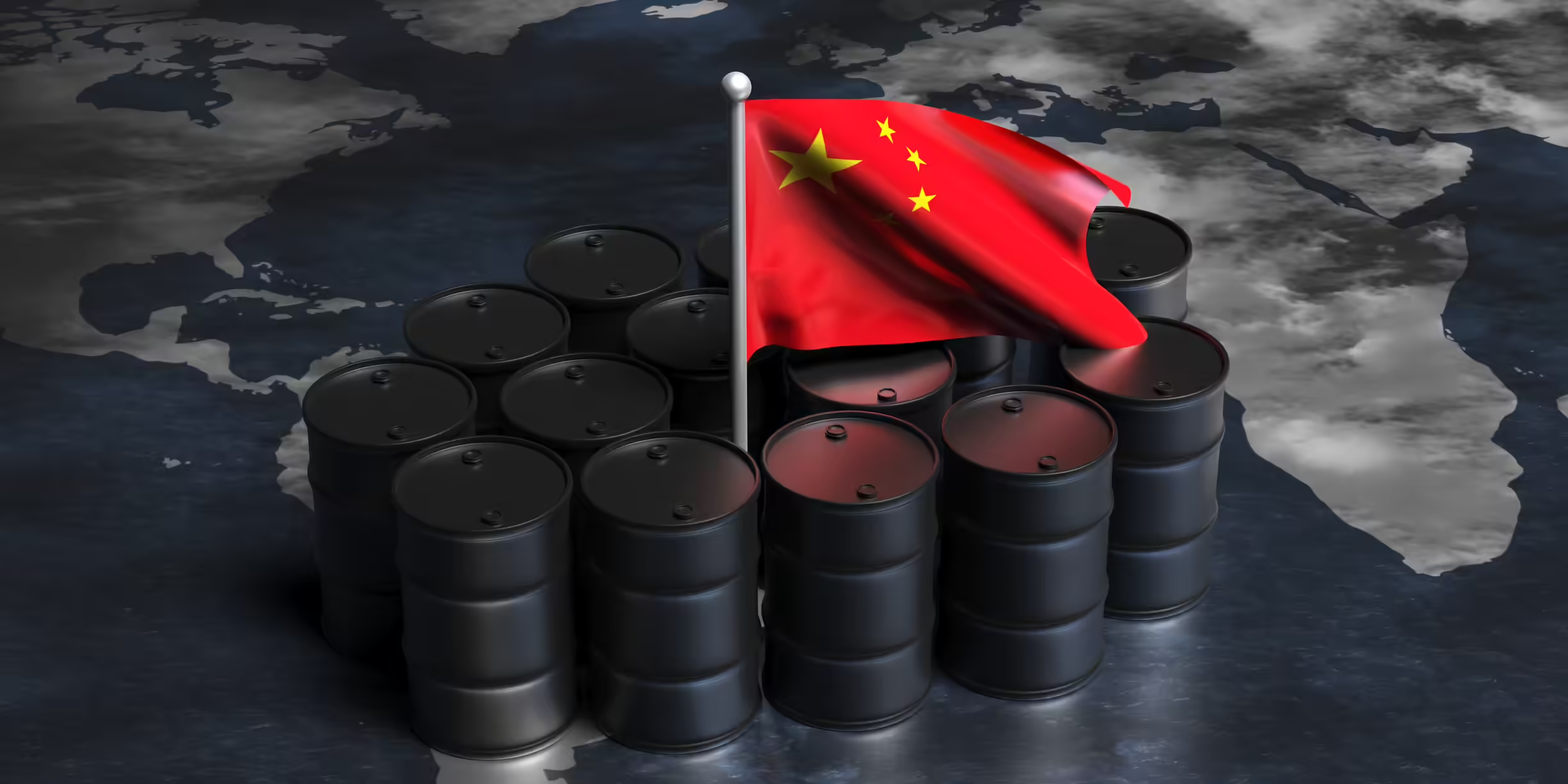
The International Energy Agency notes that China and India are expected to drive the majority of global oil demand growth in the coming years. As China and India’s oil demand continue to rise, Asia’s influence over global energy pricing, trade routes, and payment systems is likely to increase. This will further contribute to a notable energy market shift.
Also Read: India in Talks With Iran on Safe Passage for More Than 20 Tankers
This change in buyers has also begun impacting how some oil transactions are settled. Sanctions pushed Russian exporters to experiment with payments in yuan or other local currencies instead of the dollar. In several cases, Asian refiners purchasing Russian crude have used alternative settlement and not the traditional dollar-based system. These adjustments, even though they are limited, are viewed as visible signs of global de-dollarization.
The latest disruption in the Strait of Hormuz has also prompted several to highlight Russia’s advantage. One X user tweeted,
None of this means the world is witnessing an immediate US dollar decline. The currency continues to remain at the center of global finance. It still dominates reserves and commodity trading. But the oil market is undergoing major changes. Sanctions, geopolitical tensions, and the shift of energy demand toward Asia are slowly pushing transactions into other currencies.
Also Read: Elon Musk’s Macrohard Tesla xAI Aims to Replace Entire Software Companies

Written by Sahana Kiran
Sahana Kiran has been covering financial markets since 2019, with a focus on cryptocurrencies, fintech, and the geopolitical events shaping them. She previously reported for AmbCrypto and Watcher Guru, and now writes for BlockNow.


