

Stocks
September 11, 2026
Uber Stock Insiders Buy $15.3M, Is Tesla Robotaxi Fear Overdone?
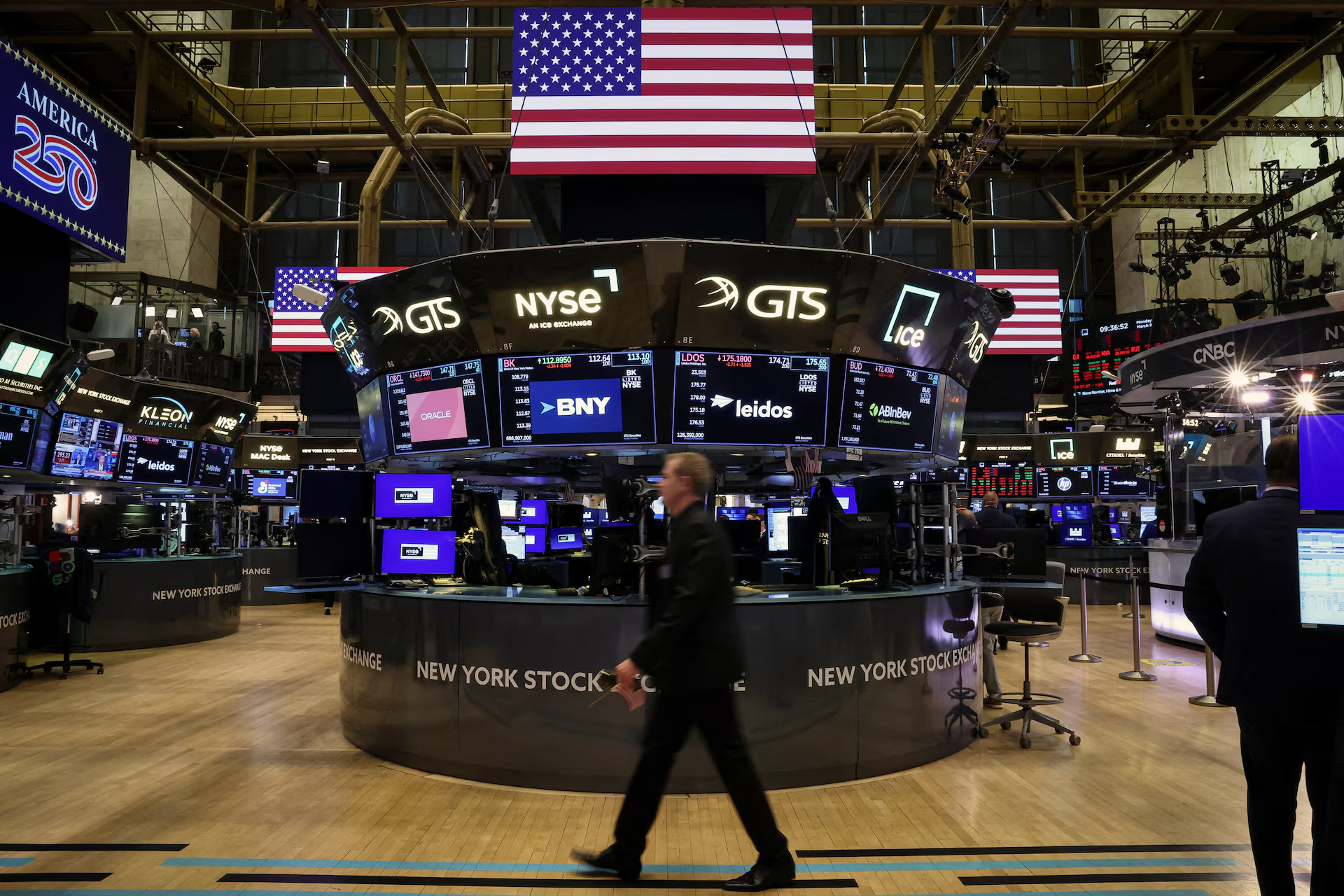
The US stock market continued moving higher this week. This comes as South Korea’s stock market saw a sharp reversal from record levels. The S&P 500 closed above 7,500 for the first time after gains in large-cap technology and AI-related stocks. Meanwhile, South Korea’s KOSPI index briefly crossed 8,000 during trading before falling more than 6% by the close. The divergence showed the different pressures facing global technology-heavy markets right now.
Also Read: SpaceX IPO Filing Could Arrive Next Week After $1.25T Valuation

The S&P 500 rose 0.77% to close at a record 7,501.24. Meanwhile, the Nasdaq Composite added 0.88%, according to the latest market data. Strong earnings from Cisco Systems and continued momentum in AI-linked stocks supported the gains.
Large-cap technology companies have continued driving much of the rally in the US stock market this year. These were particularly companies connected to artificial intelligence, semiconductors, and cloud infrastructure.
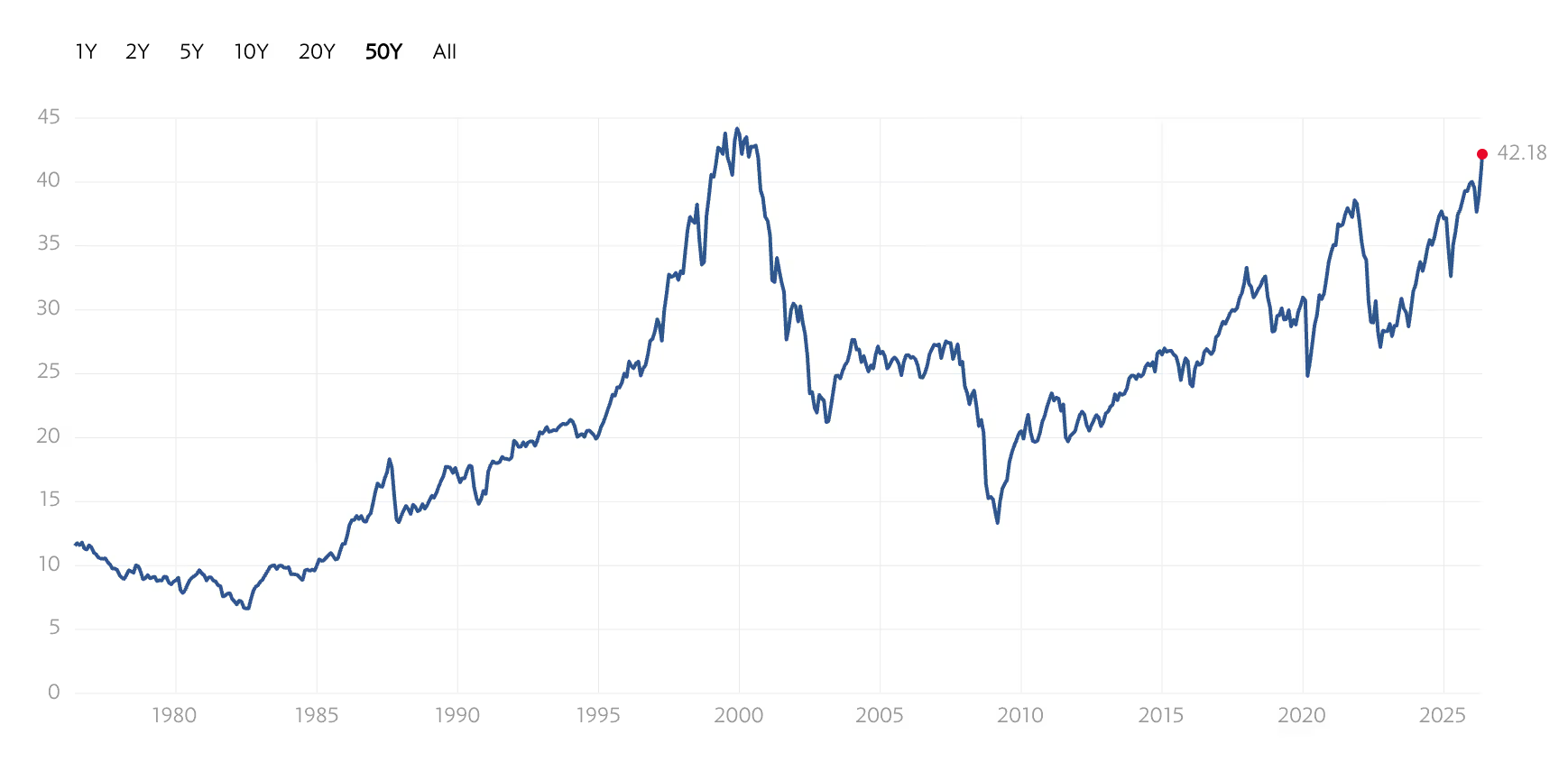
Concerns around valuations in the US stock market have also continued building. Recent reports revealed that the Shiller P/E ratio for US equities climbed above 42. It was approaching levels last seen during the dot-com bubble period in 1999.
Also Read: Senate Banking Committee Passes Crypto Clarity Act, BTC Climbs
At the same time, the KOSPI crash in South Korea reflected growing pressure on some Asian technology stocks after months of strong gains.

Samsung stock fell 8.6% after the company’s labor union confirmed plans to move ahead with a strike involving more than 45,000 workers later this month. Shares of SK Hynix also dropped 7.6%.
According to Manulife Investment Management, Samsung Electronics and SK Hynix now account for more than 42% of the KOSPI index. This increasing concentration risks within the South Korean stock market.
Investors seemed to be watching developments from the Trump-Xi summit in Beijing, where trade, Taiwan, and technology restrictions remained key discussion points.
Also Read: CLARITY Act Gains Support From Fidelity, Ripple and Coinbase Ahead of Senate Vote

Written by Sahana Kiran
Sahana Kiran has been covering financial markets since 2019, with a focus on cryptocurrencies, fintech, and the geopolitical events shaping them. She previously reported for AmbCrypto and Watcher Guru, and now writes for BlockNow.