









Stocks
August 19, 2026
Reddit Stock Outlook: Can RDDT Hold Its S&P 500 Gains and Reach Wall Street’s $218?

There is a strange split developing under the strength of US stocks. Overseas investors are sending hundreds of billions of dollars into American equities, while households at home are setting aside a remarkably small share of their income. The contrast is becoming harder to ignore as the US stock market stays close to record highs. And with corporate profits also climbing, the question is becoming less about whether investors want US equities and more about where that demand is coming from.
Also Read: Goldman Sachs Reenters XRP ETFs as Interest Grows, What Is Next for XRP Price in September?
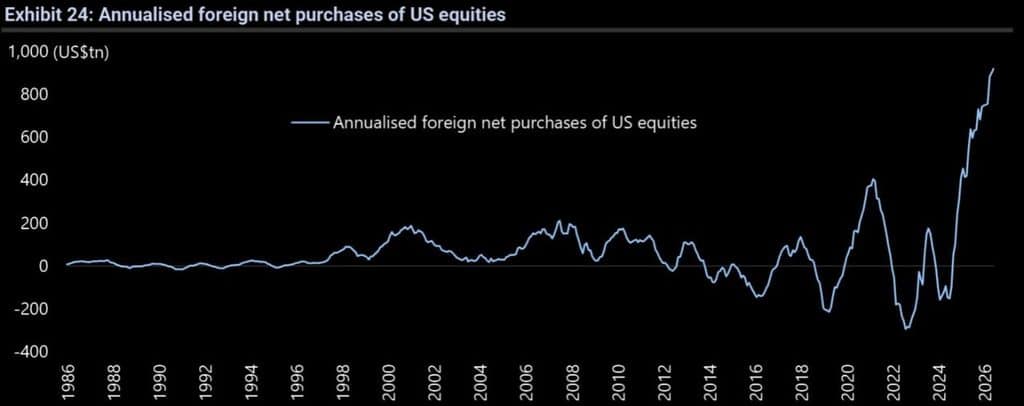
Foreign investors have been putting serious money to work in American equities. Recent data shows more than $800 billion in foreign purchases of US stocks over the past year, marking a record level. Treasury data also show that foreign investors bought a net $720.1 billion of US equities in 2025, according to an analysis of the latest figures.
This comes at a time when the S&P 500 is already up about 18% this year and is sitting close to its record high. Strong earnings and enthusiasm around artificial intelligence have kept investors interested even with plenty of concerns around inflation and interest rates.
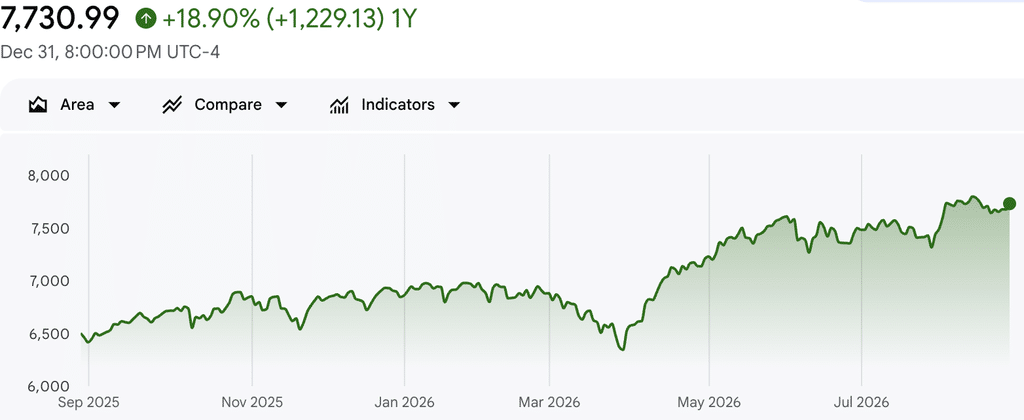
It helps explain why international investors continue to see American companies as worth owning at elevated valuations. The US market remains unusually concentrated in companies benefiting from AI investment, technology spending, and strong earnings growth.
Also Read: US Debt Heads Toward 175% of GDP as Chinese Yuan Hits 3-Year High and Dollar Rebounds
The domestic picture looks very different. The US personal saving rate fell to 3% in July, according to the latest Bureau of Economic Analysis data. Personal saving came to $712 billion, while disposable income rose 0.5% during the month.
It should be noted that a large part of the capital flowing into US equities is coming from outside the country at a time when American households are keeping relatively little of their disposable income on the sidelines.
Meanwhile, corporate America is having a very good year. Data shows that corporate profits reached a record $4.8 trillion in the second quarter, accounting for 18% of national income, the highest share since the aftermath of World War II.
For the US stock market, that combination matters. Foreign demand remains powerful, corporate earnings are providing a fundamental reason to buy, and the S&P 500 continues to hover near its highs.
Also Read: Nvidia Eyes $13B Hugging Face Deal as AI Agents Put Open Source AI Under the Spotlight

Written by Sahana Kiran
Sahana Kiran has been covering financial markets since 2019, with a focus on cryptocurrencies, fintech, and the geopolitical events shaping them. She previously reported for AmbCrypto and Watcher Guru, and now writes for BlockNow.