



Markets
September 14, 2026
Fed, ECB and BOJ May Hike Together as $2.35T Carry Trade Faces Test
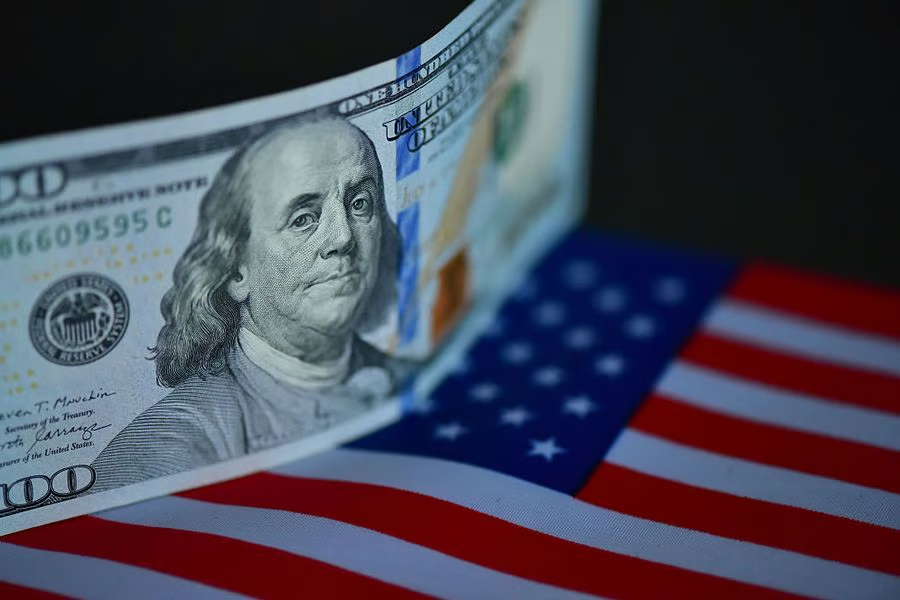
The scale of America’s fiscal problem is becoming harder for markets to ignore. US debt held by the public is already around the size of the economy, while currency markets are sending a very different set of signals. The Chinese yuan has climbed sharply against the dollar in recent months, even as the US dollar has started to recover. Behind those moves is a number that could become very difficult for investors to overlook.
Also Read: Nvidia Eyes $13B Hugging Face Deal as AI Agents Put Open Source AI Under the Spotlight

The Congressional Budget Office expects federal debt held by the public to rise from 101% of US GDP in 2026 to 120% by 2036. Over the longer term, the projection gets considerably steeper, with debt reaching 175% of GDP by 2056 under current law.
This trajectory matters because carrying a larger debt load also means paying more to service it. CBO estimates net interest outlays will rise from 4.6% of GDP in 2036 to 6.9% by 2056, eventually exceeding projected spending on both Social Security and Medicare.
Also Read: Anthropic Pitches $30T AI Market as Broadcom Backs Massive Buildout
The fiscal picture is unfolding alongside a notable move in the Chinese yuan. Market data cited by Barchart shows the yuan has gained more than 9% against the US dollar over the past four months, reaching its strongest level against the greenback since January 2023.
The move puts another currency into focus at a time when investors are reassessing the dollar’s outlook and the relative strength of the world’s two largest economies.
It should be noted that the US dollar is hardly sitting still. The dollar index was up about 0.3% for the week after falling 0.8% the previous week. Hotter-than-expected July inflation has strengthened expectations that US rates could remain restrictive through the end of the year.
Traders now see roughly a 70% chance of at least a 25-basis-point Fed hike by December, according to Reuters. This creates an interesting split for markets. The US dollar still has support from relatively strong US growth and interest-rate expectations. Meanwhile, the long-term US debt outlook raises questions about fiscal credibility.
Currently, investors are balancing those two forces. The 175% US GDP debt projection is years away, but the market is already watching how rising borrowing needs, Treasury yields and currency demand interact.
Also Read: US Expands Iran Sanctions to Crypto Over $100M Payment Trail as China Warns of Retaliation

Written by Sahana Kiran
Sahana Kiran has been covering financial markets since 2019, with a focus on cryptocurrencies, fintech, and the geopolitical events shaping them. She previously reported for AmbCrypto and Watcher Guru, and now writes for BlockNow.