



Markets
September 14, 2026
Fed, ECB and BOJ May Hike Together as $2.35T Carry Trade Faces Test

Rate cuts were supposed to be the theme of this week. But things took a different turn as the Bank of England, the Bank of Japan, and the European Central Bank all held interest rates. The trio pointed to the same concern of rising uncertainty tied to the Iran war. The decisions came within days of each other, along with a similar pause from the Federal Reserve. This has effectively put global monetary policy on hold. The war that began on February 28, 2026, is now complicating the global interest rates outlook.
Also Read: China Hoards $371B in Gold as Wall Street Sells It to Retail Investors
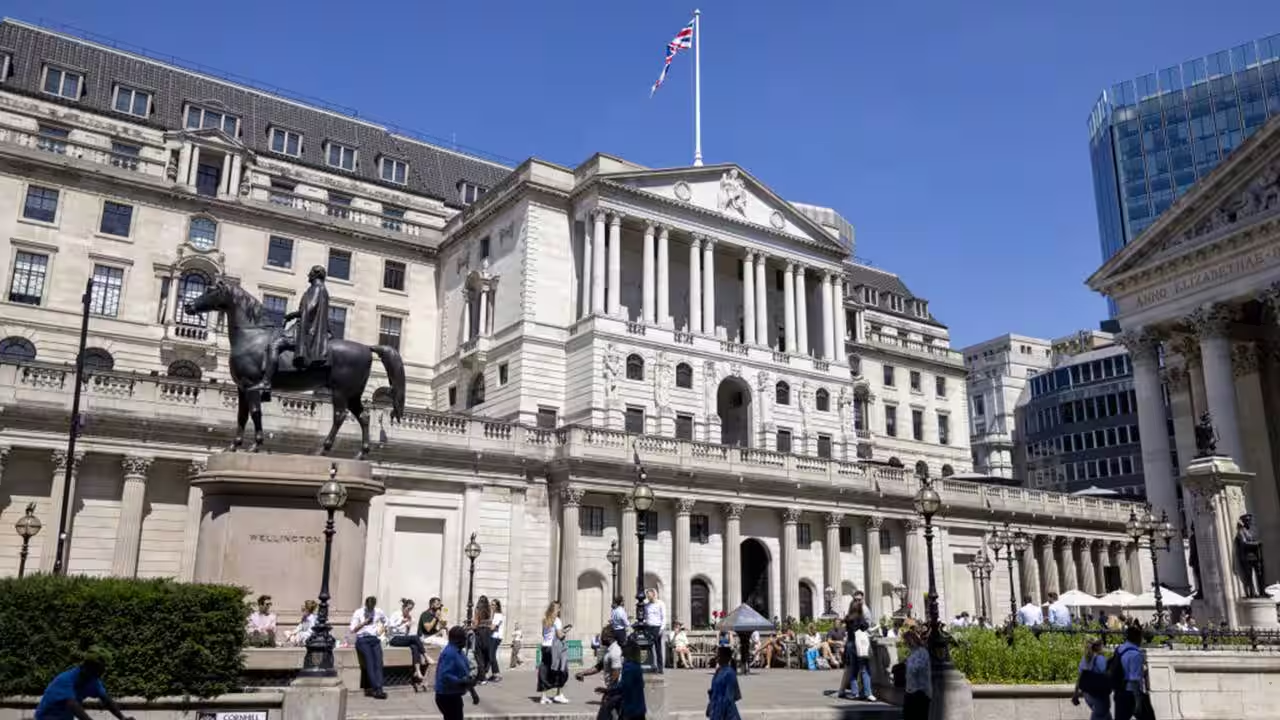
Bank of England of BOE’s rate decision reflects a shift from where markets were at the beginning of 2026. A rate cut seemed to be possible as inflation moved closer to the central bank’s 2% target. That path is now less certain. Oil and gas prices are now on the rise. Meanwhile, the risk that UK inflation will move back above 3% surfaced again. Brent crude recently spiked past $110, amidst supply concerns.
The bank is expected to hold rates at 3.75%. Analysts at major banks have also pushed back timelines for easing. JPMorgan was pointing to cuts only later in the year or in 2027. The firm said,
“We think the BoE will acknowledge that rates are still restrictive at this week’s meeting, and retain a mild easing bias. But the prospect of further easing is likely to be pushed well away from the BoE’s near-term agenda.”
The Bank of Japan, or BOJ, kept rates at 0.75% in March 2026. But policymakers pointed out how risks are building. The central bank noted that higher crude prices linked to the Iran war and inflation dynamics could push prices up again.

It should be noted that Japan remains heavily dependent on Middle Eastern energy imports, accounting for 95% of supply. While inflation recently slowed 1.5%, the BOJ flagged that trend may not hold if energy costs continue to rise. The central bank said,
“While core inflation is expected to temporarily decelerate below 2 per cent in the near term due to a slowdown in rice price increases, the conflict in West Asia will exert upward pressure, affected by the recent rise in crude oil prices.”
Also Read: Brent Hits $113 as South Pars Burns and Analysts Say $200 Oil Is Coming

In the euro zone, the ECB’s rate decision of 2026 also resulted in no change. The deposit rate stayed at 2%. Officials said they are still assessing how much of an inflation shock the war could bring instead of reacting immediately. This has pushed inflation expectations slightly above the ECB’s 2% target. Isabelle Mateos y Lago, chief economist at BNP Paribas, said,
“It makes a lot more sense to signal vigilance, signal even hawkishness at this stage and hope that they don’t need to act.”

According to reports, traders are already considering the possibility of at least one rate hike this year. But the last major energy spike pushed inflation above 10% across parts of Europe. This time, the starting point is different. Energy supply is more diverse, and demand is softer.
Across all three economies, the pattern is similar. Central banks are not looking at immediate tightening. But they are no longer as confident about easing either. Energy prices, shipping risks, recession concerns, and the impact of the conflict are still unclear. For now, the global interest rates of 2026 are being shaped less by domestic data and more by how the conflict develops.
Also Read: Brian Armstrong Says $126T Market Goes On-Chain as SEC Clears Nasdaq Tokens

Written by Sahana Kiran
Sahana Kiran has been covering financial markets since 2019, with a focus on cryptocurrencies, fintech, and the geopolitical events shaping them. She previously reported for AmbCrypto and Watcher Guru, and now writes for BlockNow.