


Bitcoin
September 9, 2026
The Rise of Violent Crypto Crime Is Turning Bitcoin Wealth Into a Liability

Bitcoin (BTC) demand has weakened in recent months, even as institutional buying continues in pockets. The shift is not immediately visible in price action. But data shows a market where selling pressure is exceeding new inflows. Indicators tied to whale activity, liquidity, and US investor participation all point in the same direction. This suggests that the current support for Bitcoin is narrower than it appears.
Also Read: De-dollarization: Iran Charges $2M in Yuan and Crypto at Hormuz

According to recent data, Bitcoin demand dipped to negative 63,000 BTC by the end of March. This metric tracks whether new demand is sufficient to absorb newly mined supply and existing selling. A negative reading usually indicates that selling by holders is exceeding fresh buying. CryptoQuant noted that this demand contraction has persisted since late November 2025. The report further read,
“Selling from retail and other market participants is more than offsetting incremental institutional buying. The sustained demand contraction, now persisting since late November 2025, confirms that the broader market remains in distribution.”
A key driver has been Bitcoin whale selling. Large holders, who accumulated roughly 200,000 BTC during the 2024 bull market, began distributing from mid-2025. The pace of selling increased through the fourth quarter and has continued into 2026. The report noted,
“Historically, sustained negative whale accumulation has coincided with periods of prolonged price weakness, and the current reading suggests selling remains a significant structural headwind.”
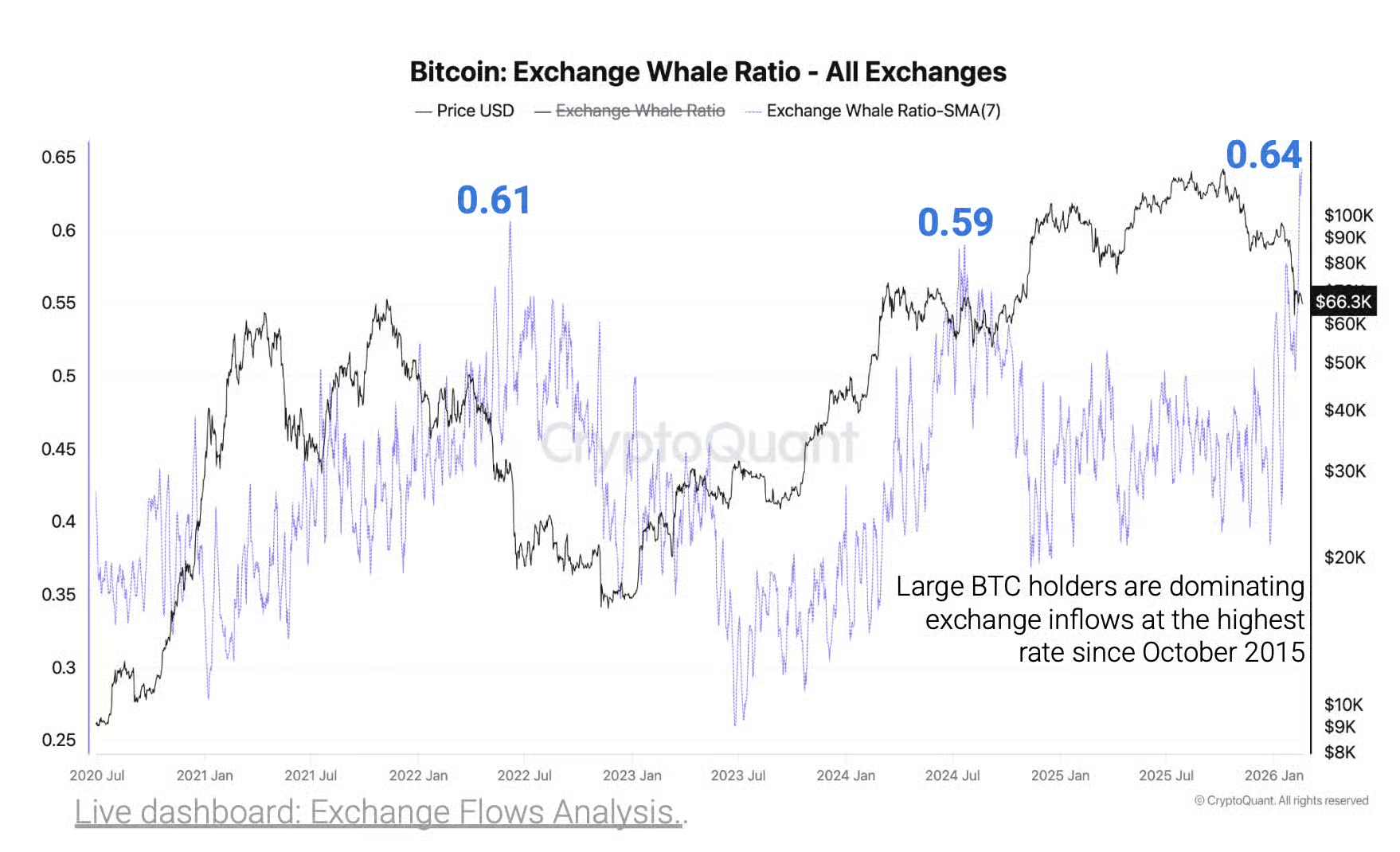
Exchange data reflects this shift. The Bitcoin whale ratio has increased to 0.64. This is its highest level since 2015. This indicates that large transactions account for a growing share of exchange inflows. In addition, it suggests that larger holders are moving assets to exchanges. This is often associated with selling activity.
Also Read: OCC Crypto Rule Is Live and Citadel, Schwab Are Already Filing for a Bank
At the same time, the Coinbase premium has turned negative again. This shows weaker demand from US-based investors. It should be noted that this removes a key source of support that has historically helped stabilize prices during periods of selling.
Liquidity conditions have also tightened. Daily stablecoin inflows to exchanges have dropped from around $616 million in November 2025 to approximately $27 million, reducing available capital for new purchases.
Institutional buying remains concentrated. Strategy acquired about 45,000 BTC in the past 30 days. This represents about 76% of total treasury purchases. Other firms collectively bought close to 1,000 BTC over the same period. It should be noted that at one point, 54 companies were actively buying, but now that number is close to 13.

Lastly, Goldman Sachs called a bottom last week. But the on-chain picture tells a different story. Bitcoin continues to show weak demand, with continued distribution and limited buyer depth. At press time, the king coin was trading at $66,424.34 following a 2.91% drop over the past 24 hours.
Also Read: OpenAI Raises $122B at $852B Valuation as Oracle Cuts Jobs to Fund AI

Written by Sahana Kiran
Sahana Kiran has been covering financial markets since 2019, with a focus on cryptocurrencies, fintech, and the geopolitical events shaping them. She previously reported for AmbCrypto and Watcher Guru, and now writes for BlockNow.