



Markets
September 14, 2026
Fed, ECB and BOJ May Hike Together as $2.35T Carry Trade Faces Test
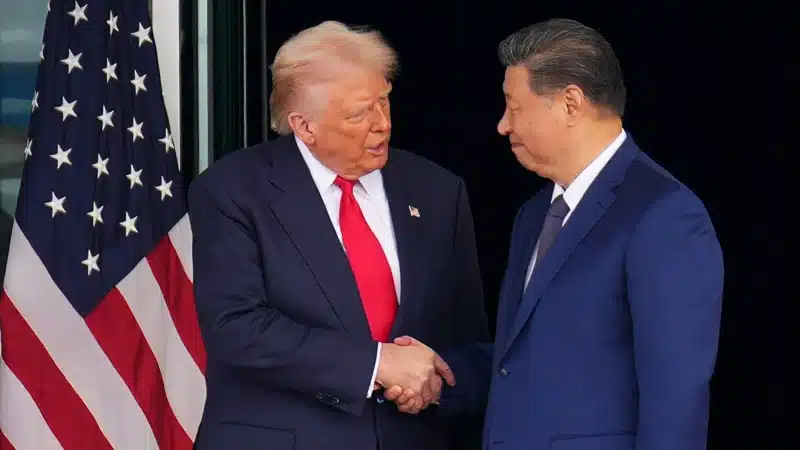
President Donald Trump’s visit to China this week brought trade and technology tensions back into focus as he met Chinese President Xi Jinping in Beijing. The two leaders publicly spoke about cooperation during meetings at the Great Hall of the People before later visiting the Temple of Heaven grounds together. But despite the diplomatic tone, issues tied to semiconductor exports, artificial intelligence, rare earth minerals, and supply chains continue shaping the relationship between the US and China.
Also Read: Warren Buffett on Stock Market: Should Investors Be Concerned?

The latest Trump-Xi meeting comes amid economic competition between Washington and Beijing. It increasingly centers on technology and manufacturing rather than tariffs alone.
China is now the world’s largest exporter. It shipped roughly $3.59 trillion worth of goods globally in 2024, compared with about $1.9 trillion for the United States.
The US has continued restricting exports of advanced AI chips to China over national security concerns, affecting companies including Nvidia. Meanwhile, China has expanded investment into domestic semiconductor development and artificial intelligence infrastructure. It is trying to reduce reliance on American technology.
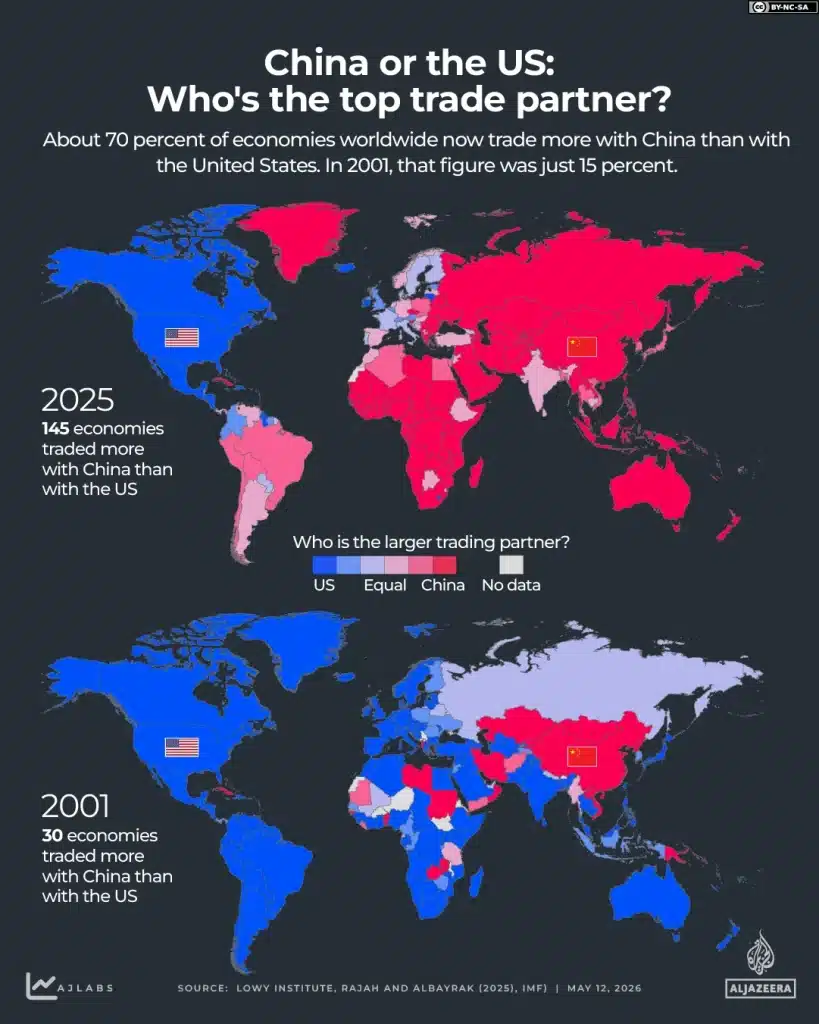
Trade data also highlights how China’s global economic influence has expanded over the past two decades. Research from the Lowy Institute shows that China now trades more heavily with around 145 economies worldwide than the US does.
Also Read: S&P 500 Index Inks New Record on Backend of Tech Stock Rallies
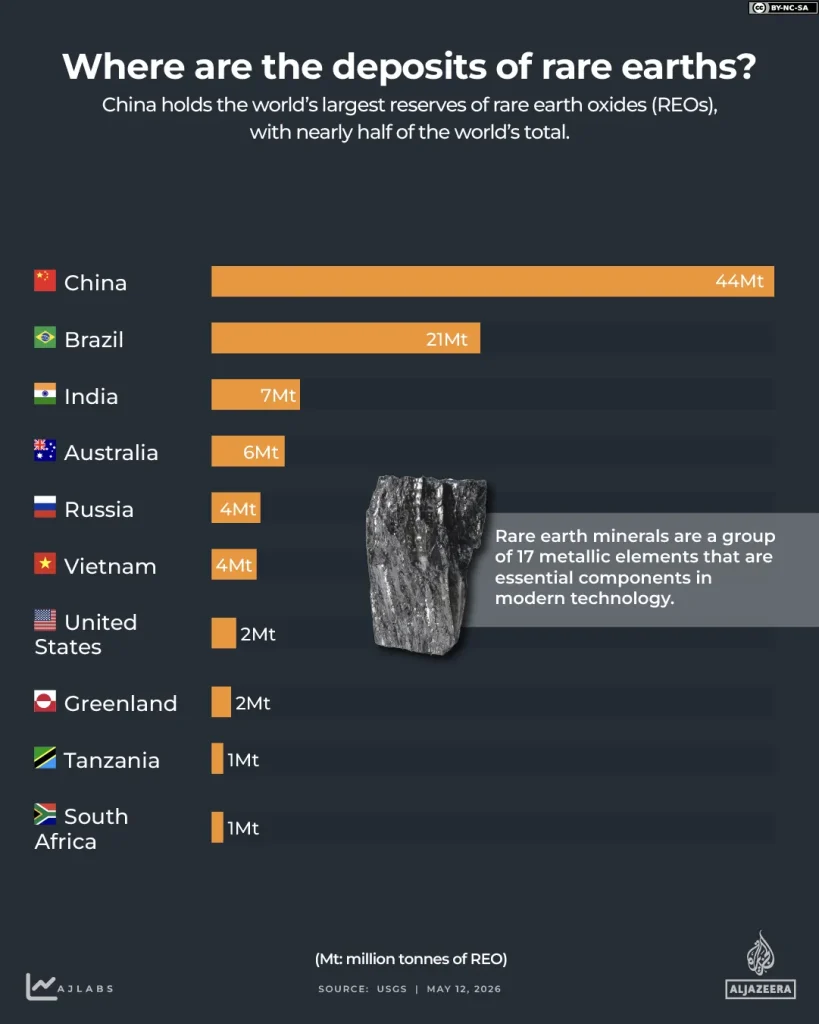
Rare earth minerals remained another major issue surrounding the broader US-China trade war. China controls a significant share of global rare earth processing capacity. This gives it an important position in industries tied to batteries, defense systems, and electronics manufacturing. China also holds an estimated 44 million tonnes of rare earth oxide reserves. It is far ahead of the US at about 1.9 million tonnes.
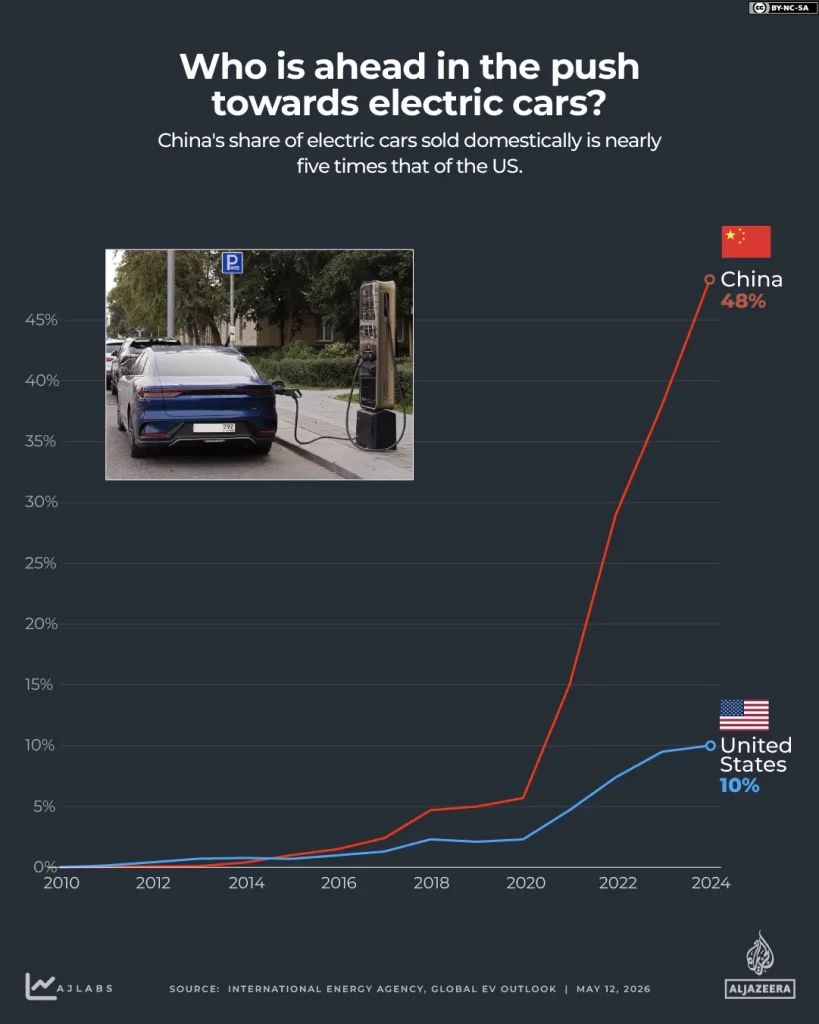
The China EV market has also continued growing rapidly as automakers expand production and exports globally. Amidst this, the US has increased efforts to strengthen domestic manufacturing and reduce dependence on Chinese supply chains. They are doing so through semiconductor and clean energy investment programs.
Nearly half of all new cars sold in China in 2024 were electric, compared with roughly 10% in the US.
Semiconductor exports and Taiwan remain closely linked to the broader competition between the two countries.
Advanced AI chips have become increasingly important for cloud computing, defense systems, and artificial intelligence development. It is making export controls one of the most sensitive areas in the relationship between Washington and Beijing.
While both sides publicly emphasized stable ties during the summit, the discussions reflected how trade, technology, and industrial supply chains remain central to the long-term competition between the world’s two largest economies.
Also Read: Coinbase Adds SOL-Backed Loans as Solana ETFs Pull in Fresh Inflows

Written by Sahana Kiran
Sahana Kiran has been covering financial markets since 2019, with a focus on cryptocurrencies, fintech, and the geopolitical events shaping them. She previously reported for AmbCrypto and Watcher Guru, and now writes for BlockNow.