



Markets
September 14, 2026
Fed, ECB and BOJ May Hike Together as $2.35T Carry Trade Faces Test
Key Takeaways
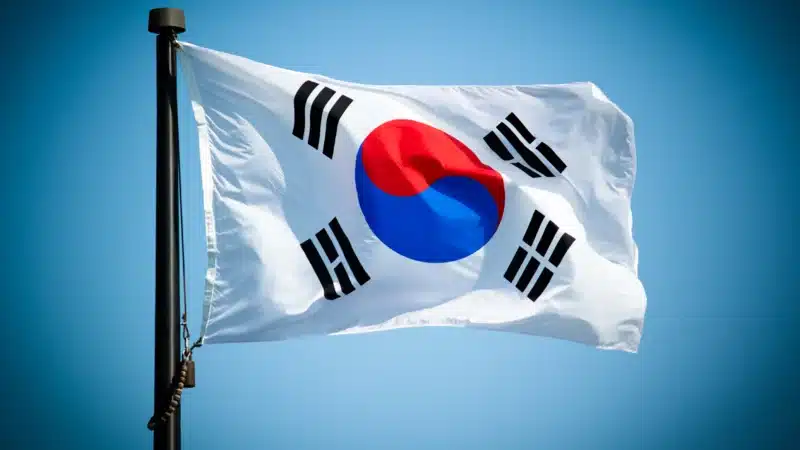
KOSPI has emerged as one of the strongest-performing major indexes this year. The South Korean stock market is now up close to 100% in 2026. This is largely driven by AI chip stocks linked to Samsung and SK Hynix stock. As global money continues flowing into artificial intelligence infrastructure, investors are looking at Korean semiconductor companies as some of the biggest beneficiaries of the AI boom.
Also Read: What Is Tokenization: BlackRock Is In and Here Is How You Get In

South Korea’s benchmark KOSPI index recently climbed above 8,400 for the first time. This was aided by strong gains in chipmakers tied to AI servers and data centers.
According to reports, SK Hynix crossed the $1 trillion market cap mark this week. It joined Samsung and Micron as AI-related memory chip demand continues to grow.

Samsung stock and SK Hynix stock have become the main drivers of the South Korean stock market this year. Together, both these companies now make up nearly half of the KOSPI by market capitalization.
Also Read: President Trump’s Promise to Protect Crypto, Predictions Markets
The rally is also being supported by growing ETF demand. Leveraged funds tied to Korean semiconductor stocks have seen strong inflows in recent months. This is because retail and institutional investors look for exposure to the AI trade.

Reports even suggest that the KOSPI’s gains in 2026 are already nearing the Nasdaq 100’s rise during the peak of the dotcom era in 1999.
Analysts say the move is being backed by fundamentals rather than short-term speculation alone. Demand for high-bandwidth memory chips used in Nvidia AI systems continues to outpace supply. It is helping push up prices and earnings expectations for major chipmakers.
Despite this, the rally has also highlighted how concentrated the KOSPI has become. Much like Taiwan’s market with TSMC, South Korea’s index is increasingly tied to the performance of a small number of semiconductor companies.
At present, investors continue to see Korean chipmakers as one of the clearest ways to gain exposure to the global AI buildout.
Also Read: Trump Administration Proposes US Government Employees Start Signing NDAs

Written by Sahana Kiran
Sahana Kiran has been covering financial markets since 2019, with a focus on cryptocurrencies, fintech, and the geopolitical events shaping them. She previously reported for AmbCrypto and Watcher Guru, and now writes for BlockNow.