



Markets
September 14, 2026
Fed, ECB and BOJ May Hike Together as $2.35T Carry Trade Faces Test
Key Takeaways
The Iran war entered a new phase on June 11. This is after Tehran announced a full closure of the Strait of Hormuz, one of the world’s most important energy chokepoints. The move came after fresh US military strikes on targets near Bandar Abbas, Qeshm, Jask, and Sirik. While the oil price today jumped on reports of the shutdown, confusion quickly followed. Iran said the waterway was closed until further notice. Meanwhile, US officials insisted commercial traffic was still moving through the strait.
Also Read: Social Security Electronic Benefits Update: Paper Checks End for 280,000 Americans in 2026
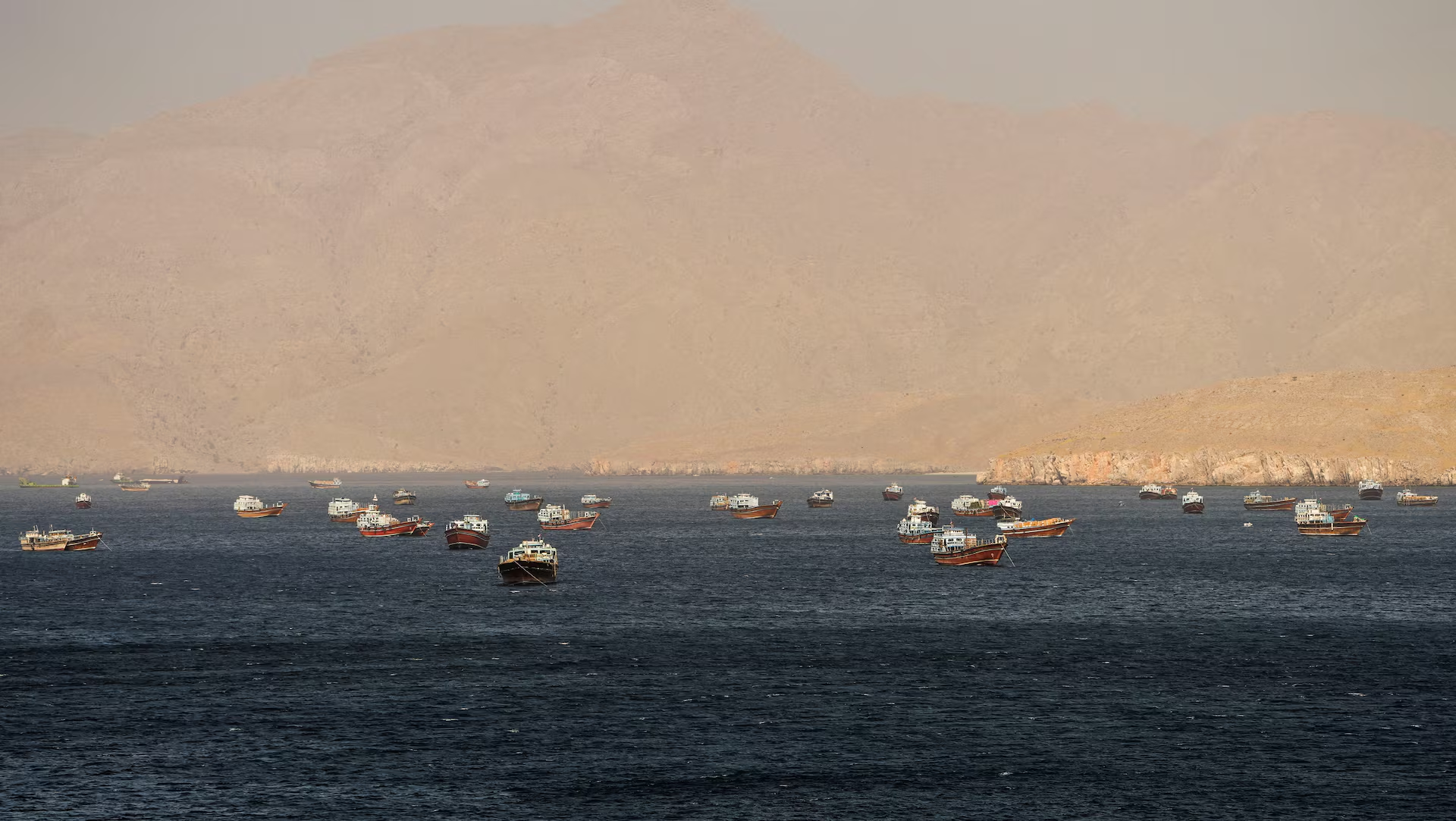
Iran’s Islamic Revolutionary Guard Corps declared the Strait of Hormuz “closed until further notice.” This came after US strikes on Jask, Sirik, Qeshm, and Bandar Abbas. Iranian state media also reported that two oil tankers attempting to pass through the waterway were struck after allegedly ignoring warnings issued by the IRGC.
The escalation followed a new round of US military operations targeting surveillance systems, communications networks, and air-defense sites. Tehran also claimed responsibility for attacks on the US Fifth Fleet in Bahrain, Ali Al-Salem Air Base in Kuwait, and Al-Azraq Air Base in Jordan. Bahrain activated air raid sirens twice while Kuwait reported intercepting hostile aerial targets.
CENTCOM disputed Tehran’s account of events. In a statement posted on X, the command said commercial ships were continuing to transit through Hormuz. This is despite Iranian claims of a complete shutdown.
President Donald Trump went further, saying a US military operation had helped move more than 100 million barrels of oil through the strait. In addition, it allowed more than 200 commercial vessels to pass safely. He added that the US, not Iran, controlled the waterway.

This leaves markets facing two competing narratives. Iran says the Strait of Hormuz oil route is effectively closed and vessels risk being targeted. The US says shipping continues despite the threats.
Also Read: Gold Erases 2026 Gains Despite China’s Biggest Purchase Since January 2025
The military escalation comes as diplomatic efforts remain stalled. Iranian media reported that Tehran had halted indirect negotiations with Washington. Vice President JD Vance said the two sides remain “very close” to an agreement but acknowledged that a breakthrough could come next week or take months. Trump has continued to insist a deal remains possible even as military exchanges intensify.

Iranian President Masoud Pezeshkian also pushed back against US threats, saying attacks on critical infrastructure would not weaken Iran’s position. “Critical infrastructures are the lifeblood of the people,” he wrote on X, adding that Iran would stand firm against pressure and threats.
The diplomatic picture comes as the conflict moves beyond the 100-day mark. French President Emmanuel Macron has invited leaders from Egypt, Saudi Arabia, Qatar, and the UAE for discussions around the upcoming G7 summit. Meanwhile, energy markets continue to watch developments closely.
According to the US Energy Information Administration, roughly one-fifth of global oil supplies normally move through Hormuz. This is making any disruption to the route a key driver of oil prices today and broader market sentiment.
Also Read: BofA CEO Warns Stablecoin Yield Could Drain 35% of All US Bank Deposits

Written by Sahana Kiran
Sahana Kiran has been covering financial markets since 2019, with a focus on cryptocurrencies, fintech, and the geopolitical events shaping them. She previously reported for AmbCrypto and Watcher Guru, and now writes for BlockNow.