

Markets
September 14, 2026
Fed, ECB and BOJ May Hike Together as $2.35T Carry Trade Faces Test

Key Takeaways
Back in 2018, Bain Capital led an $18 billion acquisition of Toshiba Memory after the Japanese conglomerate was forced to sell its chip business amid a financial crisis. During that time, it was the largest private equity deal ever completed in Asia. Few expected it would later become one of the industry’s biggest winners. Today, the renamed company, Kioxia, is at the center of the AI boom, and Bain’s investment has turned into a windfall that ranks among private equity’s most successful deals.
Also Read: SpaceX Stock Price Passes Amazon as Musk’s $1.3T Beats the Next 5 Richest Combined
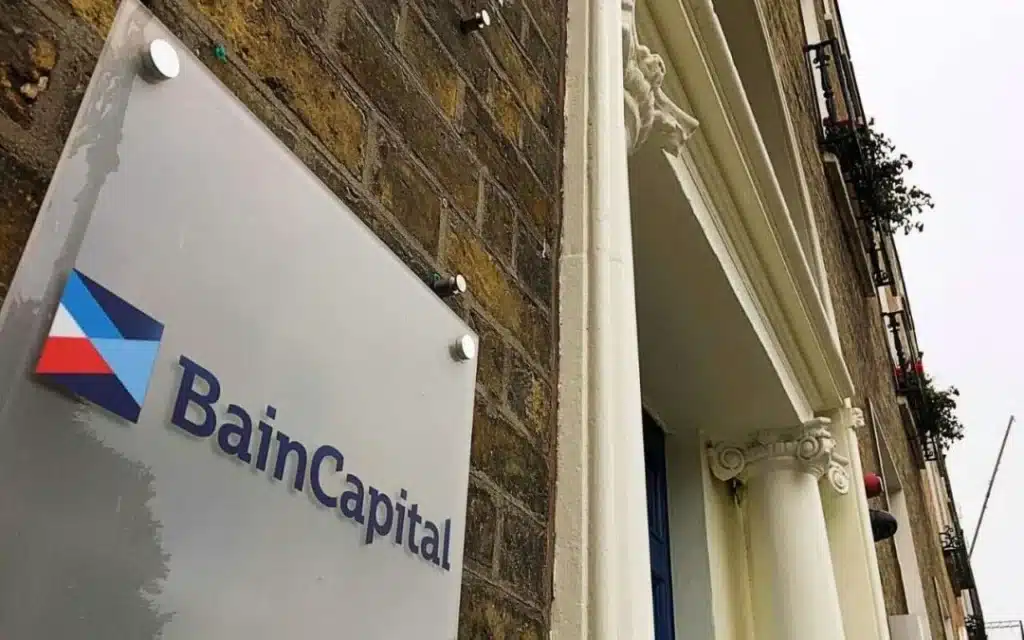
The Bain Capital and Kioxia deal has been transformed by a notable rise in demand for NAND flash memory. This is a critical component used to store the vast amounts of data required by AI systems and modern data centers.
Since listing on the Tokyo Stock Exchange in December 2024, Kioxia shares have surged more than 5,000%. This includes gains of roughly 700% this year alone. The rally has pushed the company’s market value to around ¥51 trillion ($318 billion). This makes it one of Japan’s most valuable listed companies.

Also Read: Strategy’s $105M Bitcoin Buy Brings Its Two-Week Total to 98x the Sale That Sparked Panic
The company’s financial performance has accelerated alongside the AI buildout. Kioxia recently projected an operating profit of roughly ¥1.3 trillion or $8.1 billion for the April-June quarter. This is nearly 29 times higher than the same period a year ago. Revenue topped ¥2 trillion for the first time in the fiscal year ended March 2026.

This surge has dramatically increased the value of Bain’s original investment. The firm has already realized more than $8 billion for its flagship fund. In addition, it is expected to generate more than $15 billion in profit from the transaction. The wider consortium, which includes SK Hynix, still owns about 18% of Kioxia. This leaves billions of dollars in additional gains on paper.
Steven Kaplan, a professor at the University of Chicago Booth School of Business, said that generating returns above 15 times invested capital on a deal of this size is “extremely rare.” This is why the Toshiba Memory buyout is increasingly being compared with Blackstone’s investment in Hilton Hotels and Silver Lake’s long-running Dell deal. Both of these are widely regarded as among the best PE deals ever.
Not everyone sees the outcome as a pure operational victory. Data from TrendForce shows Kioxia’s share of the global NAND market slipped from roughly 19% to 14% during Bain’s ownership. Meanwhile, rivals Samsung, SK Hynix, and Micron invested in AI-focused memory technologies. Kioxia remained concentrated on NAND flash. This strategy looked risky during the industry downturn but has paid off as AI-driven demand tightened supply.
Also Read: The CLARITY Act July 4 Deadline Is Stalled by a Fight Over Trump’s Own Crypto Wallet

Written by Sahana Kiran
Sahana Kiran has been covering financial markets since 2019, with a focus on cryptocurrencies, fintech, and the geopolitical events shaping them. She previously reported for AmbCrypto and Watcher Guru, and now writes for BlockNow.