


Markets
September 14, 2026
Fed, ECB and BOJ May Hike Together as $2.35T Carry Trade Faces Test

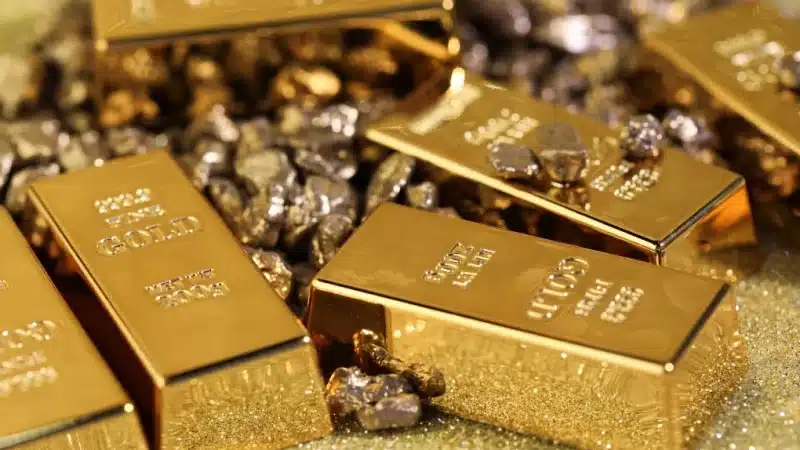
The tokenization era is now evolving with blockchain tech enabling the tokenization of metals, bringing assets like gold and copper on-chain. Gold tokenization is gaining significant momentum as of late, with companies now exploring ways to represent physical commodities on-chain. This development represents another step in the evolution of traditional financial markets, as tokenized assets continue to take the broader stage.
At the same time, rare earth mining is also a new development taking center stage. With AI and other advanced technologies expanding rapidly, demand for the critical minerals used across high-tech equipment is becoming increasingly important. To counter China’s leadership in this domain, the US and Japan have strengthened cooperation on critical minerals and rare earth supply chains. These two developments underscore how the world is now rapidly evolving to accommodate new resources, with technological advancements taking center stage as financial markets increasingly explore blockchain-based infrastructure.
Also Read: Solana Price Could Top $100 in August Despite Staking Disruption

The latest wave of tokenization has now hit the physical commodities market. Per the recent report by the Financial Times, digital gold projects are now attracting renewed interest. These projects may allow investors to gain blockchain-based exposure to physical metals. The report outlines how companies are now developing digital tokens linked to gold, copper, and uranium and other commodities, with some allowing holders to redeem tokens for physical metals.
Apart from gold tokenization, the FT report outlines how companies are also developing tokens related to uranium, copper, and antimony, used in missiles, batteries, and flame retardants. As shared by Datavault AI’s chief, Nathanial Bradley
“Think of it like a future. Traditional instruments come with an enormous amount of paperwork: transfer agents, chain of custody, and wire transfers. Tokens collapse that entire stack into software,” said Bradley.
Gold remains the most significant metal, capturing investors’ attention right now. The World Gold Council shared the latest stats, adding that gold-backed ETFs are holding nearly $530B in assets. However, major gold-backed tokens such as Tether Gold and PAX Gold remain smaller by market value. That gap shows that tokenized metals are still a developing market rather than a replacement for physical gold infrastructure.
The AI industry is rapidly evolving, and so are the requirements to feed its constant hunger for rare earth components. The demand for critical minerals is rising alongside the expansion of advanced technologies, putting rare earth supply chains back in focus. Rare earths are extensively used in AI equipment manufacturing, making it a top priority for many nations. China has long dominated large parts of the global rare-earth supply chain, but other countries are now looking to strengthen alternative sources. The US and Japan have recently teamed up to explore the Pacific Ocean, deep 6000 meters, to extract precious rare earth extracts.
Japan has been advancing efforts to recover rare-earth-rich mud from the Pacific seabed near Minamitorishima at depths of around 6,000 meters, while the US and Japan have strengthened cooperation on critical-mineral supply chains.
The US and Japan have also established a framework to strengthen the aforementioned collaboration. Meanwhile, gold tokenization and tokenization assets are also evolving, with platforms exploring tokens related to uranium, nickel, cobalt, copper and other metals.
Also Read: Japan’s $1.2T US Treasury Holdings Face Pressure as Yen Nears 160
The rise of gold tokenization may make the commodity exposure simpler for investors. At the same time, expansion of tokenized metals may give investors exposure to other metals as well, although whether this translates into stronger underlying demand remains to be seen.
When it comes to rare earth mining, the US-Japan rare earth strategy outlines the growing importance of securing physical supplies of essential rare earths. However, it is worth noting that these markets remain relatively small compared to their physical and real-world market counterparts. The idea, however, may evolve with time, with wider adoption ultimately depending on investor demand, liquidity, and how well these products work alongside existing commodity markets.
Also Read: SpaceX Stock Faces $4.5M Retail Sell-Off as Morgan Stanley Eyes $600

Written by Juhi Mirza
Juhi Mirza covers cryptocurrency, DeFi, blockchain, and on-chain markets, translating complex developments into clear, data-driven reporting.