







Markets
July 12, 2026
US Inflation Data Expected at 4.2% YoY as CPI Hits Tuesday
Renewed fighting between the US and Iran has pushed the oil price back into focus, with traders once again watching every development around the Strait of Hormuz. Brent crude climbed sharply after fresh military strikes. But the bigger signal may be coming from a different corner of the energy market. While crude has reacted to geopolitical headlines before, tightening diesel supplies are beginning to paint a more complicated picture for global trade.
Also Read: SK Hynix Joins Solana Tokenized Stocks in 24/7 Trading Push
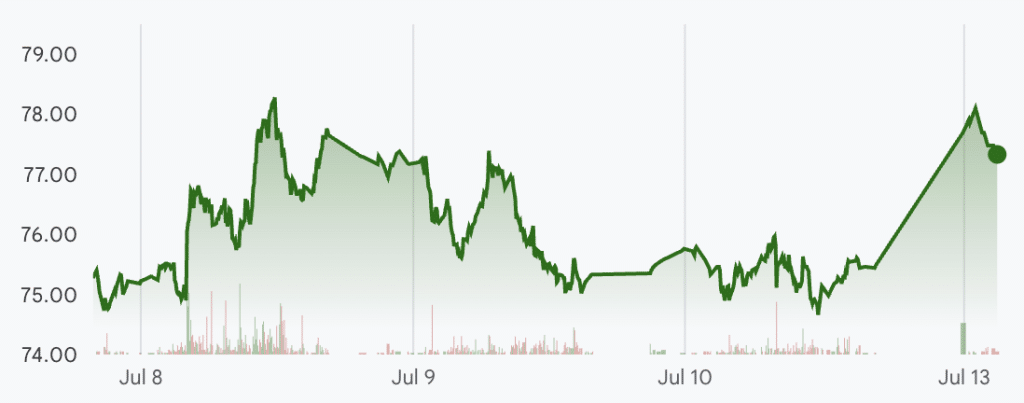
Brent crude oil rose more than 4% on Monday to around $79 a barrel after the US and Iran exchanged fresh attacks tied to the Strait of Hormuz. Considering this is one of the busiest routes, any disruption is likely to cause concern for energy markets.
Shipping activity has already begun to reflect those risks. Maritime intelligence firm Windward reported that only six vessels crossed the waterway during one recent 12-hour period. This is a sharp decline from normal traffic levels before hostilities resumed. The slowdown followed US strikes on Iranian targets and Tehran’s renewed warnings over vessel movements through the corridor. But the official US military statement read,
Analysts, however, believe supply fears rather than actual shortages are driving the latest rally. IG market analyst Fabien Yip noted that geopolitical risk premiums have returned to crude markets, though increased OPEC+ production and softer global demand could limit another explosive surge in prices. Yip added,
“Oil’s return towards pre-war levels in June reflected markets pricing in a best-case outcome for the fragile US-Iran arrangement; last week’s re-escalation exposes how fragile that assumption was.”
Also Read: Strong JPM Q2 Earnings Expected Amid Robust Investment Banking Fees
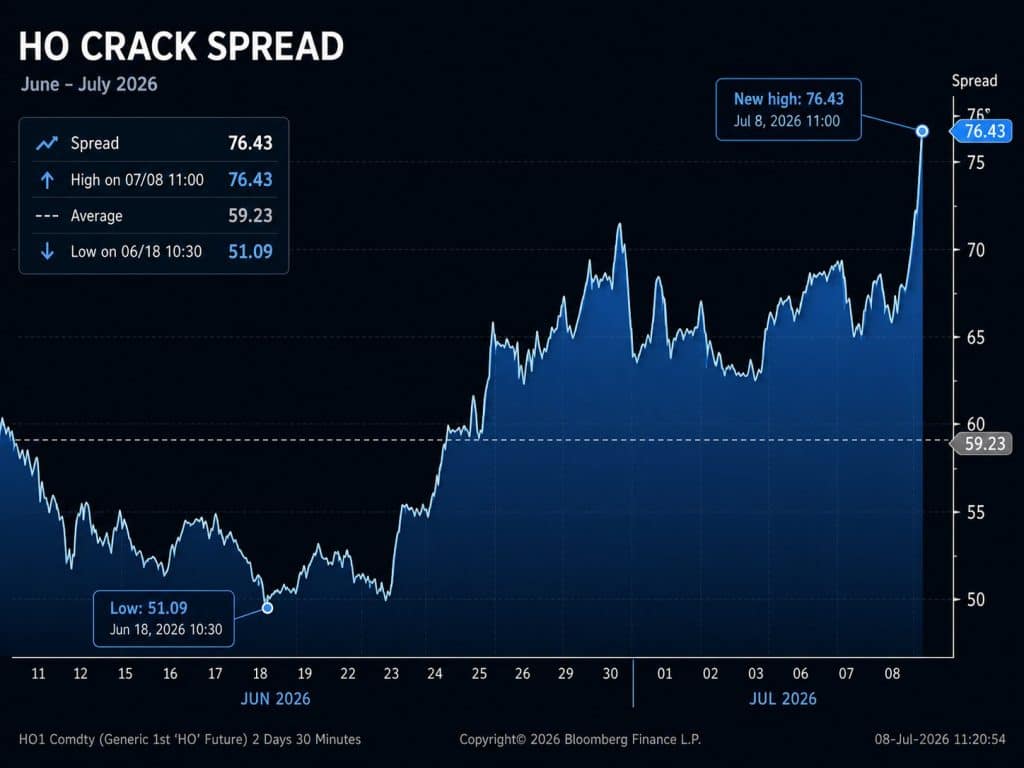
While headlines remain focused on the Iran war and oil price, refined fuel markets are showing signs of even greater stress. Diesel crack spreads, which measure refining profits, have climbed to roughly $77 per barrel. Market commentator Jack Prandelli explained,
“That prices diesel as if oil were near 140. Diesel is not a side market. It moves 80% of US freight by weight and roughly 80% of global trade by sea, plus most farming and mining equipment. Crude tells you what the war did to the wellhead. Diesel tells you what it is about to do to the supply chain.“
Diesel sits at the heart of global trade. It fuels trucks, ships, farm equipment, and heavy machinery, so when refining margins climb this sharply, it usually signals that supplies are getting tighter even if crude hasn’t returned to its previous highs.
The EIA’s latest petroleum data also shows US distillate fuel inventories remain historically tight compared with seasonal averages. This further adds to concerns that diesel availability could become a larger issue should tensions continue.
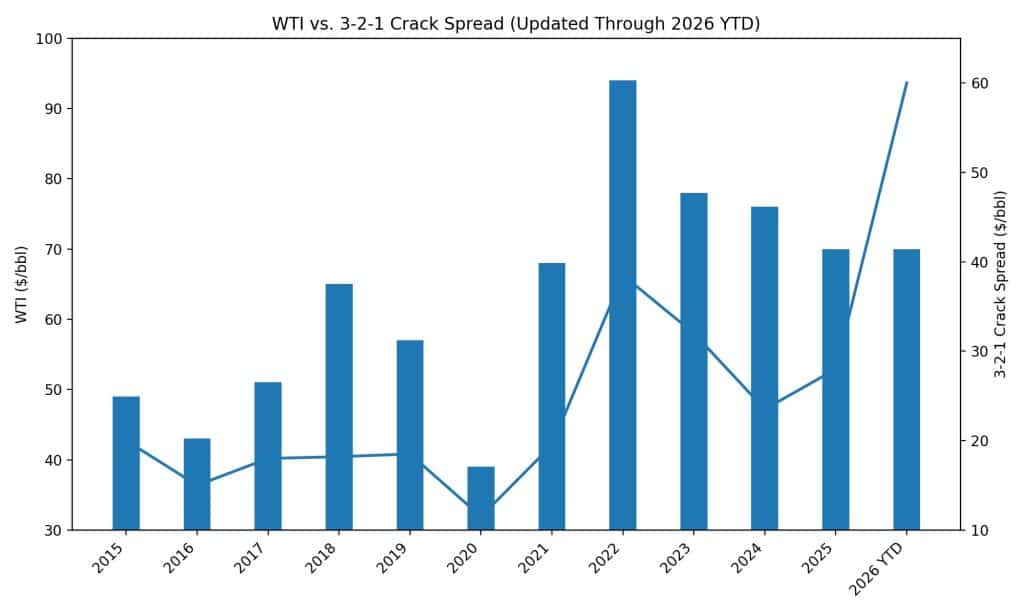
For now, the oil price is responding to military escalation around the Strait of Hormuz. But beneath the surface, the diesel market suggests investors may be underestimating how quickly supply chain pressures can build if disruptions persist.
Also Read: US Inflation Data Expected at 4.2% YoY as CPI Hits Tuesday

Written by Sahana Kiran
Sahana Kiran has been covering financial markets since 2019, with a focus on cryptocurrencies, fintech, and the geopolitical events shaping them. She previously reported for AmbCrypto and Watcher Guru, and now writes for BlockNow.