


Bitcoin
September 9, 2026
The Rise of Violent Crypto Crime Is Turning Bitcoin Wealth Into a Liability
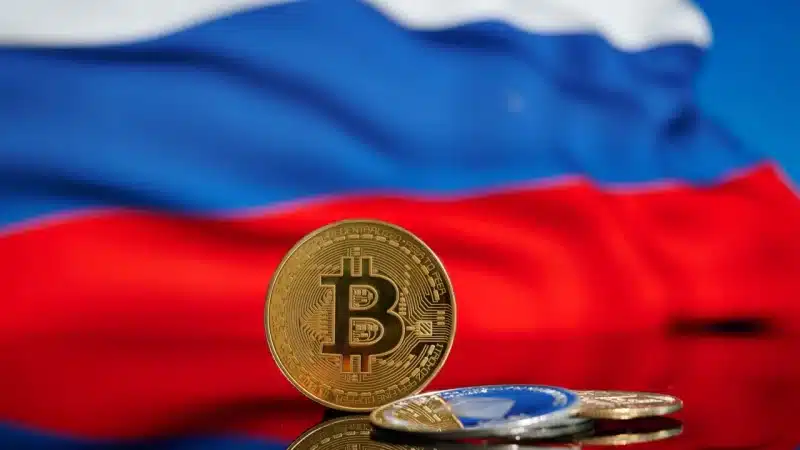
Russia’s crypto law moved a step closer to reality, but the bigger story isn’t limited to Moscow. Around the world, governments are settling long-running questions about digital assets and building regulated markets. Russia has now given Bitcoin property rights under its civil code, while Japan, South Korea, Hong Kong and Singapore continue expanding their own frameworks. This disparity with the US has become difficult to ignore, where lawmakers are still debating the rules.
Also Read: Big Tech Hid $1.65T in AI Debt Off Its Books While Investors Borrowed $1.4T to Buy the Same Stocks
Russia’s State Duma approved Bill No. 1194918-8, On Digital Currency and Digital Rights, in its second and third readings with 327 of 340 lawmakers backing the legislation. The bill now heads to the Federation Council before reaching President Vladimir Putin for final approval.
The framework gives Bitcoin and other digital assets legal recognition as property rather than currency. That change means crypto holdings can now receive judicial protection during bankruptcy cases, divorce settlements and civil disputes. Domestic crypto payments remain prohibited, leaving the ruble as Russia’s only legal tender. But businesses will be allowed to use digital assets for cross-border settlements. This is a provision that is widely viewed as a response to sanctions that have limited access to the SWIFT banking network.
The law also creates Russia’s first comprehensive licensing system for exchanges, brokers, custodians and other crypto service providers. This is under the supervision of the Bank of Russia. Core provisions are scheduled to take effect on Sept. 1, with existing firms receiving a transition period through July 2027. Non-qualified investors will be limited to purchasing about 300,000 rubles, or roughly $3,800, in crypto annually through licensed intermediaries.
Also Read: Bitcoin & Gold Both Look Undervalued, More Americans Choose BTC
The pace of development has already shifted beyond legislation. Sberbank, Russia’s largest lender, plans to launch a crypto wallet before December. Meanwhile, VTB, T-Bank Group and the Moscow Exchange have outlined custody and digital asset services. Russia’s Finance Ministry estimates domestic crypto trading already approaches 50 billion rubles, or roughly $640 million, every day. Much of it is outside regulated channels.
Russia’s progress also fits into the broader crypto regulation 2026 picture. Japan has lowered crypto taxes, South Korea is tokenizing government-owned real estate, and Hong Kong has introduced regulated stablecoin rules alongside real-world asset infrastructure. Meanwhile, Singapore continues expanding institutional crypto licenses.
These developments have also renewed attention on BRICS crypto payments, with several member nations exploring blockchain-based settlement systems for international trade.
Amidst this, the US is still working through the CLARITY Act, where the Senate’s 60-vote threshold remains a major hurdle. As the debate continues, Russia Bitcoin 2026 is increasingly becoming a story about implementation rather than legislation. Russia’s new crypto law gives the country a regulated market structure and recognizes Bitcoin property rights. It also sets a timetable for licensed infrastructure to begin operating within weeks.
Also Read: Strategy Raises $730M but Buys No Bitcoin as ETF Inflows Reach $727M in Five Days

Written by Sahana Kiran
Sahana Kiran has been covering financial markets since 2019, with a focus on cryptocurrencies, fintech, and the geopolitical events shaping them. She previously reported for AmbCrypto and Watcher Guru, and now writes for BlockNow.