

BRICS
June 12, 2026
What Is De-Dollarization and Why the BRICS vs Dollar Battle Is Reshaping Global Finance

BRICS response to the Iran war has been uneven, with member states taking different positions. Oil markets are tightening, and supply routes are under strain. Amidst this, governments are being forced into quick decisions. The situation is now spilling into a broader global energy crisis.
Also Read: Gold Price Crash: Worst Week in Decades, Safe Haven Demand Falls

Energy markets reacted almost immediately after strikes on Iran and the disruption of shipping through the Strait of Hormuz. Around 20% of the global oil supply moves through that route. So, any partial disruption has been enough to push prices higher and trigger supply concerns.
The scale of the hit is already drawing comparisons to past crises. The International Energy Agency estimates that roughly 11 million barrels per day of oil supply and significant volumes of gas have been disrupted. IEA chief Fatih Birol said the current situation combines the impact of the 1970s oil shocks with the Ukraine war. This shows how quickly Iran’s oil supply issue has surged. He further added,
“The single most important solution to this problem is opening up the Hormuz strait. [..] I think no country will be immune to the effects of this crisis if it continues to go in this direction, so there is a need for global efforts.”

The geopolitical response has been uneven. The G7’s position on the Iran war has largely focused on stabilizing shipping routes. They intend to prevent further escalation and align closely with the efforts of the US. Within NATO, there is less clarity. Some members have shown willingness to support maritime security operations. But a few others of NATO remain cautious about being drawn into the Iran-Israel war.
Also Read: Morgan Stanley $1T Hides a 401k Recession Risk

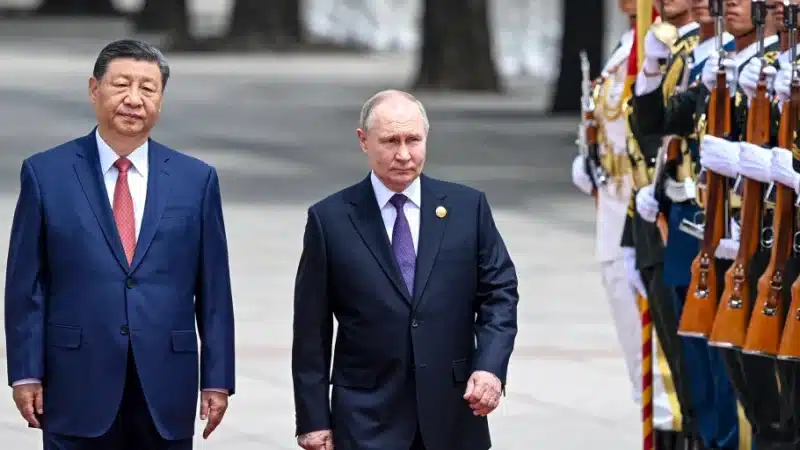
Within BRICS, there is no single line, as each member state is responding differently. India is central to this. As the current BRICS chair, it has called for de-escalation but avoided taking sides. At the same time, India is highly exposed to shifts in Iran’s oil supply and Gulf disruptions.
China’s position highlights how countries are managing the shock differently. As one of the largest oil importers, it remains exposed, but years of stockpiling and investment in alternative energy have provided some buffer. Estimates suggest reserves close to 900 million barrels. This will allow China to manage short-term disruptions better than other Asian economies. Energy economics researcher Roger Fouquet said,
“To some extent, China is fortunate that 25 years ago it began its investment in renewable energy, and it is now reaping the benefits.”
Still, the global energy crisis is taking shape now. Emergency oil releases have been used to stabilize markets, but they are not a long-term solution. With the G7, NATO, and BRICS responding differently to the Iran war, the focus shifts to coordination.
Also Read: Gold Price Crash Below $4,500: Key Technical Levels to Watch

Written by Sahana Kiran
Sahana Kiran has been covering financial markets since 2019, with a focus on cryptocurrencies, fintech, and the geopolitical events shaping them. She previously reported for AmbCrypto and Watcher Guru, and now writes for BlockNow.