

BRICS
June 12, 2026
What Is De-Dollarization and Why the BRICS vs Dollar Battle Is Reshaping Global Finance

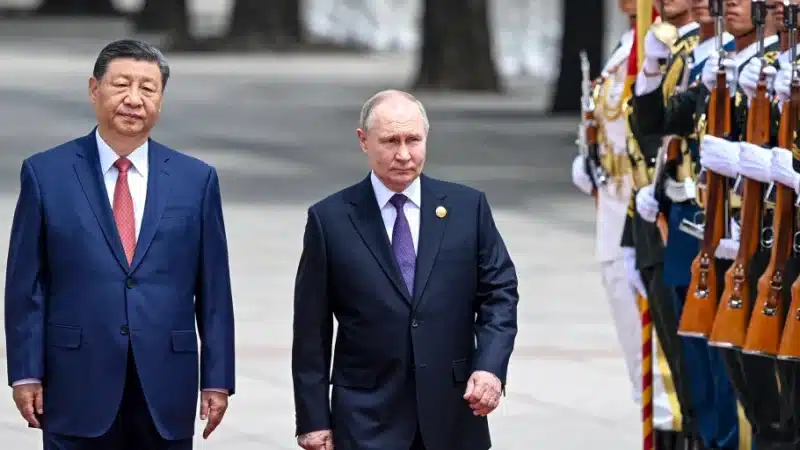
Most trade between Russia and China is no longer being settled in US dollars. Russian Deputy Prime Minister Alexey Overchuk said 95% of bilateral trade now takes place in rubles and yuan. This marks a major shift in how Moscow conducts international payments. The move comes after several years of sanctions pressure pushed Russia to reduce its dependence on Western banking systems and dollar-based transactions. The de-dollarization push now extends across much of Russia’s regional trade network.
Also Read: Saudi Aramco Made $420M a Day in Q1 While the Iran War Bled the World Dry

According to Overchuk, 91% of payments between Russia and CIS countries are now made in national currencies. The figure stands at 93% for the Eurasian Economic Union and 95% for China, which Russia considers its biggest trading partner. He added,
“We have almost completed the transition to mutual payments in national currencies over the last four years. As of 2025, 91% of mutual payments are in national currencies with CIS, 93% with the EAEU, and 95% with the People’s Republic of China, our most important partner.”
The change reflects how Russia-China trade has adapted since 2022. This is when Western sanctions disrupted access to major financial systems, including SWIFT. Russian companies and banks gradually shifted toward direct ruble and yuan settlements. Meanwhile, the Chinese payment infrastructure became more important for cross-border transactions.
Also Read: Elon Musk Backs Buffett’s 5-Minute Fix for Debt Bigger Than the US Economy
China’s yuan has become one of the most used foreign currencies in Russia over the past few years. The growing use of local currencies has reduced the dollar’s role in bilateral trade. Russian officials described it as a “residual” share of around 5%.
Trade between the two countries totaled $228 billion in 2025, according to Chinese customs data. This is, although growth slowed compared to previous years. Energy exports still account for a large part of the relationship. But financial cooperation has expanded beyond oil and gas trade.
Russian officials have argued that the transition was driven by restrictions from Western countries. This was not a deliberate attempt to trigger a dollar collapse. Kremlin spokesperson Dmitry Peskov said earlier this year that Russia did not reject the dollar on its own. Instead turned to alternative systems after access became limited.

The wider de-dollarization trend has also gained attention within BRICS, where several countries have discussed increasing trade settlements in local currencies and building alternative payment systems.
Also Read: Trump Calls Iran’s Peace Proposal “Totally Unacceptable” as Oil Hits $105

Written by Sahana Kiran
Sahana Kiran has been covering financial markets since 2019, with a focus on cryptocurrencies, fintech, and the geopolitical events shaping them. She previously reported for AmbCrypto and Watcher Guru, and now writes for BlockNow.