

BRICS
June 12, 2026
What Is De-Dollarization and Why the BRICS vs Dollar Battle Is Reshaping Global Finance
Key Takeaways
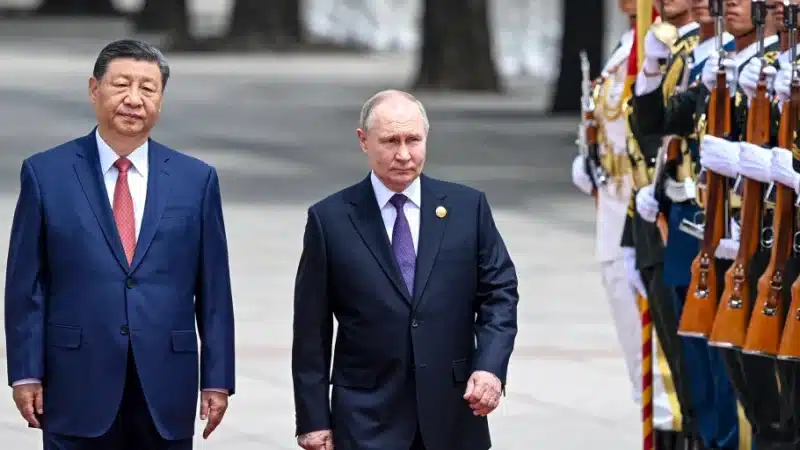
Donald Trump’s visit to Beijing last week was centered on trade talks and growing tensions around Iran. Days later, Vladimir Putin arrived in the Chinese capital. The Putin-Xi Summit is putting Beijing at the center of two major diplomatic meetings involving rival global powers. The back-to-back visits have drawn attention to China’s growing role in BRICS and its ability to maintain close ties with both Washington and Moscow at a time when global divisions continue to deepen.
Also Read: Trump and Sons Granted ‘Forever’ Protection From IRS Tax Audits in Quiet DOJ Deal
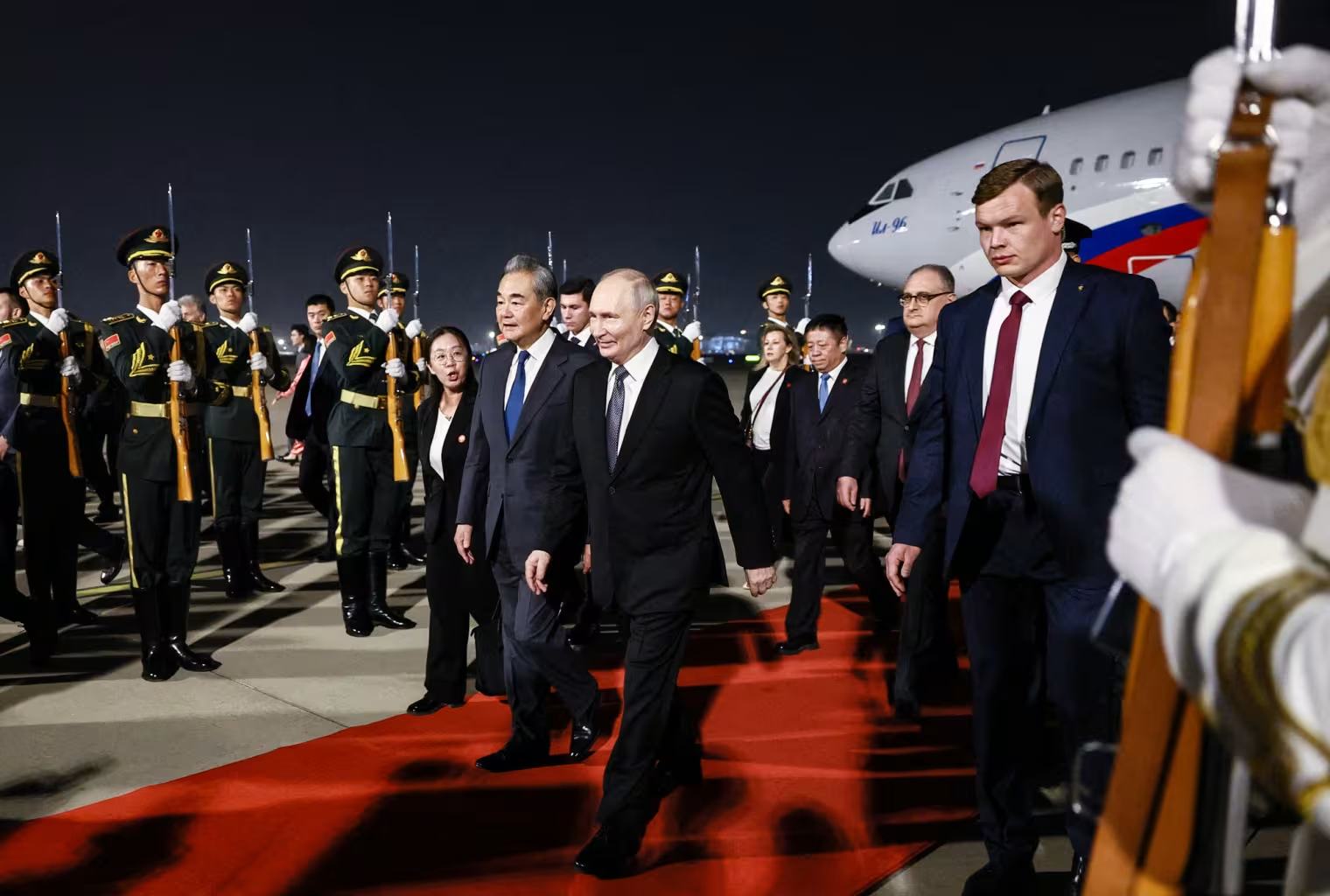
The Putin-Xi Beijing summit of 2026 comes as Russia grows increasingly dependent on China economically. Western sanctions imposed after Moscow’s invasion of Ukraine have pushed Russia to strengthen trade and energy ties with Beijing. This has made China-Russia cooperation more important than at any point in recent years.
According to Russian presidential aide Yuri Ushakov, Russian oil exports to China increased by 35% in the first quarter of 2026. China is now Russia’s largest trading partner and one of the biggest buyers of Russian oil and gas. The scale of the relationship is also uneven economically. China exported about $3.59 trillion worth of goods globally, while Russia’s exports stood closer to $377 billion.

What stands out is the timing of this visit. Trump’s visit to China had taken over headlines throughout the past week. Both visits produced warm public messaging. But analysts say China’s main objective was to reinforce its position as a central diplomatic player rather than take sides.
Steve Tsang, director of the SOAS China Institute at the University of London, told the Associated Press that Beijing’s message was that,
“China maintains friendship and strategic partnership with whichever power it likes.”

Chinese officials have continued to describe Beijing as neutral on the war in Ukraine. This is even as economic ties with Moscow deepen. Analysts say that approach also fits into China’s broader BRICS strategy. Beijing is trying to expand its influence across emerging economies while avoiding direct alignment with either the United States or Russia. Oleg Ignatov, a senior Russia analyst at Crisis Group, said,
“The relationship between the two countries is strategic — they are partners, strategic partners, but they are not military allies, and I don’t expect that they will go anywhere further.”
Also Read: Space Stocks: RocketLab (RKLB) “Major Catalyst” Potential: Analysts
Several analysts noted that the relationship currently benefits Moscow more than Beijing. Timothy Ash, an associate fellow at Chatham House, told Al Jazeera that “Putin needs this more than Xi,” pointing to Russia’s economic dependence and ongoing war pressures.
Even without major policy announcements, the timing of the Putin-Xi Summit highlighted how Beijing is positioning itself in an increasingly multipolar global order.
Also Read: Nvidia NVDA: Wall Street Rates Stock a Buy Before Q1 Earnings

Written by Sahana Kiran
Sahana Kiran has been covering financial markets since 2019, with a focus on cryptocurrencies, fintech, and the geopolitical events shaping them. She previously reported for AmbCrypto and Watcher Guru, and now writes for BlockNow.