

BRICS
June 12, 2026
What Is De-Dollarization and Why the BRICS vs Dollar Battle Is Reshaping Global Finance

India is expanding its digital currency trials, but the effort is still in an early phase. The push around the e-rupee comes as BRICS countries continue discussions on alternative payment systems. At the same time, more than 40 countries have shown interest in engaging with the group in different ways. The overlap between domestic pilots and broader policy talks suggests a gradual shift. It should be noted that most of these ideas are still being tested rather than fully implemented.
Also Read: Standard Chartered Predicts Bitcoin Could Hit $500K as Institutional Demand Rises

The Reserve Bank of India has been running pilot programs. They are using the e-rupee for the country’s welfare spending. These include targeted subsidies and food distribution, where payments are programmed for specific uses. The goal is to reduce leakages and give the CBDC a clearer role in everyday transactions.
So far, usage has been relatively small. The e-rupee has reached around 10 million users, but total transaction volumes are still modest. By comparison, India’s existing payment system, UPI, handles about $300 billion in transactions each month. This was revealed by the National Payments Corporation of India. This gap highlights the challenge of scaling new payment infrastructure.
At the same time, India’s efforts are feeding into the overall BRICS discussions. Policymakers have been exploring ways to link digital currencies across member countries to simplify cross-border trade and reduce reliance on the US dollar. A report by Reuters noted that these plans could be discussed further at upcoming BRICS meetings.
Also Read: Trump Heads to Crypto Stage as Morgan Stanley Expands Stablecoin Push
Interest in these initiatives extends beyond current members. More than 40 countries have expressed some level of engagement with BRICS. This is whether through formal applications or exploratory talks. Much of this interest is tied to de-dollarization. Even though there is no clear timeline for a unified BRICS currency.
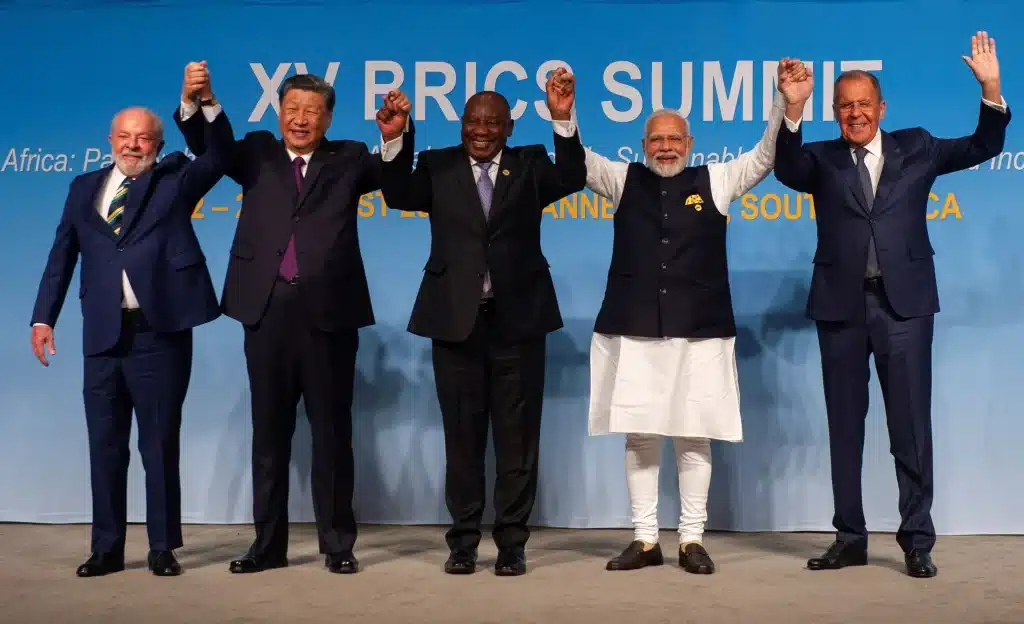
The growing interest around BRICS includes countries from regions such as Central Asia, Eastern Europe, Africa, and Latin America. They are reflecting wider engagement with alternative payment and trade frameworks. Brazilian President Luiz Inacio Lula da Silva previously stated,
“If international governance does not reflect the 21st century’s new multipolar reality, it is up to the BRICS to contribute to bringing it up to date.”
Currently, the focus remains on testing systems and building smaller-scale solutions. India’s e-rupee pilots are one part of that process. They are offering a practical example of how digital currencies might be used before any larger framework takes shape.
Also Read: Avis Stock Crashes 48% as CAR Short Squeeze Reversal Wipes Out Rally

Written by Sahana Kiran
Sahana Kiran has been covering financial markets since 2019, with a focus on cryptocurrencies, fintech, and the geopolitical events shaping them. She previously reported for AmbCrypto and Watcher Guru, and now writes for BlockNow.