



Markets
September 14, 2026
Fed, ECB and BOJ May Hike Together as $2.35T Carry Trade Faces Test
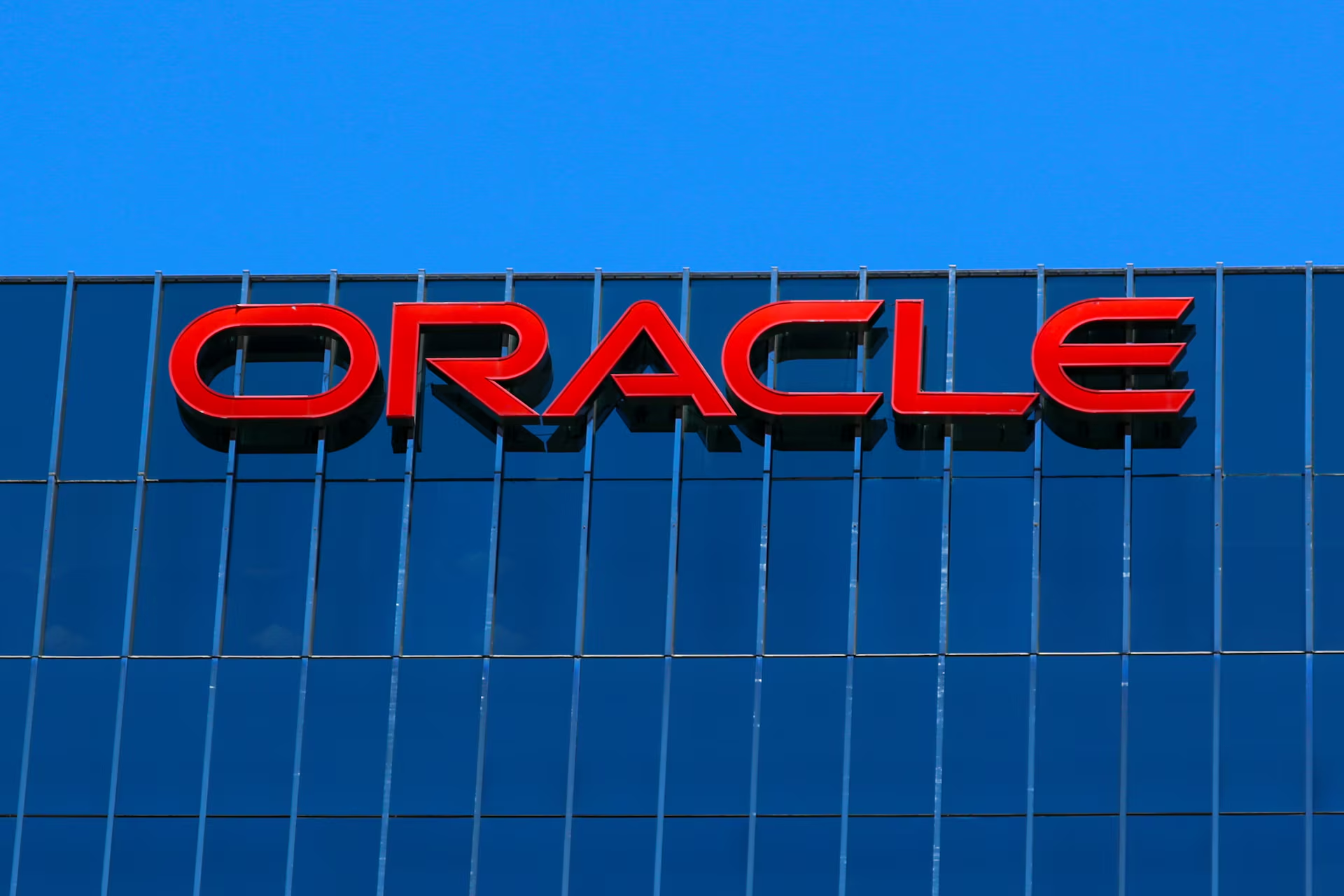
For months, the AI debate has lived almost entirely in the stock market. Investors have argued over Nvidia’s valuation, trillion-dollar market cap, and whether the rally has gone too far. But the pressure is not building where most people are looking. The latest AI credit blowout is unfolding in bond markets. This is where lenders are growing noticeably less comfortable financing the industry’s spending binge. Oracle is now sitting at the center of that story, and its latest downgrade shows why.

The chatter around this from Wall Street is taking the front stage. Brian Garrett, Goldman Sachs’ head of derivatives strategy, recently described the move in hyperscaler bonds as showing “signs of panic.” This is after spreads widened to fresh records yet again. Coming from one of the bank’s own trading desks, the remark stands out. It suggests the concern has moved beyond routine caution and into something more serious.
Oracle has become the first major company where that anxiety has translated into a credit event. S&P Global Ratings lowered Oracle’s long-term issuer rating to BBB-. This leaves it just one notch above junk. The agency’s reasoning wasn’t complicated. Oracle is expected to spend roughly $95 billion on capital expenditures by fiscal 2027. Meanwhile, free operating cash flow is projected to sink to a $42 billion deficit during the same period. This is a level of investment few companies have attempted without putting pressure on their balance sheet.
Bond investors have already adjusted. Market data shows Oracle’s debt trading roughly 100 to 150 basis points wider than other large technology peers. This shows the extra risk investors now see in the company. The Oracle credit downgrade simply confirmed what credit markets had already begun pricing in.

Also Read: Oil and Gas Prices Jump Past $90 as Two Mined Tankers Push Insurers Toward $100
Oracle is far from alone. Bloomberg estimates that Alphabet, Amazon, Meta and Oracle have collectively raised more than $300 billion through bond sales since the beginning of 2025 to help finance AI infrastructure. Morgan Stanley believes AI-related borrowing by hyperscalers could eventually exceed $500 billion. This is a figure that continues to climb as companies race to build new data centers.
This further helps explain the latest Goldman Sachs AI warning. The issue isn’t whether companies will keep spending on AI. They almost certainly will. The bigger question is how much investors are still willing to lend before demanding materially higher borrowing costs.
Stock investors are still rewarding AI ambition. But bond investors are asking a much simpler question of who can afford it? Oracle is the first major company to find out that those two answers don’t always line up.
Also Read: US Foreclosure Filings Surge 21% as Inflation Hammers Overextended Homeowners

Written by Sahana Kiran
Sahana Kiran has been covering financial markets since 2019, with a focus on cryptocurrencies, fintech, and the geopolitical events shaping them. She previously reported for AmbCrypto and Watcher Guru, and now writes for BlockNow.