



Markets
September 14, 2026
Fed, ECB and BOJ May Hike Together as $2.35T Carry Trade Faces Test

The US dollar still holds a notable position in global finance. It remains the primary reserve currency and the default choice for trade, debt, and international settlements. According to the International Monetary Fund, the dollar makes up roughly 56% of global foreign exchange reserves, much ahead of the euro and other currencies. It is also involved in nearly 90% of all foreign exchange transactions, based on Bank for International Settlements data.
While the dominance has not disappeared, the conversation around it has changed.
Also Read: XRP Price Jumps Near $1.50 but Bigger Move Is Coming, Analyst Says
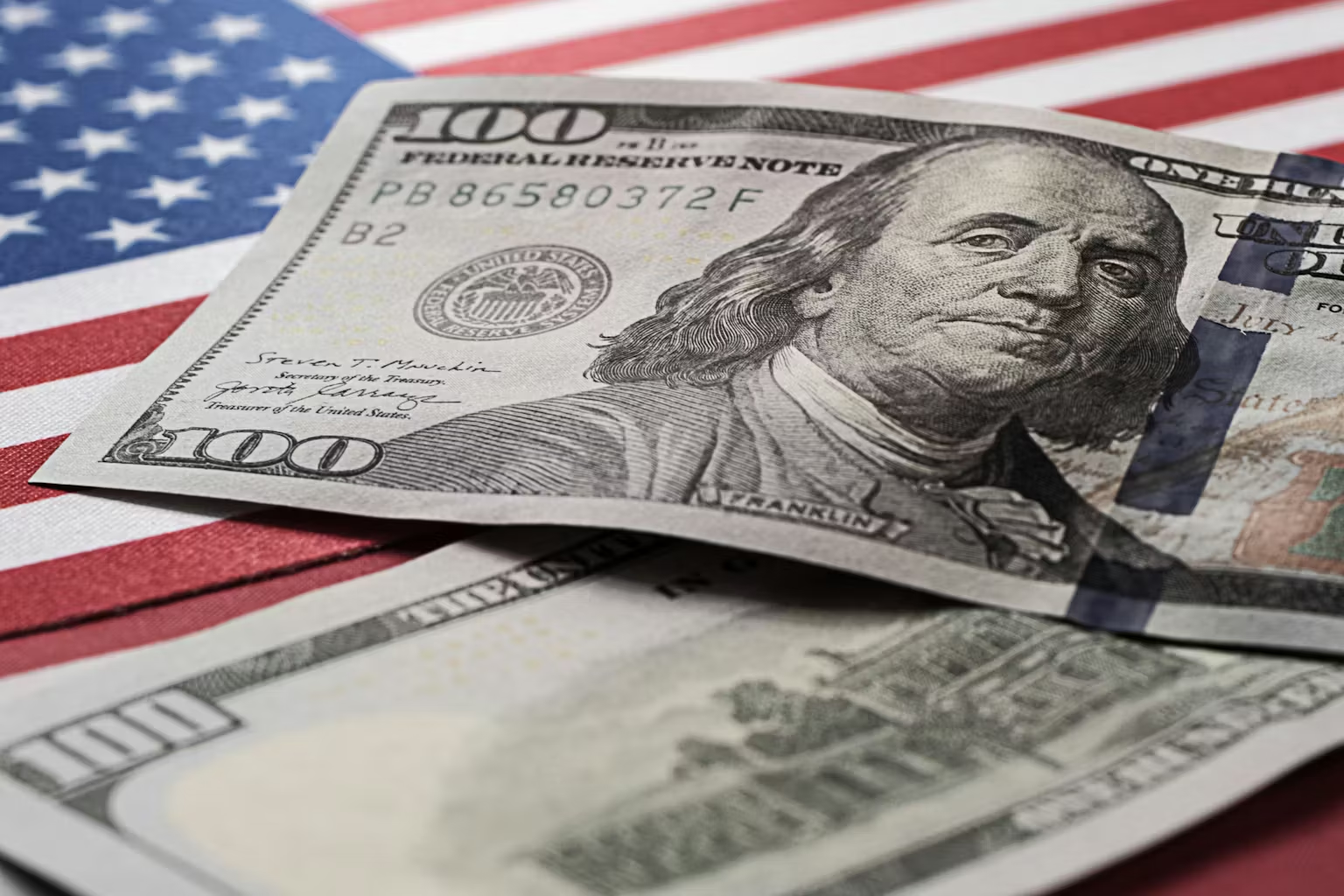
The de-dollarization trend has gained traction in recent years. This has been driven less by sudden moves and more by gradual adjustments. Central banks have been increasing their gold reserves, diversifying into other currencies, and even building alternative payment systems. For instance, China’s Cross-Border Interbank Payment System processed about 45 trillion yuan or abotu $6.5 trillion in transactions in 2025. Even though this is smaller than US-based systems, its growth shows efforts to reduce reliance on the dollar.
There are also signs of strain in the dollar itself. The dollar index, which tracks the currency against major currencies, saw one of its weakest starts in decades recently. This is because investors were reacting to fiscal pressures, trade tension and shifting interest rate expectations. Reuters data shows that while the dollar remains strong over long periods, its short-term direction has become more uncertain. The dollar index has been up by nearly 8% in the past 20 years.

This has raised broader questions about the future of dollar dominance. Political pressure on monetary policy, rising government debt, and tariff disputes have also contributed to unease among global investors. But none of this has displaced the dollar.
Also Read: Shiba Inu Is Going Up Despite 549B Inflows, Bulls Target Breakout
In addition, the USD reserve status remains firmly intact. US financial markets continue to offer unmatched liquidity and scale. During financial crises, global institutions still rely heavily on Federal Reserve swap lines and dollar funding. No other currency, at present, offers the same depth or reliability.
Most countries are playing it smart and not outrightly abandoning the dollar. Instead, they are exploring other options. Trade agreements are increasingly settled in local currencies, and reserve diversification has become more common. More recently, ING pointed out how the dollar has been losing its safe-haven status slowly.

The decline of dollar influence, if it continues, is likely to be slow and uneven. For now, the dollar remains central to global finance. But the adjustments happening around it suggest a major shift much later.
Also Read: Rise to Millions: How $15K Became $150M for Takashi Kotegawa

Written by Sahana Kiran
Sahana Kiran has been covering financial markets since 2019, with a focus on cryptocurrencies, fintech, and the geopolitical events shaping them. She previously reported for AmbCrypto and Watcher Guru, and now writes for BlockNow.