



Markets
September 14, 2026
Fed, ECB and BOJ May Hike Together as $2.35T Carry Trade Faces Test
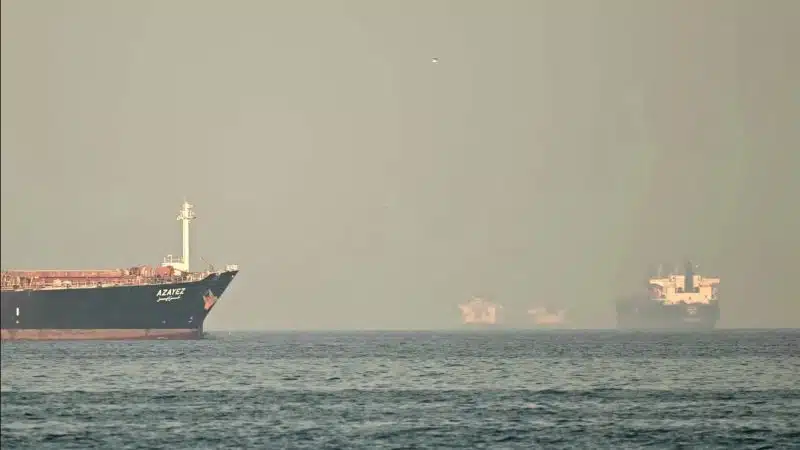
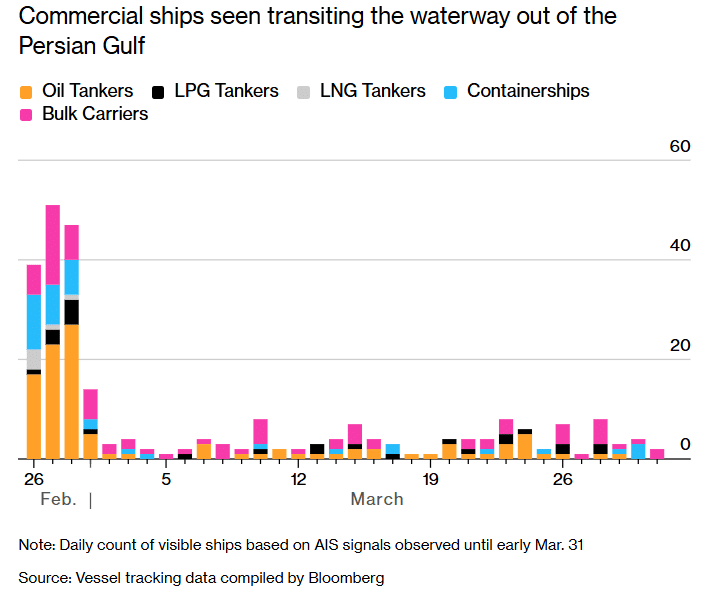
De-dollarization has gone operational at the world’s most critical oil chokepoint. Iran’s Islamic Revolutionary Guard Corps is charging ships up to $2 million per voyage to transit the Strait of Hormuz, with payments settled in Chinese yuan or stablecoins. The baseline fee starts at $1 per barrel for oil tankers, meaning a fully loaded supertanker carrying 2 million barrels hits the full charge. Between March 1 and 25, only 142 vessels transited the strait compared to 2,652 in the same period in 2025, a collapse of roughly 95%, according to Lloyd’s List Intelligence.
Also Read: De-Dollarization: US Pays China in Gold as Treasury Hits Record Buyback
Ships seeking passage must submit ownership details, cargo manifests, crew lists, and AIS transponder data to IRGC-linked intermediaries. The IRGC Navy screens each vessel for links to the US, Israel, or other nations considered hostile. If cleared, toll negotiations begin using a one-to-five friendliness ranking for nations. Once payment in yuan or stablecoins is confirmed, a permit code is issued and an armed naval escort meets the ship near Larak Island.

Lloyd’s List Intelligence tracked 26 ships using this corridor since mid-March. Tiemer Raanan, a maritime risk analyst, stated:
“This is very unprecedented. This is not how things were moving prior to the war, and it’s a really disturbing development in terms of Iran exerting control over traffic through the strait.”
The yuan oil trade running through Hormuz is backed by infrastructure that has been quietly expanding for years. China’s Cross-Border Interbank Payment System (CIPS) recorded a daily average of $134 billion in transaction volume in March, its highest ever, up from an $85 to $105 billion range over the prior year.

Iran war crypto usage reached $7.8 billion on-chain in 2025 according to Chainalysis, with stablecoins increasingly handling settlement in the energy trade. Project mBridge, the cross-border CBDC platform backed by China and Gulf central banks, has processed over 4,000 transactions worth $55.49 billion, with China’s digital yuan making up 95.3% of volume.

Jason Chuah, professor of commercial and maritime law at City University London, said:
“The Iranian justification is that this is an exercise of their rights to self-defense, and therefore they need to check the vessels. And in checking these vessels you need to pay a fee. Now from the perspective of most international law commentators, this is not legal.”
Also Read: Global De-Dollarization Surges as Russia Shifts Oil Trade Away From USD
Iranian lawmaker Mohammadreza Rezaei Kouchi told Fars and Tasnim news agencies:
“Parliament is pursuing a plan to formally codify Iran’s sovereignty, control and oversight over the Strait of Hormuz, while also creating a source of revenue through the collection of fees.”
A blockade ends with a ceasefire, while a domestic law does not. De-dollarization at Hormuz is no longer a financial experiment. The Strait of Hormuz oil corridor that once moved a fifth of global crude is now operating on Chinese currency and crypto, and Iran is also moving to make that arrangement permanent through statute.

Also Read: Markets Rally After Trump Says US Could Exit Iran War in 2–3 Weeks

Written by Vladimir Popescu
Vladimir Popescu leads editorial coverage at BlockNow, with over 8 years in financial and tech journalism. He previously held editorial leadership roles at Watcher Guru and Windows Report, and has been cited by Forbes for his crypto market coverage.