



Markets
September 14, 2026
Fed, ECB and BOJ May Hike Together as $2.35T Carry Trade Faces Test

Key Takeaways
Russian President Vladimir Putin left President Xi Jinping China with 40 trade deals accomplished this past week, but without a Power of Siberia 2 price. The Power of Siberia 2 is a proposed natural gas pipeline to export natural gas from Russia’s Western Siberia Altai region to North-Eastern China. President Putin and President Xi on Wednesday failed to make progress on the planned 1,615-mile pipeline to supply China.
Also Read: New Bill Targets 1 Million Bitcoin Funded by Gold and Locked for 20 Years
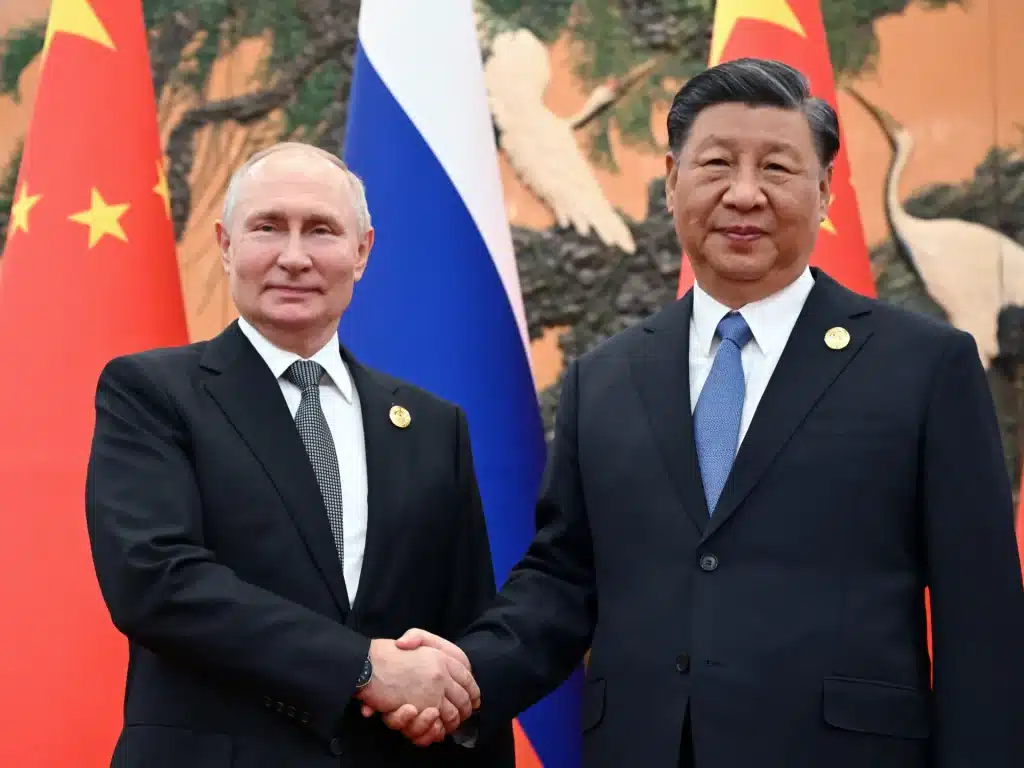
Beijing and Moscow signed a sweeping package of over 40 deals on trade, education, technology, and nuclear security. However, according to sources close to Putin’s 2-day visit to China, the Power of Siberia 2 deal stalled. The sources say the delay was due to differences over the timetable, financing and cost of the gas. Beijing is reportedly holding out for a price of 12-13 cents/cubic meter, in line with costs in the Russian market. Following the Putin and Xi Jinping meeting, Russian Press Secretary Dmitry Peskov said Beijing and Moscow had arrived at an understanding on the venture’s key parameters. However “some nuances remain to be ironed out,” with no clear timeframe for the project, according to Russian news agency RIA Novosti.
The reason for China’s unrushed approach to the deal may lie not between the BRICS nations, but in Iran. The Strait of Hormuz has been in a state of flux for nearly three months due to the US-Iran war. However, X Jinping and China view the Strait shutdown as temporary, meaning it’s in no rush to confirm the pipeline. Most of China’s LNG imports must be shipped through strategic chokepoints, such as Hormuz and the Strait of Malacca. Therefore, the strait reopening could further stall the Power of Siberia 2 even further. Additionally, President Xi just hosted US President Donald Trump for a two day summit. Therefore, the former may feel that signing a deal this week would’ve sent a bad message to his US counterpart.
Also Read: Gold Price Drops on Stronger US Dollar and Rising Yields

As for Russia, it has lost 180 billion cubic meters of European gas exports. It has no other pipeline customer, and China seemingly knows it. After losing Europe as a gas customer, Russia’s last option is to sell Gas to China via Power of Siberia 2. However, the latter already imports LNG from Qatar and Australia. Further, the US. Qatar’s North Field comes back in 1-2 years, making the losses even more minimal for China. As several analysts have explained: Russia needs China far more than China needs Russia.
According to Lyle Morris, senior fellow on Chinese national security and foreign policy at Asia Society Policy Institute, Beijing may be “playing hardball at a time when Russia has lost some leverage with the European Union shutting off certain gas flows from Moscow,” Morris said.
“There is no way to sugarcoat it: Putin was embarrassed by the failure to agree to the pipeline.”
Analysts have flagged this power imbalance as a core risk to the deal’s economics. China is reportedly seeking a price in the range of $120 to $150 per 1,000 cubic meters. With Russia’s current situation, a deal that expensive may not be something that Russia can pull off. At those levels, Gazprom’s returns on the massive infrastructure investment could squeeze thin. Meanwhile, Russia may fall further into a hole after its EU fallout.
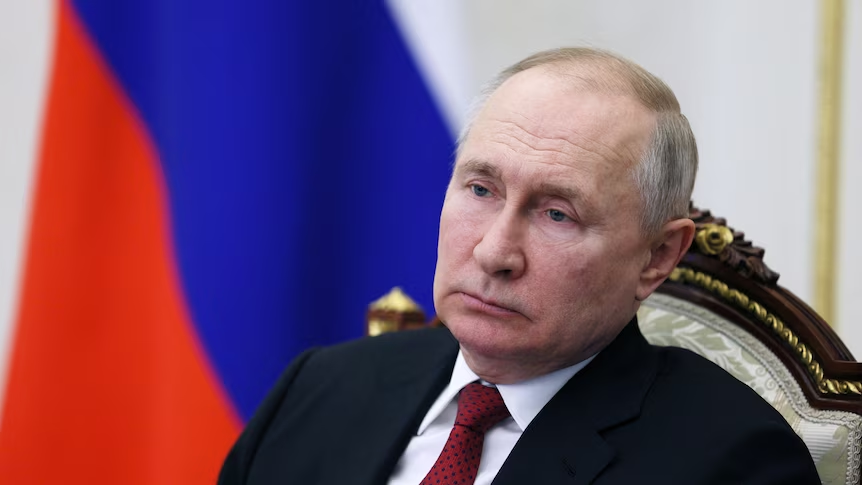
China and Russia already agree on construction parameters for the massive natural gas pipeline. However a gas price and financing for the pipeline have been in discussion for nearly ten years. While Putin and Russia are pressing to deal, China and Xi Jinping appear to be the ones in control.
Lastly, while the US-Iran War has the Strait of Hormuz in a flux, this could’ve been Putin’s best chance to complete a trade deal between Russia and China. Russia’s 12 bcm Far East pipeline is scheduled to begin operations in 2027. It represents the next incremental capacity increase before any Power of Siberia 2 infrastructure could theoretically come online. Putin’s next visit to China is still TBD, however, the two leaders will likely remain engaged in talks over the coming months.
Also Read: Kevin Warsh Fed Leadership: Crucial Decisions Await at June Meeting

Written by Isaac Bennet