



Markets
September 14, 2026
Fed, ECB and BOJ May Hike Together as $2.35T Carry Trade Faces Test

Key Takeaways
The oil market entered 2026 with a surplus. A few months later, this cushion is disappearing fast. The latest oil price data shows more than 1 billion barrels have already been pulled from global storage since February. This comes as the Strait of Hormuz oil disruption continues to affect supply flows. Traders are still betting on some kind of resolution. But inventory numbers are moving in the opposite direction. Energy companies and analysts now say the market may be underestimating how tight conditions have become heading into summer.
Also Read: Trump’s Fintech EO Could Finally Let Coinbase and Ripple Bank Like JPMorgan

The current oil inventory crisis is being driven by a simple imbalance. There is too much supply offline and not enough replacement barrels arriving quickly enough. According to the US Energy Information Administration, global inventories are expected to decline by 8.5 million barrels per day during Q2 2026. This is the steepest drawdown the agency has ever forecast.
Around 10.5 million barrels per day of production from Iraq, Saudi Arabia, Kuwait, the UAE, Qatar, and Bahrain was shut in during April. This was following the disruptions tied to the Strait of Hormuz. At the same time, demand has stayed firmer than expected. US petroleum consumption is averaging 20.2 million barrels per day, up 3.1% from a year ago. Even if Gulf flows resume, the oil price may not normalize quickly because inventories need months to rebuild.
In addition, the US drew a record 8.6 million barrels from the Strategic Petroleum Reserve in a single weeK. Meanwhile, commercial inventories at Cushing continue to decline.
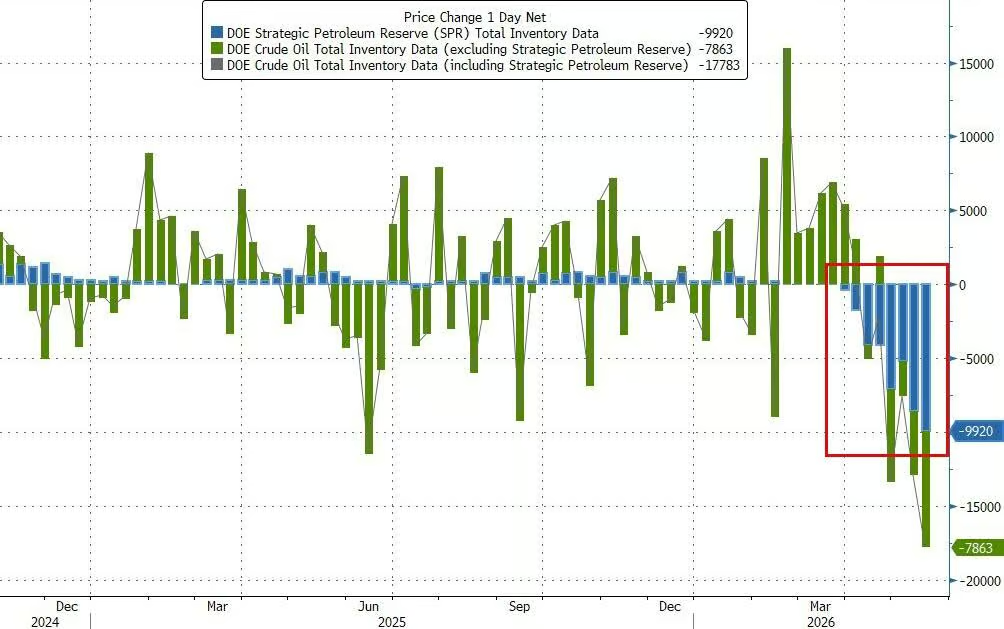
Executives from some of the world’s largest oil companies have started warning that inventories may stay tight even if the situation improves soon. TotalEnergies CEO Patrick Pouyanné said the world would still exit the conflict period with “very low inventories.” This is because supply chains need time to normalize.
Amidst this, ExxonMobil CEO Darren Woods pointed to delays between any reopening of shipping routes and the arrival of actual cargoes. Woods said,
“It’s obvious to most that if you look at the unprecedented disruption in the world supply of oil and natural gas, the market hasn’t seen the full impact of that yet.”
Goldman Sachs estimates global oil stocks have already fallen close to eight-year lows, while fuel inventories are tightening even faster.
Also Read: Nvidia’s Q1 Earnings Broke Records, Yet NVDA Stock Fell…Why?
Even with some Atlantic Basin producers increasing exports, analysts say the gap has not been fully replaced. Refineries in Asia and Europe are already adjusting imports and cutting runs in some regions because of limited crude availability.

This is why some analysts think the current oil price close to $106 may not fully reflect the pressure building underneath the market, especially with peak summer demand approaching.
Also Read: Blast Off: SpaceX IPO Nears Launch, Files Paperwork with Nasdaq

Written by Sahana Kiran
Sahana Kiran has been covering financial markets since 2019, with a focus on cryptocurrencies, fintech, and the geopolitical events shaping them. She previously reported for AmbCrypto and Watcher Guru, and now writes for BlockNow.